
Armenian and Azerbaijani Leaders Meet in Abu Dhabi, Reaffirm Bilateral Path to Peace
Source: president.az
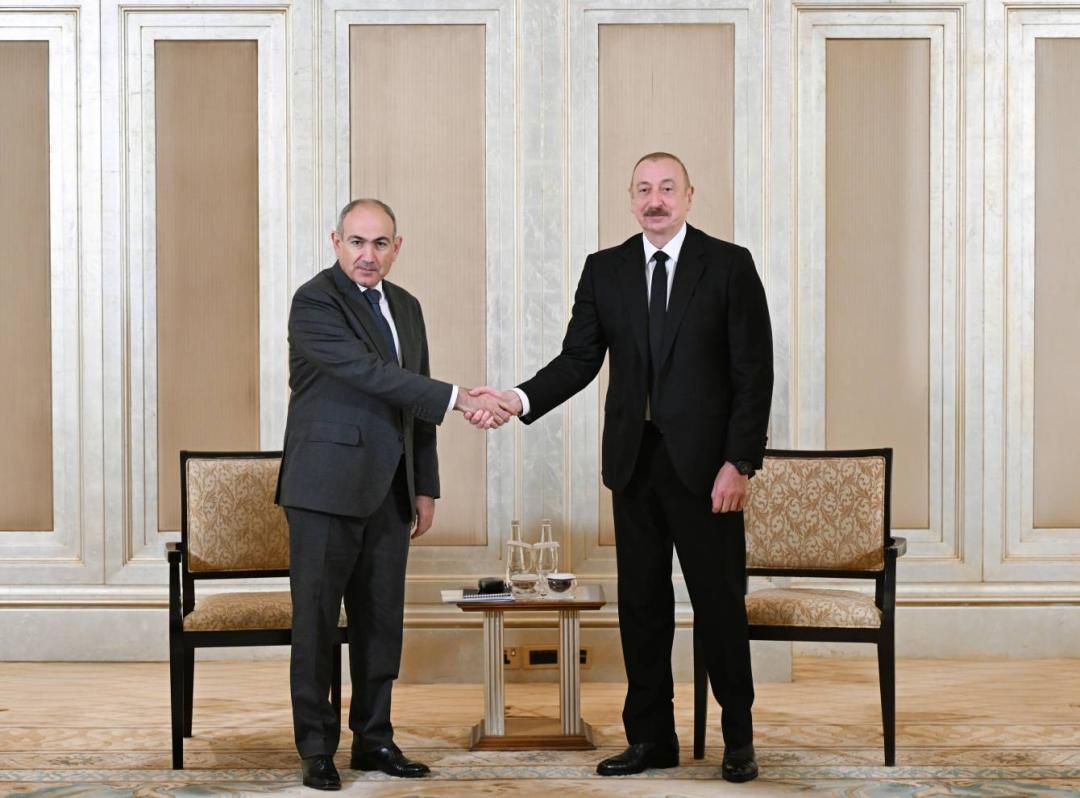
Armenian Prime Minister Nikol Pashinyan and Azerbaijani President Ilham Aliyev held a direct meeting in Abu Dhabi on July 10 to advance the normalization agenda between their two nations. Both leaders reaffirmed that direct bilateral negotiations remain the most effective format for the peace process and agreed to continue a results-oriented dialogue.
The high-level talks were facilitated by the President of the United Arab Emirates, Sheikh Mohamed bin Zayed Al Nahyan, whom both leaders thanked for his hospitality.
During the meeting, which later continued in a one-on-one format, the leaders reviewed progress on border delimitation and instructed their respective state commissions to continue practical work on the matter. They also agreed to maintain bilateral negotiations and other confidence-building measures.
Statements and Regional Reactions
Following the talks, the Armenian government signaled positive outcomes. Foreign Ministry Spokesperson Ani Badalyan described the meeting as "successful" and stated it could serve as a "serious foundation for the continued advancement of the peace process."
In a notable development, Deputy Foreign Minister Mnatsakyan Safaryan announced that Armenia would consider transferring control of the Zangezur corridor to an American company, provided the arrangement adheres to Armenia’s stated principles. "If it fully complies with the principles we have stated, it can be implemented," Safaryan noted.
The Ministry of Foreign Affairs of Azerbaijan issued a statement confirming the key outcomes. “It was confirmed that bilateral negotiations represent the most effective format to address all issues related to the normalization process and, on this basis, it was agreed to continue such result-oriented dialogue”. The ministry added that the leaders took stock of progress in the border delimitation process and agreed to pursue further confidence-building measures.
The meeting drew positive reactions from international observers.
Anitta Hipper, EU Spokesperson for Foreign Affairs and Security Policy, stated the EU "strongly supports" the normalization efforts. She recalled that the two sides had finalized a draft agreement on Peace and Establishment of Interstate Relations in March 2025 and encouraged them to proceed with signing it promptly.
Kremlin Press Secretary Dmitri Peskov welcomed the direct dialogue, stating that a final peace agreement would be a significant step toward ensuring “predictability, peace, and stability in the South Caucasus.”
Preceding Diplomatic Engagements
The direct meeting on July 10 followed separate bilateral discussions held the previous day. On July 9, both President Aliyev and Prime Minister Pashinyan met individually with UAE President Sheikh Mohamed bin Zayed Al Nahyan.
President Aliyev's visit was marked by the signing of a Comprehensive Economic Partnership Agreement between Azerbaijan and the UAE. During his meeting with Sheikh Mohamed, both leaders praised their strategic partnership, the growth in economic ties, and successful collaboration in the renewable energy sector between Azerbaijan’s SOCAR, the UAE’s ADNOC, and the Masdar company.
Prime Minister Pashinyan's meeting with the UAE President focused on expanding cooperation in economic, investment, and humanitarian spheres. The leaders discussed regional stability, and Sheikh Mohamed welcomed the progress on the draft peace deal with Azerbaijan. Pashinyan, in turn, presented his "Crossroads of Peace" initiative and thanked the UAE for its role in fostering regional security.
US Hints at Imminent Armenia-Azerbaijan Peace Deal Ahead of Abu Dhabi Summit
U.S. Secretary of State Marco Rubio has suggested that Armenia and Azerbaijan may soon reach a long-anticipated peace deal, as leaders prepare for another round of talks in Abu Dhabi this Thursday.
This latest round of high-level talks comes after months of negotiations and mounting international pressure to resolve lingering disputes following the 2020 Nagorno-Karabakh war and its aftermath.
Speaking during a cabinet meeting chaired by US President Donald Trump, Rubio highlighted the possible peace deal as one of the current administration’s key foreign policy achievements. US State Department spokeswoman Tammy Bruce declined to elaborate on the basis for Rubio’s optimism, stating only that, “The Secretary noted that for a reason, and when we have some more details for you I’ll get it to you.”
Although Armenia and Azerbaijan finalized a draft peace treaty in March, its signing was delayed after Baku introduced new demands—chief among them, that Armenia amend its constitution to remove perceived territorial claims against Azerbaijan.
Earlier this week, a senior adviser to President Aliyev reaffirmed this precondition, raising doubts about whether a deal can be finalized without significant constitutional changes from Yerevan. Nonetheless, the upcoming summit in Abu Dhabi suggests continued momentum toward a breakthrough.
News,
Politics,
Armenia, Azerbaijan |
Nikol Pashinyan, Ilham Aliyev, UAE, Armenia-Azerbaijan Relations, Marco Rubio