
Armenian Lawmaker Highlights NATO Partnership as Security Pillar; Turkish MP Sees Real Opportunity for Border Opening
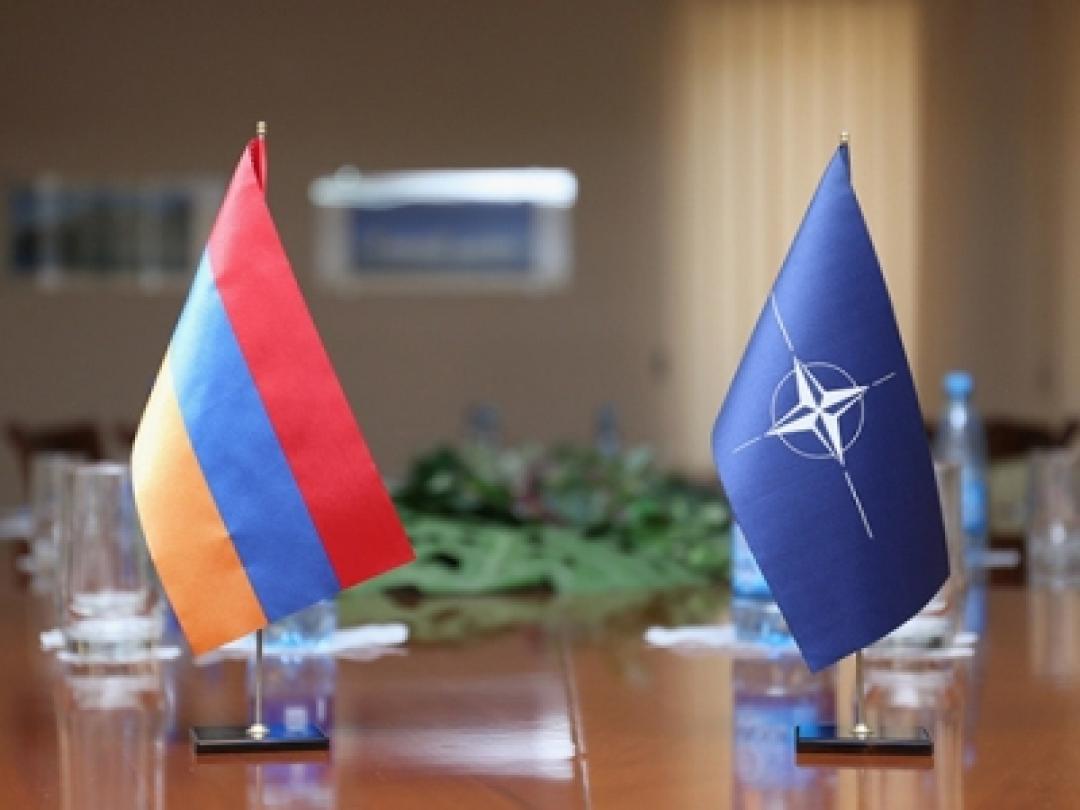
Armenia’s partnership with NATO is one of the key pillars of its national security, said Andranik Kocharyan, Head of the National Assembly’s Defense and Security Committee and Chief of the Armenian Delegation to the NATO Parliamentary Assembly (PA). Speaking at the 108th Rose-Roth Seminar of the NATO PA in Yerevan, Kocharyan stressed that Armenia must adapt to global geopolitical changes and challenges by deepening cooperation with NATO.
He recalled that Armenia’s relations with NATO date back to 1994 through the Partnership for Peace program and have been formalized since 2006 under the Individual Partnership Action Plan (IPAP). According to Kocharyan, discussions are now underway to develop a new Individually Tailored Partnership Program to guide future cooperation.
“Our cooperation is based on universal values - democracy, the protection of human rights, and the rule of law,” Kocharyan said, adding that NATO partnership is not just about defense but also about systemic reforms that strengthen Armenia’s independence and institutional resilience.
Kocharyan highlighted that Armenia’s cooperation with NATO includes defense and security reforms, transparency measures, and participation in international peacekeeping missions. He warned, however, of hybrid threats and disinformation campaigns targeting Armenia’s statehood and public opinion, stressing the importance of public awareness, digital literacy, media development, civil society engagement, and international experience-sharing in information security.
He also underlined that civilian oversight of the defense sector is vital for democratic stability. While acknowledging that some limits on transparency are inevitable for security reasons, Kocharyan said this “cannot lead to a lack of accountability.”
Meanwhile, Fatma Aksal, Turkish MP and member of Türkiye’s NATO PA delegation, voiced optimism about the Armenia–Türkiye normalization process, saying that a “real opportunity” to reopen the land border could materialize in the coming months.
“We have flights, but Turkish Airlines doesn’t fly yet. We hope that the gates will open soon, and we will have commercial and cultural ties,” Aksal said, adding that reconciliation between Armenia, Türkiye, and Azerbaijan could serve as a model for global peace efforts amid conflicts like those in Ukraine.
When asked about the use of the term “Zangezur corridor” by Ankara and Baku instead of “Trump Route,” Aksal dismissed concerns that it implies a territorial claim against Armenia. “It is not a territorial claim. No one has lost from peace and no one has gained from war yet,” she said, urging patience and optimism.
Aksal also acknowledged the issue of Armenian prisoners of war held in Azerbaijan, stating that while she could not share details, Türkiye is “ready to do everything to establish peace.”