
Armenian Parliament Holds Hearings on Alleged Political Prisoners
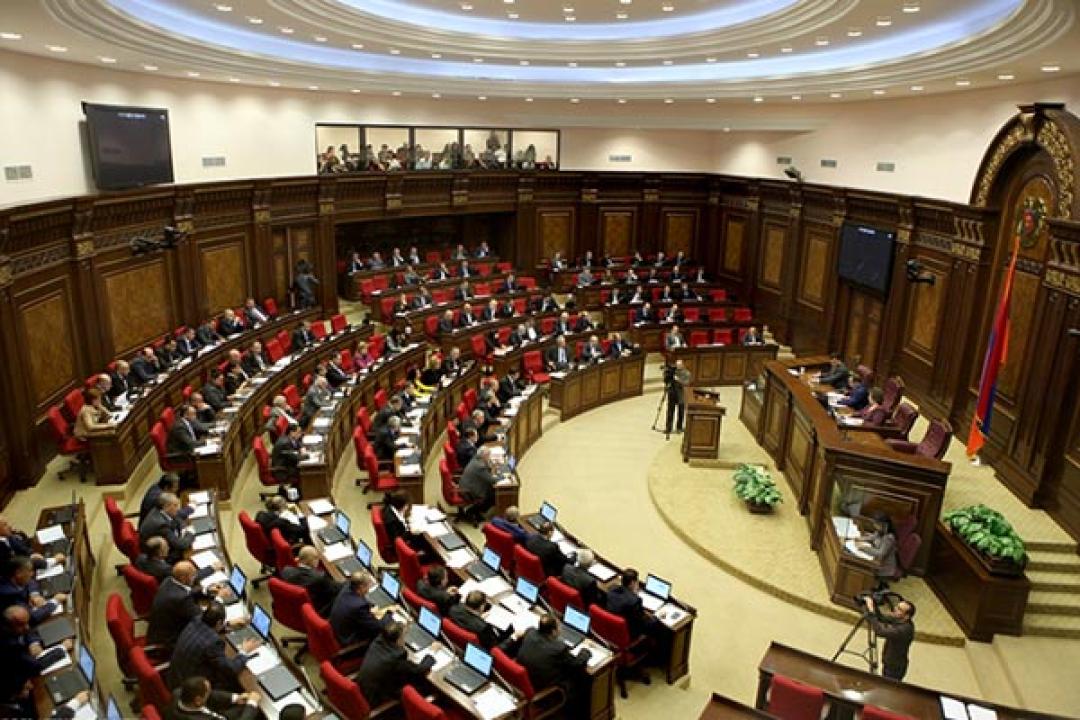
Parliamentary hearings titled “On the political prisoners in the Republic of Armenia and the restoration of their violated rights” opened on November 26 in the National Assembly, initiated by the opposition “Armenia” Faction. No members of the government or executive branch attended.
In a symbolic gesture, photos of individuals described by the opposition as political prisoners were placed on the desks of government representatives in the chamber, including a photo of imprisoned Archbishop Mikael Ajapahian on the desk of PM Nikol Pashinyan.
Opposition politician Armen Ashotyan, deputy chair of the Republican Party of Armenia, delivered a sharply worded speech accusing the government of systemic political repression. “Once an open-air museum, Armenia has now become an open-air prison,” he said, criticizing what he described as widespread injustices and a lack of political accountability. Ashotyan accused the opposition itself of selective advocacy and lit a candle inside the hall, explaining that it symbolized solidarity with imprisoned individuals. He concluded by calling for their release.
Seyran Ohanyan, head of the opposition “Mother Armenia” faction, opened the hearings by saying a draft statement on political prisoners had been circulated, prompting the session. He accused the authorities of democratic regression, citing pressure on media, violations of fundamental freedoms, and politically motivated prosecutions. Ohanyan argued that selective justice had led to an unprecedented number of political prisoners and said foreign diplomatic missions were monitoring the hearings.
Opposition MP Elinar Vardanyan argued that Armenia’s judiciary and law enforcement bodies have become tools of political repression. She said many detainees meet criteria for political prisoners under Council of Europe Resolution 1900 (2012), noting that only one criterion is needed. Highlighting 40 individuals, she singled out activist Lidya Mantashyan — the only woman among them — saying her detention “amounts to political punishment.”
Vardanyan accused the government of “systematic interference” in the judiciary, including politically motivated structural reforms, dismissals of officials, executive pressure on courts, and the detention of political, military, and religious figures. She described pre-trial detention as having become a routine punitive tool against government critics. She also criticized muted responses from international organizations, arguing that the authorities use the absence of strong statements to dismiss concerns.
The hearings are expected to continue with input from opposition factions, civil society representatives, and invited observers.