
Azerbaijan Hosts Trilateral Meetings with Russia and Iran in Baku
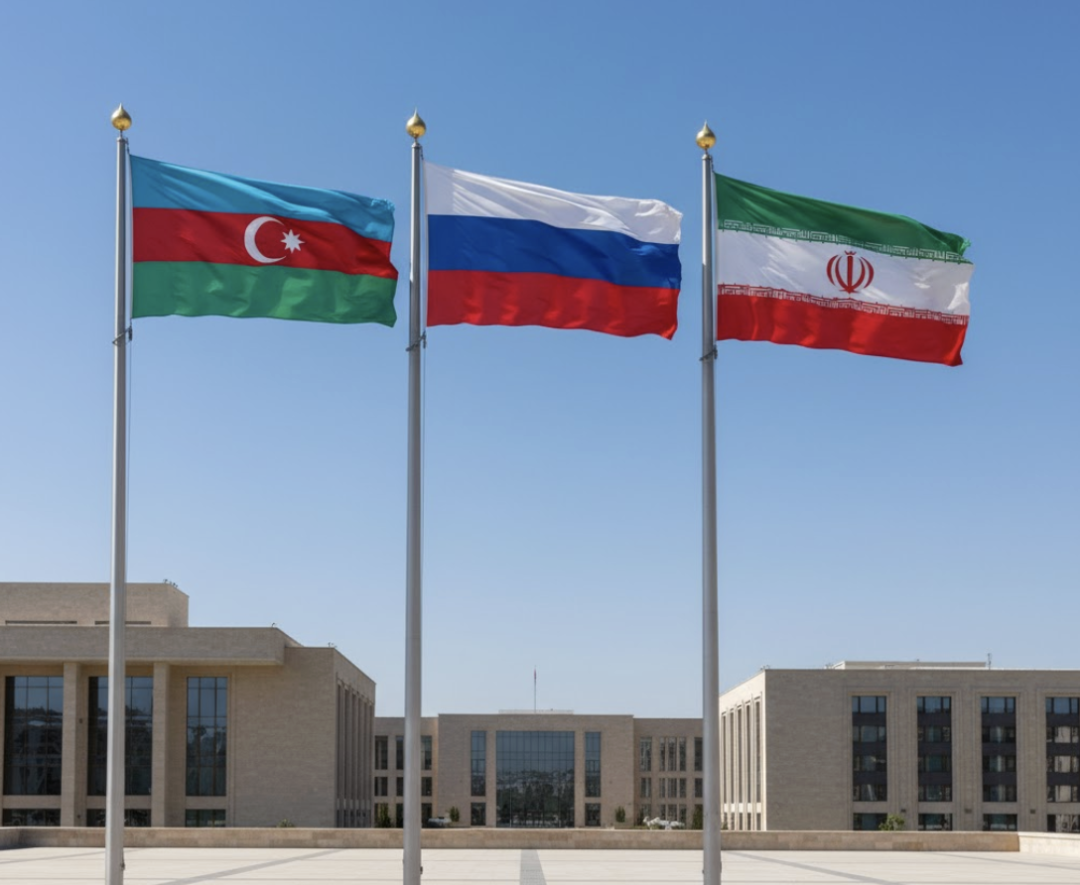
On October 13, a trilateral meeting between government representatives of Azerbaijan, Russia, and Iran took place in Baku, bringing together Shahin Mustafayev, the Deputy Prime Minister of Azerbaijan; Alexey Overchuk, the Deputy Prime Minister of Russia; and Farzaneh Sadegh, the Iranian Minister of Roads and Urban Development.
During the meeting, Shahin Mustafayev emphasized that Azerbaijan remained committed to the principles of good-neighborliness, mutual understanding, and equal partnership in its relations with both Iran and Russia. He underlined that Baku sought to further strengthen multifaceted relations not only bilaterally but also through trilateral cooperation frameworks. "We are confident that our comprehensive ties with both nations will continue to develop in a spirit of friendship and mutual benefit, gaining new depth and substance," Mustafayev stated.
He also stressed the importance of peace, stability, and regional prosperity, noting the growing relevance of the "3+3" consultative platform proposed by President Ilham Aliyev, which, according to him, complemented existing regional formats and opened new opportunities for economic cooperation. Highlighting economic progress, Mustafayev noted that freight transport along the North–South International Transport Corridor had increased by 8.3% in the first nine months of the year compared to the same period in 2024. He recalled that Azerbaijan and Russia had signed an agreement in December 2024 to develop transit cargo transportation through the corridor, stipulating that from January 1, 2028, at least 5 million tons of cargo would be transported annually via Azerbaijan. He added that this figure could later rise to 15 million tons based on future agreements.
Mustafayev also announced that construction of the Aghband–Kelaleh bridge over the Araz River—a key component of the Araz Corridor—was expected to be completed by the end of 2025, with customs and border infrastructure to follow in early 2026. He stated that this project, along with the Horadiz–Aghband road and railway lines scheduled for completion next year, would create a new branch of both the East–West and North–South corridors, linking the Persian Gulf to the Black Sea.
Speaking at the same meeting, Alexey Overchuk emphasized that Russia, Azerbaijan, and Iran were intensifying efforts to establish a unified goods market and barrier-free logistics system extending from the Barents and Baltic Seas to the Persian Gulf. "We have a lot of important work ahead aimed at establishing a unified goods market with harmonized rules and standards," Overchuk stated , adding that closer regional cooperation would enhance competitiveness for producers, exporters, and importers in all three countries. Farzaneh Sadegh, the Iranian Minister of Roads and Urban Development, proposed the full digitalization of freight documentation within the North–South International Transport Corridor to improve efficiency and reduce delays. "The existence of an integrated transport system between states forms the basis of economic integration. Therefore, we must align our infrastructure and take concrete steps to implement that alignment," Sadegh emphasized. She noted that the corridor was expected to handle up to 15 million tons of cargo annually by 2030 and provided updates on ongoing infrastructure projects, including the jointly built Rasht–Astara railway and the 107-kilometer Julfa–Kelaleh highway connecting Iran with Azerbaijan’s Nakhchivan region. Sadegh reiterated Iran’s readiness to cooperate with other countries to expand the corridor, calling it a "unique, internationally significant project" that would contribute to the economic development of the broader region.
In a bilateral meeting on the same day, Shahin Mustafayev and Alexey Overchuk discussed the current state and prospects of Azerbaijan–Russia economic cooperation. The two sides noted that trade turnover between the countries had grown by over 10% in 2024 and by 13.5% year-on-year in the first eight months of 2025, reaching $3.35 billion. Cargo traffic along the North–South Corridor rose by 8.3% in the first nine months of 2025, while agricultural exports from Azerbaijan to Russia increased by 15% during the same period, driven mainly by fruit and vegetable products. Both officials expressed satisfaction with the progress of joint projects in transport, energy, customs, and investment, stressing the importance of synchronizing infrastructure development along the North–South Corridor.
Also on October 13, Shahin Mustafayev met with Farzaneh Sadegh to discuss the comprehensive development of Azerbaijan–Iran relations. The sides exchanged views on cooperation in transport, transit, and energy, highlighting the completion of the Aghband–Kelaleh bridge over the Araz River as a major achievement in connecting Azerbaijan’s Eastern Zangazur Economic Region with the Nakhchivan Autonomous Republic. They also reviewed the progress of the South Cargo Terminal and discussed measures for fully operationalizing the newly constructed road bridge over the Astarachay River. Both officials emphasized that the outcomes of the Azerbaijan–Iran–Russia trilateral meeting would further deepen cooperation in trade, transport, and energy, strengthening regional integration and benefiting all three countries.