
Azerbaijan, Türkiye, And Georgia Strengthen Trilateral Economic, Energy, Transport, And Investment Cooperation in Kakheti
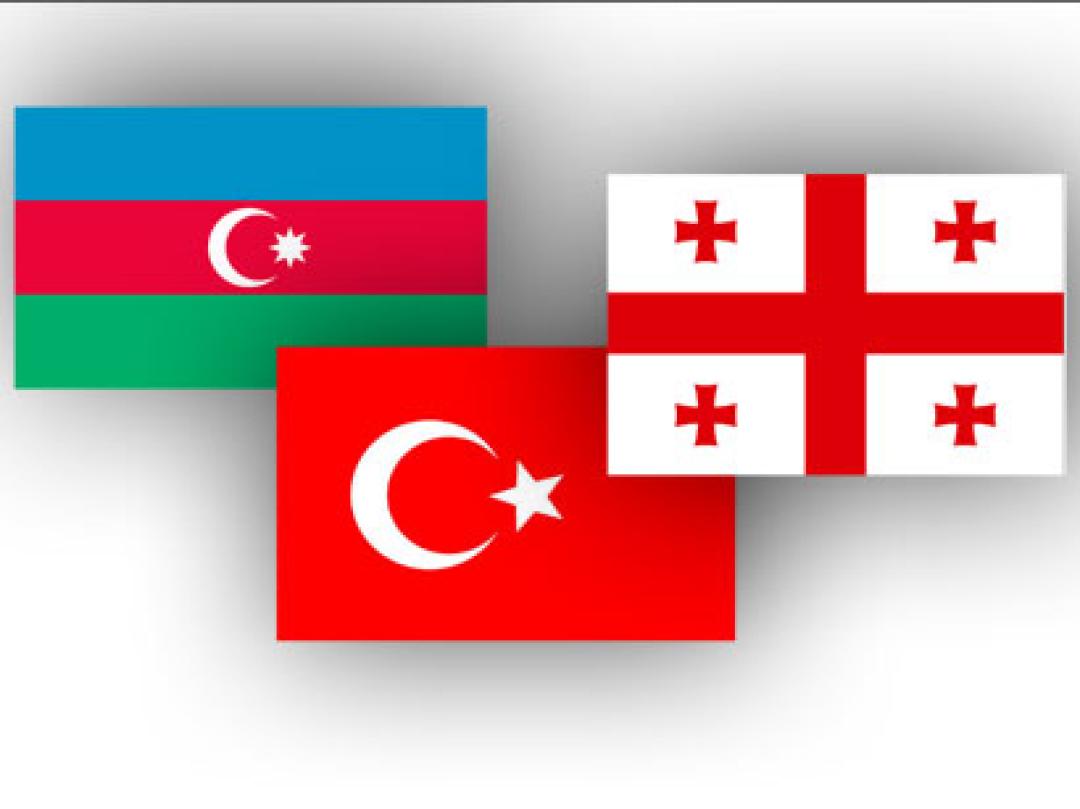
On February 26, the VII Azerbaijan–Georgia–Türkiye Business Forum opened in Georgia's Kakheti region, gathering over 400 participants from the three countries.
Mikayil Jabbarov, the Azerbaijani Minister of Economy, stated that Azerbaijan continues to prioritize its partnerships with Türkiye and Georgia amid expanding economic cooperation. He highlighted that Türkiye and Georgia remain Azerbaijan's main trade and export partners. In 2025, trade with Türkiye reached $7 billion, while trade with Georgia totaled approximately $900 million. "Türkiye serves as a strategic gateway to the European Union markets. Its industrial capacity, logistics infrastructure, technological capabilities, and customs integration with the EU create new opportunities for production and supply chains for Azerbaijan and the South Caucasus region," Jabbarov emphasized. He underlined that Azerbaijan aims to strengthen its role as a production and transit hub, contributing to regional economic development and integration into global markets.
During the forum, Jabbarov also addressed Azerbaijan’s ongoing efforts toward peacebuilding and sustainable economic growth, while recalling the 34th anniversary of the Khojaly massacre. He noted that 613 civilians, including 63 children, were killed in Khojaly in 1992, and 125 individuals remain missing. "Throughout these years, Türkiye has steadfastly supported Azerbaijan and the principle of its territorial integrity," he stated. Jabbarov pointed out that the peace process in the South Caucasus gained momentum with the historic documents signed on August 8, 2025, in Washington by Azerbaijani President Ilham Aliyev and Armenian Prime Minister Nikol Pashinyan, with US President Donald Trump as witness. He emphasized the historic partnership between the three countries, noting that centuries of cooperation among Georgia, Azerbaijan, and Türkiye enhance regional stability, economic well-being, and security.
Jabbarov also highlighted Azerbaijan’s robust economic indicators and financial stability, noting that significant capital expenditures over the past five years have been allocated to the restoration and reconstruction of liberated territories. "Azerbaijan will continue to contribute to peace, economic cooperation, and sustainable development in the region," he stated.
Omer Bolat, the Turkish Minister of Trade, described Azerbaijan–Georgia–Türkiye cooperation as a model of strategic partnership. Speaking at the forum, he stressed the importance of deepening economic integration through energy, transport, port and airport operations, information technologies, and artificial intelligence. "The main duty of government officials is to create a favorable environment for business and remove existing barriers in investment and trade," Bolat emphasized. He added that neighboring countries mainly develop trade with close partners, making trilateral cooperation based on friendship, strategic partnership, and alliance essential. The minister also highlighted major infrastructure projects, including the Baku–Tbilisi–Ceyhan oil pipeline, the Baku–Tbilisi–Erzurum gas pipeline, and the Baku–Tbilisi–Kars railway, calling them "golden projects" vital for shaping the region’s economic map.
Jabbarov further elaborated on foreign investments, noting that Türkiye and Georgia occupy leading positions in Azerbaijan’s investment portfolio. Following Azerbaijan’s entry into the Turkish electricity market and the acquisition of an 870 MW power plant, mutual investments with Türkiye have approached $21 billion. Investments in Georgia exceed $3.1 billion, with SOCAR playing a leading role. He emphasized that trilateral energy cooperation is now a key pillar of regional development. "Azerbaijan supplies natural gas to 16 countries, including 10 EU members, and ranks first globally in pipeline supply geography," he stated. Jabbarov noted that the Southern Gas Corridor project has become integral to European energy security and stressed readiness to explore further investment opportunities in Georgia.
The minister also underscored the importance of transport and connectivity projects, such as the Baku–Tbilisi–Kars railway and the Middle Corridor, along with the Kars–Nakhchivan initiative. These projects, he stated, open new avenues for economic growth in Azerbaijan, Georgia, and Türkiye. On social media, Jabbarov noted that during the forum, participants discussed unlocking the full potential of the Middle Corridor, strengthening regional connectivity, expanding export capacities, improving digital transit infrastructure, and fostering greater synergy among business communities to form a sustainable regional economic ecosystem.