
EU And Armenia Move Closer Through Security Consultations And Financial Support in Yerevan Meeting
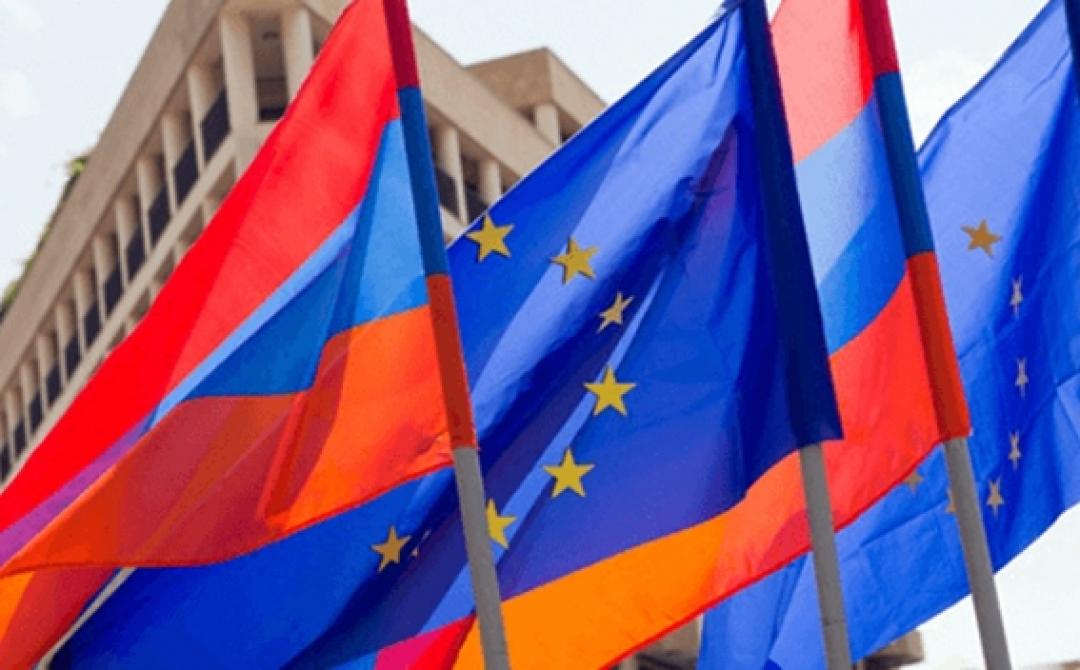
On June 30, Kaja Kallas, the High Representative of the European Union for Foreign Affairs and Security Policy and Vice-President of the European Commission, emphasized the strategic importance of normalizing Armenia-Azerbaijan relations for strengthening ties between Europe and Central Asia and reaffirmed the EU’s readiness to deepen cooperation with Armenia during her official visit to Yerevan.During a press conference in Yerevan, Kaja Kallas responded to a question about the importance of swiftly concluding a peace agreement between Yerevan and Baku by stating that the EU unequivocally encourages the peace process and wishes to see it completed as soon as possible. She underscored that "we need more stability in the world, not only in the region" and stressed that the EU supports a settlement based on sovereignty, territorial integrity, and the inviolability of borders, adding, "there is no alternative to these principles." Kallas remarked that she had conveyed the same message in Baku and linked progress in South Caucasus peace efforts to the broader goal of connecting Europe with Central Asia.Kallas also addressed reports that Hungary was blocking EU financial assistance to Armenia through the European Peace Facility. When asked about this at the same press conference, she acknowledged that the EU comprises 27 sovereign states with independent positions and that decisions are reached by consensus. Kallas stated, "It’s a process. We are trying to find a solution. Yes, there is no solution, but we are trying to find one," while expressing optimism about progress.
She declared at the press conference that she had arrived in Armenia with a clear message: the EU has never been closer to Armenia. Praising Yerevan’s reform progress, she pledged continued EU assistance in various fields. Financially, Kallas cited a €270 million business support program for 2024–2027 and aid for displaced persons, without specifying details. She highlighted the importance of people-to-people ties, dialogue on visa liberalization, and the EU’s peace-promoting initiatives, noting, "Yesterday, I visited and familiarized myself with the work of the mission." Kallas further announced the signing of a framework agreement enabling Armenia to participate in EU crisis management missions worldwide.Ararat Mirzoyan, the Armenian Foreign Minister, clarified why Armenia continued peace contacts with Azerbaijan despite new demands from Baku. Speaking at the same press conference, Mirzoyan confirmed that Azerbaijan’s conditions included the dissolution of the OSCE Minsk Group and constitutional amendments in Armenia. He reiterated that the disbanding of the Minsk Group could be addressed as part of the peace process, noting that Baku’s insistence might serve purposes contrary to Armenia’s territorial integrity. On constitutional reforms, Mirzoyan stated that this remained a domestic issue, long debated since 2018, and would likely proceed after future elections. He emphasized that if Azerbaijan genuinely believed the Armenian Constitution was an obstacle, the simplest solution would be to sign the peace agreement, referencing mutual recognition of borders within the USSR’s 1991 boundaries. He stressed that only Armenia’s Constitutional Court held the authority to assess the constitutionality of such an agreement.
Later, during joint consultations on security and defense, Ararat Mirzoyan listed three major achievements: the signing of an agreement on Armenia’s participation in international crisis management, the start of security and defense consultations with the EU, and the conclusion of negotiations on a new, ambitious partnership agenda. Mirzoyan emphasized that these initiatives reflected unprecedented proximity in EU-Armenia relations and thanked Brussels for its support in financial aid, institutional strengthening, and crisis resilience. He added that issues discussed included visa liberalization, regional transport projects, and the potential alignment of EU’s Global Gateway with Armenia’s Crossroads of Peace initiative and the Middle Corridor project linking Europe and Central Asia.
Armenian Prime Minister Nikol Pashinyan also received Kaja Kallas in Yerevan. During their meeting, the two sides discussed deepening cooperation on democratic reforms, rule of law, and governance. Kallas reaffirmed that EU-Armenia relations had reached an unprecedented level and highly valued the trilateral Armenia-EU-US statement signed in Brussels on April 5, 2024. She praised the Armenian government’s reform commitment and warned against external interference, disinformation, and hybrid threats. Kallas stressed the EU’s readiness to support Armenia’s resilience and acknowledged the significant recent progress in the visa liberalization process.