
Former Georgian PM Gakharia to Face Prosecution
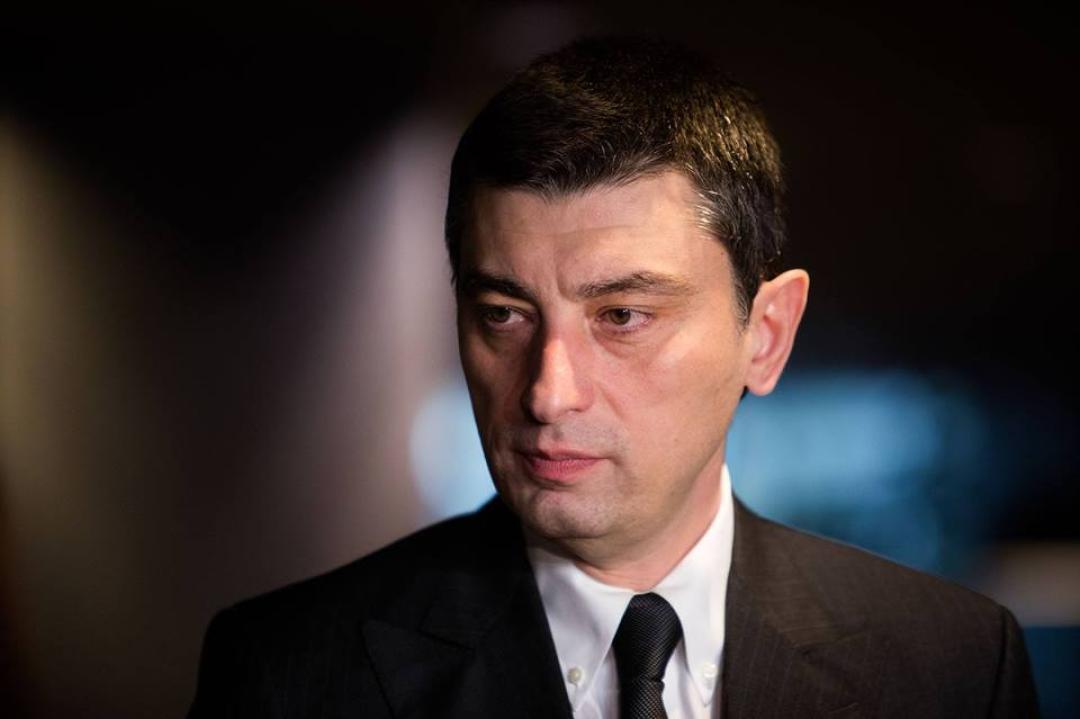
The Georgian Prosecutor’s Office has launched an investigation into former Interior Minister and Prime Minister Giorgi Gakharia, currently the leader of the opposition party For Georgia, focusing on his role in the 2019 decision to establish a police checkpoint near the village of Chorchana, close to the Russian-occupied Tskhinvali region.
On June 14, Vakhtang Gomelauri—who succeeded Gakharia as interior minister and previously served as head of the State Security Service—testified before prosecutors. His appearance followed his resignation announcement two weeks earlier.
In a statement released the same day, the Prosecutor’s Office confirmed it is examining Gakharia’s actions on August 24, 2019, as part of a broader criminal probe into alleged sabotage. The case also involves wider accusations, including support for foreign-controlled entities and activities allegedly aimed at undermining Georgia’s constitutional order and national security. Gomelauri was summoned as a witness in this context, given his role during the 2019 events.
The decision to establish a Georgian police post in Chorchana heightened tensions with Russian-backed de facto authorities in Tskhinvali, who promptly demanded its removal. It marked one of the rare instances under the Georgian Dream government when state security services visibly resisted such demands from the occupying forces.
Although Georgian Dream nominated Gakharia as prime minister shortly after the incident, the checkpoint issue later surfaced in a parliamentary commission, led by Tsulukiani, tasked with investigating alleged abuses during the United National Movement era. Gakharia complied with the commission’s summonses, unlike opposition figures such as Nika Gvaramia and Zurab Japaridze, who faced imprisonment for noncompliance.
During his April testimony before the commission, Georgian Dream lawmakers criticized Gakharia for allegedly failing to coordinate the checkpoint decision with other relevant bodies, including the State Security Service. They argued this lack of coordination provoked the de facto Tskhinvali authorities to escalate their activities, including establishing new checkpoints and advancing the occupation line.
Gakharia defended his decision, asserting that the move was a preemptive measure to counter a land grab attempt by then-de facto leader Anatoly Bibilov, who, he claimed, sought to claim Chorchana territory for South Ossetia using a falsified 1922 map. Gakharia maintained that all relevant officials were informed about the operation.
Gomelauri, however, expressed a different view. Speaking to the press before his questioning, he stated, “Of course I was against [opening the checkpoint]; of course it should not have been done.”
The investigation appears wide-ranging. Prosecutors have linked the case to an earlier probe launched this year, which led to the freezing of solidarity funds used to cover fines for demonstrators and searches of fund administrators’ homes. Charges under consideration include sabotage and providing aid to foreign-controlled organizations engaged in hostile acts against Georgia.
Opposition leaders view the investigation as politically motivated. Tinatin Bokuchava of the United National Movement suggested the authorities are using the probe to pressure Gakharia into participating in the upcoming local elections. In a Facebook post, she described the move as presenting Gakharia with a stark choice: “Either prison or collaboration in a so-called ‘special operation’ called the local elections.”
The United National Movement has pledged to boycott the October municipal vote, while Gakharia’s For Georgia appears inclined to participate. Bokuchava also recently alleged that her husband was abducted and forced to issue a video apology for past statements regarding the sexual orientation of Bidzina Ivanishvili’s son—an accusation Georgian Dream denies. Fellow UNM MP Ana Tsitlidze suggested the incident was intended to pressure their party into reversing its boycott stance.
Below is the corrected version of the provided article. I have focused on improving grammar, punctuation, clarity, and consistency without altering the structure or adding new content.
On June 16, Thea Tsulukiani, the Chair of the Temporary Investigative Commission in the Georgian parliament, emphasized that Giorgi Gakharia had already received official notification and expressed hope that he would attend the scheduled session. She recalled Gakharia’s earlier claim that "not a single centimeter of territory was occupied" following his decision on the placement of a post and that the central government of Georgia had maintained control. However, she pointed to conflicting testimony from a resident of Tsagveri given the previous week, who stated that Russia had seized the entire forest, advancing deeper into Georgian territory than before.
Tsulukiani stressed that the sharp contradiction between Gakharia’s statements and the local resident’s account necessitated further questioning, as it was the commission’s obligation to seek clarity. She also noted that inquiries would cover the period from 2012 to 2025, including the years after Gakharia’s resignation when he entered the opposition, as well as his and his party’s activities on the international stage and their relations with foreign partners.
On the same day, Beka Liluashvili, a member of the opposition For Georgia party, stated before a temporary parliamentary commission led by Thea Tsulukiani that the establishment of a Georgian checkpoint in Chochana, located in the territory of de-facto South Ossetia, was the only instance in Georgian history when the country’s territorial interests were defended without military escalation.
Responding to the commission’s questions, Liluashvili emphasized that Giorgi Gakharia, the current leader of the For Georgia party, "defended national and territorial interests" during the incident. He underlined that this operation had been conducted under the Ministry of Internal Affairs, led by Gakharia, with the coordination of all relevant state bodies, and succeeded in safeguarding Georgia’s national and territorial positions without risking escalation.
Liluashvili also accused the prosecutor’s office and the investigative commission of conducting political persecution against Gakharia, noting that such actions had been ongoing for some time. He recalled previous incidents, including "well-known threats" against Gakharia and his team, followed by an organized assault in Batumi involving an ambush by armed men and surveillance. According to Liluashvili, the investigation into the Batumi attack had been stalled for five months, with crucial surveillance footage concealed and no progress made by the prosecutor’s office.
He further cited an attack at Tbilisi International Airport and Gakharia’s summons to the commission as part of a broader scheme to lay the groundwork for criminal and political persecution. Liluashvili concluded by declaring these incidents a clear example of political reprisals, asserting that they revealed “who is the real problem for Georgian Dream.”