
Georgian Parliament Commission Accuses 'Saakashvili Regime' of Torture, Murders, and the 2008 War
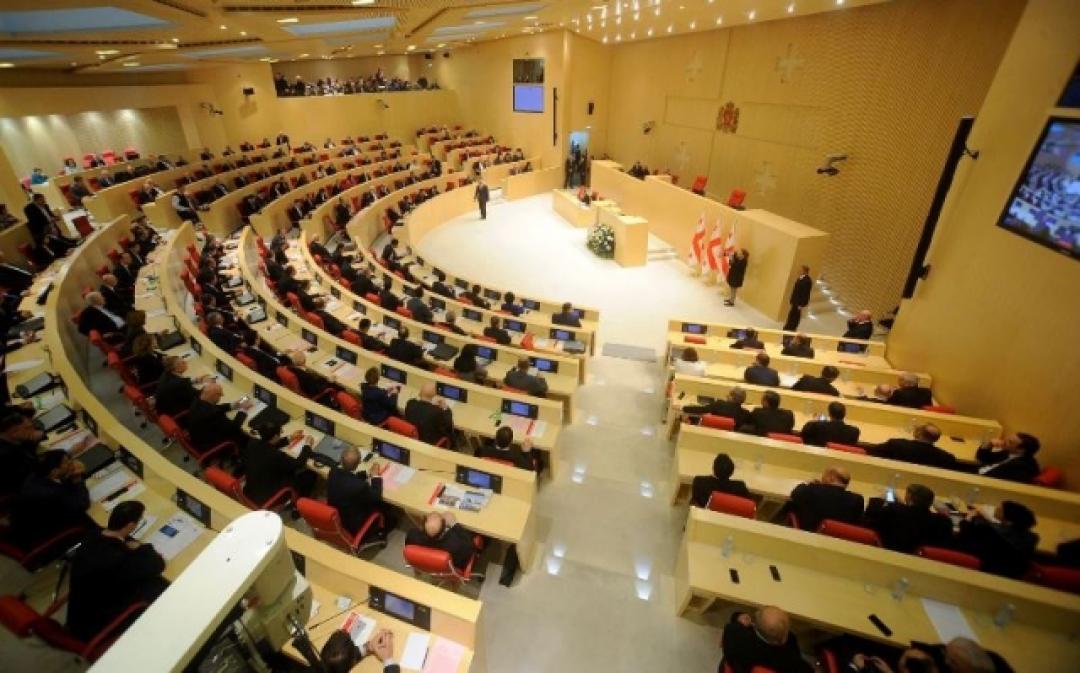
The Georgian Parliament's website has published a 473-page report by an investigative commission, established by the ruling Georgian Dream party, to examine the activities of the United National Movement government during Mikheil Saakashvili's presidency (2004–2012).
The document claims that during Saakashvili's rule, the country had a "widespread and systematic practice of torture and inhumane treatment" of detainees and prisoners. According to the commission, the cruel treatment was pervasive, elevated to the level of state policy, and accompanied by "terror with the complicity of high-ranking officials."
Among the commission's key findings:
The report also documents cases of murder, rape, and the falsification of criminal cases in which, according to the commission, representatives of the authorities were involved. The European Court of Human Rights, as noted in the document, issued hundreds of decisions against Georgia, with about 80% of them concerning the period of the "National Movement's" rule.
The commission claims that the "Saakashvili regime" massively violated the right to privacy through illegal wiretapping, surveillance, and the dissemination of compromising materials. The report details the existence of a "black archive" with secret recordings that can still be used for political purposes.
A separate section is devoted to corruption and "business racketeering," alleging that entrepreneurs were subjected to pressure, arrests, and coercion to hand over property. The materials also mention representatives of private banks, including TVS Bank (whose founders, Mamuka Khazaradze and Badri Japaridze, are serving prison terms for failing to appear at a commission meeting).
The report also claims that the decisions of Saakashvili and his team damaged the country's territorial integrity and the peace process, starting with the closure of the Ergneti market and the termination of programs in the Tskhinvali region:
"It is clear that in August 2008, the Georgian army found itself drawn into a war led by politicians far removed from military affairs. They, counting on the help of external forces and ignoring the opinion of the Georgian military, launched an offensive on the city of Tskhinvali and identified this settlement as the main direction of military operations."
According to the report, "as a result of the August 2008 war, 111 more settlements were added to the 363 settlements previously occupied by Russia in the Tskhinvali region. The Kodori Gorge, previously under the control of the central government, also came under Russian occupation."
The document notes that "after the August 2008 war, Georgia's territorial integrity was violated in 2019 as a result of the unilateral decision of the Minister of Internal Affairs Giorgi Gakharia to build a checkpoint in the village of Chorchana."
The report also says: “The facts established by the commission in connection with the construction of the Chorchana checkpoint, taken together, raise a number of legitimate questions: was there an attempt then to artificially create a hotbed of tension in Georgia—similar to what happened in 2008—and what role did former Minister of Internal Affairs Giorgi Gakharia play in these events, as well as the head of the National Security Council apparatus Kakhaber Kemoklidze, who until July 2019 headed the information and analytical department of the State Security Service and for many years was the main negotiator on behalf of the central government at meetings within the framework of the incident prevention and response mechanism.”