
Georgia’s Political Playbook: When Sport Becomes a Tool of Power
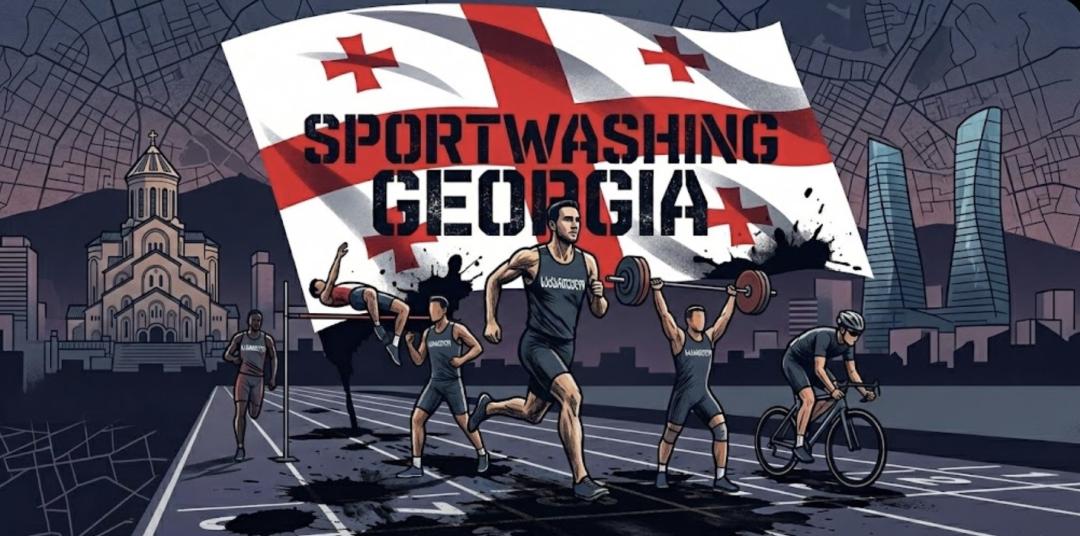
In Georgia, sport has long carried significance far beyond entertainment. For a small nation, it has provided a central platform to assert national identity, project resilience, and gain international recognition, despite limited political and economic strategic positioning. Individual and team victories in wrestling, football, rugby, basketball, and other disciplines have often been interpreted as national triumphs, reinforcing a collective sense of pride, dignity, and fulfillment. Sports have often united Georgians across political, regional, and social lines, offering moments of shared celebration in a country often challenged by internal and external struggles. Indeed, Georgian fans are remarkably loyal and emotionally invested. This devotion, while admirable, creates a powerful opportunity for political actors seeking to associate themselves with national success. It is precisely this sensitive context that makes Georgia particularly susceptible to sportswashing.
Sportswashing refers to the deliberate use of sport to improve reputations, divert attention from controversy, or reinforce authority. It is a strategy employed by governments, corporations, or political actors who seek to convert the emotional power of sporting success into social or political capital. Sporting achievements, events, and affiliations can be used to project competence, benevolence, and national prestige, while simultaneously deflecting attention from governance shortcomings, controversies, or ethical concerns. Globally, this has been observed when political regimes or corporations attach themselves to major events, teams, or athletes to bolster their image. What makes sportswashing particularly effective is that sport is emotionally resonant, widely followed, and often perceived as apolitical, allowing audiences to connect with achievements on a personal and national level without questioning the underlying political context.
The country has historically produced few widely celebrated success stories and has a limited number of independent public figures able to influence social norms, making athletic achievement an outsized symbolic weight. This scarcity of unifying Georgian influencers makes sporting success one of the primary arenas through which decency, excellence, prestige, and socio-political messaging can be projected. Ruling party political leaders exploit this dynamic by positioning themselves alongside athletes in highly visible ways, transforming individual or team accomplishments into instruments of symbolic authority.
This takes the form of public appearances with prominent sports figures, featuring athletes in political campaigns or party lists, targeted social media PR content highlighting these associations, or ceremonial gestures such as presenting symbolic gifts or hosting athletes at official venues. By linking themselves to sporting success, officeholders leverage the popularity and convert the credibility of athletes to create a “positive” reflection of their leadership, thereby framing narratives of competence, benevolence, or national identity. These mechanisms are particularly effective due to the deeply rooted emotional connection fans have with sports.
In modern-day Georgia, public celebrations of sports success increasingly overlap with political discourse, turning moments that should unify the public into experiences of division and hostility. Fan communities, which historically provided a sense of shared joy and honor, are now caught in the currents of ideological conflict and political polarization. Government officials, affiliated interest groups, and even co-opted athletes often insist publicly that sports and politics are separate, promoting curated slogans of neutrality or detachment. Yet in practice, these claims are largely performative, serving to normalize selective political narratives while suppressing dissent. The resulting double standards, where certain voices are amplified and others are marginalized under the guise of “apolitical” sport, risk undermining the authenticity of public celebration and eroding trust and synergy between athletes, fans, and the broader society.
While enhancing political legitimacy for those in power is one of the most immediate consequences of sportswashing, its impact reaches far beyond the approval ratings or perceived competence of government officials. The manipulation of sporting success has significant social repercussions. First and foremost, as noted earlier, social cohesion is undermined when disagreements over athletes or teams are automatically interpreted as political opposition, or conversely, when support for certain sports figures is assumed to indicate alignment with the ruling party. This practice affiliates individuals with specific political groups even when their subjective opinions are unrelated to party politics. By doing so, ordinary differences of perspective are transformed into markers of disloyalty or betrayal, serving to demonize and dehumanize members of the public.
If current patterns continue, several developments are likely in Georgia. Athletes may increasingly be expected to participate in political messaging, either explicitly through public statements or implicitly through the connection of their public image with crafted narratives. More recently, a growing number of high-profile sports faces have also begun adopting a more assertive and, at times, openly critical stance toward their own fans, criticizing them for expressing disappointment and frustration about poor performances or the failure to meet national expectations shaped by Georgia’s past sporting successes. This dynamic creates a one-sided interaction in which athletes feel entitled to public admiration, while offering little civic accountability, all while remaining silent or indifferent to the inhumane or unfair treatment many citizens face in the broader political situation.
In this case, the longstanding goodwill and unconditional loyalty of Georgian fans are taken for granted as an indulgence, leaving political players free to exploit this emotional bond for their own political motivations and short-term electoral gains. On top of that, what we are already seeing is that financial incentives and sponsorship opportunities, often tied to pro-ruling party or government-loyal businesspeople with political mandates, tend to favor athletes who align with government-endorsed messaging, while those who maintain independence may receive selective and comparatively less acknowledgment.
Over and above that, in Georgia’s current social and political context, citizens operate within a highly sensitive and often hostile informational ecosystem, where fans and athletes become co-opted participants in these manipulative processes, with fans serving as proxies of social validation and athletes as direct actors whose public image is leveraged far beyond the sporting arena. This environment contributes to social polarization and the radicalization of public opinion, as loyalties and disputes in sport increasingly mirror broader extensions of political divisions rather than genuine appreciation of national sporting success.
The instrumental use of sport in civic discourse is escalating to the point where discussions of governance, public policy, and societal challenges are overshadowed by symbolic narratives tied to sports achievement and performative patriotism, while even critical conversations about sports tend to be politicized, simplified, or labeled in ways that reduce complex issues to partisan messaging. Perhaps most subtly, sportswashing in the Georgian case subverts the public’s ability to distinguish genuine achievement from political technology manipulations and propaganda. When all of this gets mixed, the latter artificially redirects public attention and judgment, shaping perceptions of both athletes and the state in ways that reinforce authority while discouraging critical engagement.
Sport in Georgia is essentially a national and public project. It is funded by taxpayers, represents the country internationally, and embodies collective effort and dedication. Because of this, it is inherently political, yet that does not justify the co-optation, manipulative politicization, or weaponization of sports to deepen polarization or radicalize public sentiment. Critical discussion about systemic shortcomings or imbalanced development in Georgian sport is vital, but it should not be hijacked for one-sided controllable agendas of certain political/ideological bubbles.
Monopolizing sporting success, turning it into a tool of exclusion based on perceived moral superiority, or setting communities against one another ultimately harms society and jeopardizes the mutual benefits of the common good. If anything, such strategies backfire, sidelining what truly matters, creating the illusion of greatness and well-being through sportswashing, and especially when athletes themselves distance and turn away from fans, remaining passive, isolated, or disconnected from the wider obligations and influence their public role carries.
Contributed by Luka Okropirashvili for Caucasus Watch