
Kiriyenko's Visit to Separatist Abkhazia: Support to Russia and Explanation of Local Political Rivalries
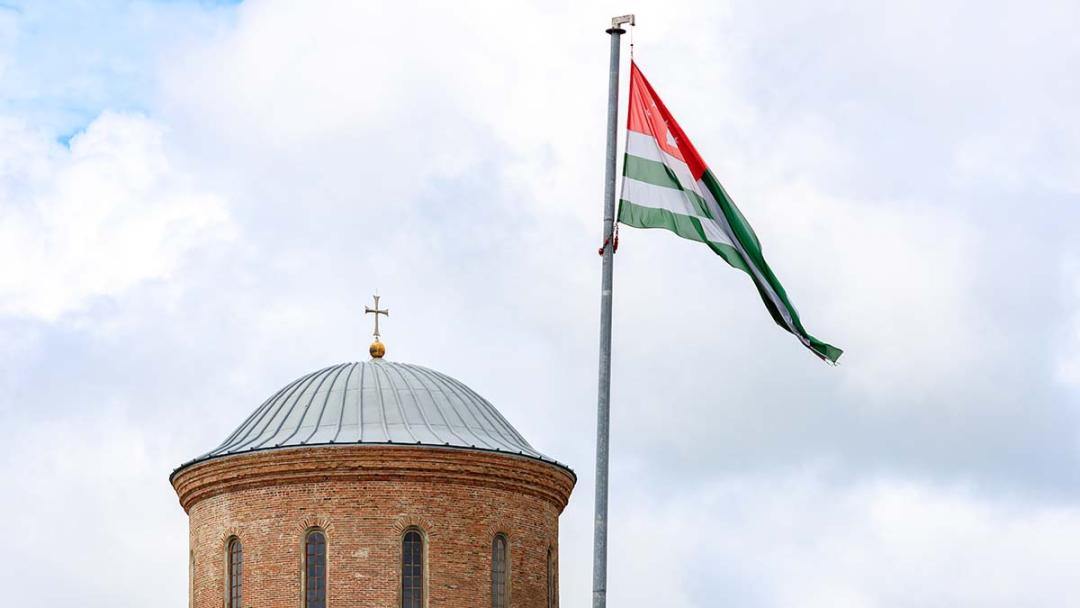
On December 3, during a working visit to the separatist Abkhazia, Sergey Kiriyenko, the First Deputy Chief of Staff of the Presidential Administration of the Russian Federation, stated that the region could not be assessed through social media narratives. In an interview with local television channels, Kiriyenko emphasized that there were no anti-Russian sentiments within Abkhazian society, arguing that existing statements were driven by political and economic motives.
He added that closer cooperation with Russia undermined the interests of groups that had previously benefitted from activities such as mining, illegal taxi services, and customs evasion, noting that "hundreds of millions are now going into the budget, not into someone's pockets". Discussing critical statements toward Russia, Kiriyenko stated that their origins were political.
According to him, Abkhazian political life was shaped by two widely shared ideas, both "not without historical justification": the belief that sovereignty, security, and stability were achievable only through partnership with Russia, and the fear that "excessive embracing" could enable a takeover. He explained that when one political force appealed to the first idea, its competitors inevitably turned to the second in order to mobilize public support.
Kiriyenko also addressed the case involving Russian political strategists who worked for the Abkhazian Herald newspaper during the local government election campaign and who, according to him, violated the laws of the unrecognized republic. He stated that they had breached both the legal requirements and the ethical norms expected of a guest, and that responsibility for these violations should be determined by investigators and the court. At the same time, he condemned the violent attack against them, noting that they had been beaten for an hour and stressing that lynching was unacceptable.
Kiriyenko added that "Russia will always protect its citizens," emphasizing that anyone who used violence against Russian nationals would be held accountable under Russian law. He noted that this principle was equally important for Abkhazia, where the vast majority of residents also held Russian citizenship.
Addressing the future of bilateral relations, Sergey Kiriyenko stated in an interview with Abkhaz television channels that Russia sought a long-term strategic partnership and friendship with Abkhazia and the Abkhaz people, stressing that such relations should not depend on the outcome of electoral cycles. He noted that these priorities had been defined by Russian President Vladimir Putin and that work was underway to implement them.
Responding to local journalists’ questions about "hypothetical doubts" regarding Russia’s decisions on certain individuals, Kiriyenko emphasized that citizenship issues fell under exclusive state sovereignty. He stated that such decisions were never made instantaneously and "never for words, but for actions". Recalling that more than 3,000 individuals had been stripped of Russian citizenship in recent years—only three of them residents of Abkhazia—he explained that the measure was not exceptional but was carried out in the interest of national security.
Kiriyenko further stated that the increase in these decisions was linked to the ongoing war, including what he described as a harsh information war. "In peacetime, you can turn a blind eye to certain things. In wartime, you can’t," he emphasized, adding that Russia would not allow compromises on matters posing risks to national security.