
Nikol Pashinyan's Visit to Moscow: NPP Lifespan Extension, Cooperation With Russia and Belarus, SMR Projects, Meeting with Putin
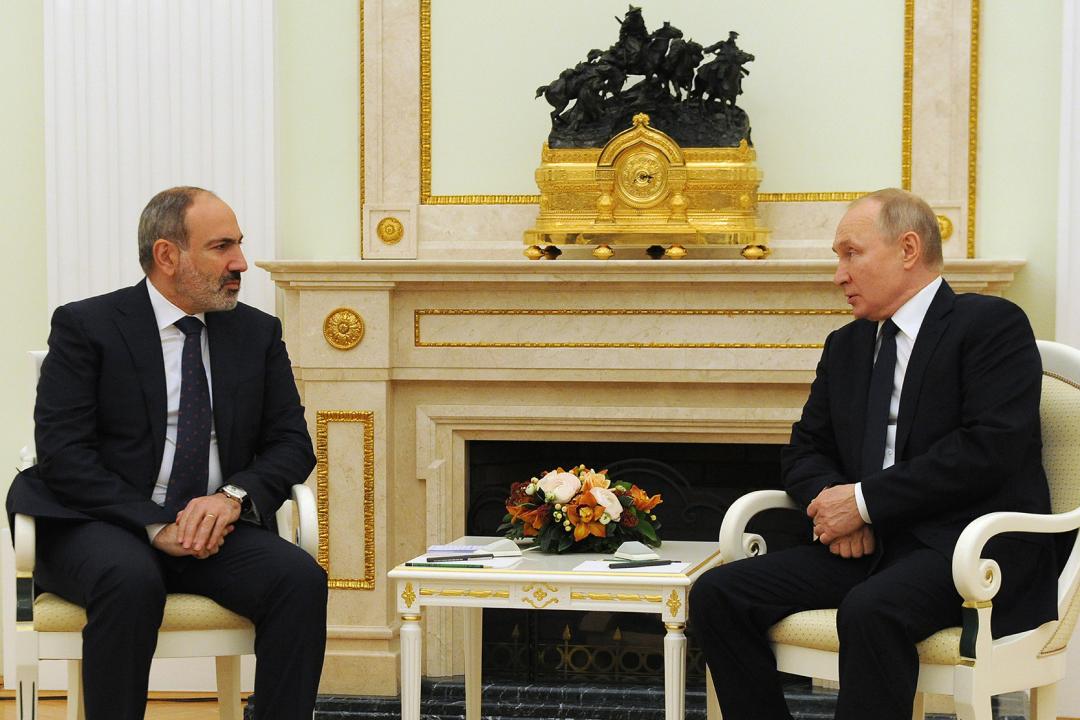
During a working visit to Moscow on September 25–26, Armenian Prime Minister Nikol Pashinyan participated in the World Atomic Week, praised Armenia’s nuclear energy achievements, explored cooperation with Russia and Belarus, and met with President Vladimir Putin to advance bilateral relations and nuclear energy projects.
Pashinyan's Speech at "World Atomic Week"
On September 25, Nikol Pashinyan, the Prime Minister of Armenia, arrived in Moscow on a working visit, where he participated in the "World Atomic Week" conference alongside several international leaders. During his speech at the forum, Pashinyan congratulated Russia on the 80th anniversary of its nuclear industry, praised Armenian expert Eduard Saakov, and emphasized nuclear energy’s role in reducing carbon emissions, ensuring energy security, and supporting economic growth. He stated that around 30% of Armenia’s electricity is generated by the Armenian Nuclear Power Plant (NPP), whose safe operation remains a strategic priority for the government. Pashinyan highlighted Armenia’s compliance with IAEA standards and explained that modernization efforts had extended the plant’s lifespan until 2026, with a new decision having been taken to further extend it until 2036 in cooperation with Rosatom and other partners. He added that Armenia’s long-term goal is to build a new power unit while ensuring international cooperation and safety. Pashinyan also underlined the importance of non-energy applications of nuclear technologies, including in medicine, agriculture, and science, stressing Armenia’s commitment to the peaceful use of nuclear energy and further cooperation with the IAEA and partner countries.
Rosatom CEO and Belarusian President Offer Assistance In Nuclear Development
During the event, Belarusian President Alexander Lukashenko offered Armenia assistance in developing nuclear technology, stating that Belarus and Russia were ready to jointly build nuclear power plants in partner countries. Addressing Pashinyan, Lukashenko emphasized that Belarus would help ensure Armenia’s national interests in the nuclear field. Rosatom CEO Alexei Likhachev also addressed Pashinyan, recalling the resilience of the Armenian NPP during the 1988 Spitak earthquake and calling it a source of shared pride. He expressed support for Armenia’s plans to extend the plant’s operation until 2036 and its exploration of new nuclear energy solutions, assuring that Rosatom would work to protect Armenia’s interests and future energy policy.
Meeting with Vladimir Putin
On September 26, Nikol Pashinyan, the Prime Minister of Armenia, met with Russian President Vladimir Putin at the Kremlin to discuss bilateral relations and nuclear cooperation. During the meeting, President Putin welcomed Pashinyan, noting Armenia’s reliance on nuclear energy, with its nuclear power plant providing 30 percent of the country’s electricity. He emphasized Rosatom’s ongoing work to extend the plant’s lifespan and highlighted the steady development of bilateral ties, pointing to a record trade turnover of $11.7 billion in 2024, which accounted for 34 percent of Armenia’s foreign trade. Prime Minister Pashinyan expressed gratitude for the invitation to the World Atomic Week forum and underlined the growing global role of nuclear energy as a green option. He confirmed Armenia’s cooperation with Russia and Rosatom in extending the Armenian Nuclear Power Plant’s operation until 2036, while also exploring small modular reactor projects suitable for Armenia. Addressing trade relations, Pashinyan acknowledged a slight decline in 2025 due to global challenges but stressed the importance of sustaining growth at the levels achieved in 2023 and 2024. He concluded by noting the broad agenda of Armenian-Russian relations and the need for continued dialogue.