
OSCE Ministerial Council Ends Minsk Process Activities
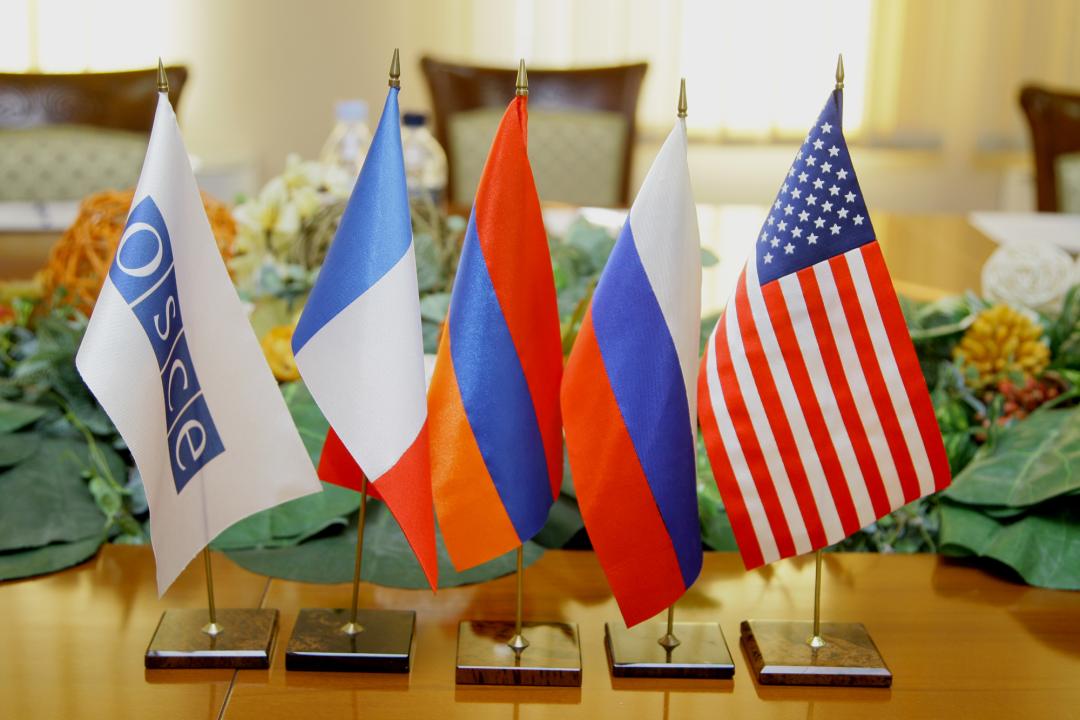
On September 1, the OSCE Ministerial Council adopted a decision to terminate the activities of the OSCE Minsk Process and its related structures. The decision officially ended the activities of the OSCE Minsk Process as of September 1, 2025, following a joint appeal by the foreign ministers of Azerbaijan and Armenia to the OSCE Chairperson-in-Office. As part of the decision, the roles of the OSCE Chairperson-in-Office’s Personal Representative on the Armenian-Azerbaijani conflict and the High-Level Planning Group were also discontinued.
The OSCE Secretariat has been tasked with completing all organizational and technical matters related to the closure of these structures no later than December 1, 2025. Additionally, all previous OSCE resolutions concerning the former Armenian-Azerbaijani conflict were declared null and void. The Azerbaijani Foreign Ministry's statement emphasized that "all OSCE participating States have officially acknowledged that the institutions once created to address the Armenian-Azerbaijani conflict are no longer necessary under the new conditions that emerged after the resolution of the conflict."
Elina Valtonen, the OSCE Chairperson-in-Office and Foreign Minister of Finland, welcomed the decision, stating, "I would like to once again extend my warmest congratulations to Armenia and Azerbaijan on their historic agreements towards peace and normalization of relations and their resolute decision to start their prompt implementation. I have responded without delay to their Joint Appeal and would like to express my sincere appreciation to the parties for their excellent co-operation in the process. I also would like to commend participating States for their collaborative spirit in achieving this consensus." OSCE Secretary General Feridun H. Sinirlioğlu described the unanimous decision of all 57 member states as "a historic development that underlines what diplomacy can achieve, even after decades of conflict and mistrust. It demonstrates that agreement remains possible when there is a shared determination between parties to find common ground."
Gaya Mammadov, an MP and head of the Azerbaijani Parliament delegation to the OSCE Parliamentary Assembly, noted that the closure of the Minsk Process marks a diplomatic success for President Ilham Aliyev and paves the way for a fair and sustainable peace in the region. He emphasized that the decision "means that the former Armenian-Azerbaijani conflict is completely removed from the OSCE agenda. It is recognized that the conflict has been resolved within the framework of Azerbaijan's territorial integrity and sovereignty. This also confirms the collapse of a diplomatic model that tried to circumvent the norms of international law." Mammadov added that the decision brings Azerbaijan and Armenia closer to signing a peace treaty and strengthens security and cooperation in Europe.
The OSCE Minsk Process, initiated in 1992, was a diplomatic effort led by the Organization for Security and Co-operation in Europe (OSCE) to mediate the conflict between Armenia and Azerbaijan over the Nagorno-Karabakh region. The Minsk Group, co-chaired by France, Russia, and the United States, aimed to facilitate a peaceful resolution through negotiations. Despite numerous attempts, the process faced significant challenges, including periods of heightened tensions and military confrontations. In recent years, particularly following the 2020 Nagorno-Karabakh war, the Minsk Group's role became increasingly contentious. Azerbaijan, asserting that the group's efforts had been ineffective, called for its dissolution as a precondition for advancing peace negotiations. This stance was supported by Turkey, which aligned with Azerbaijan's position. Conversely, Armenia expressed concerns about the dissolution, fearing a reduction in international oversight and support.
A significant development occurred on August 8, 2025, when Armenian Prime Minister Nikol Pashinyan and Azerbaijani President Ilham Aliyev, with U.S. President Donald Trump's mediation, signed a Joint Declaration in Washington, D.C. This agreement outlined a future peace accord and included a joint appeal to the OSCE for the dissolution of the Minsk Group.