
Pashinyan Reaffirms Armenia’s Peace with Azerbaijan; Rejects Opposition Claims About Nagorno-Karabakh
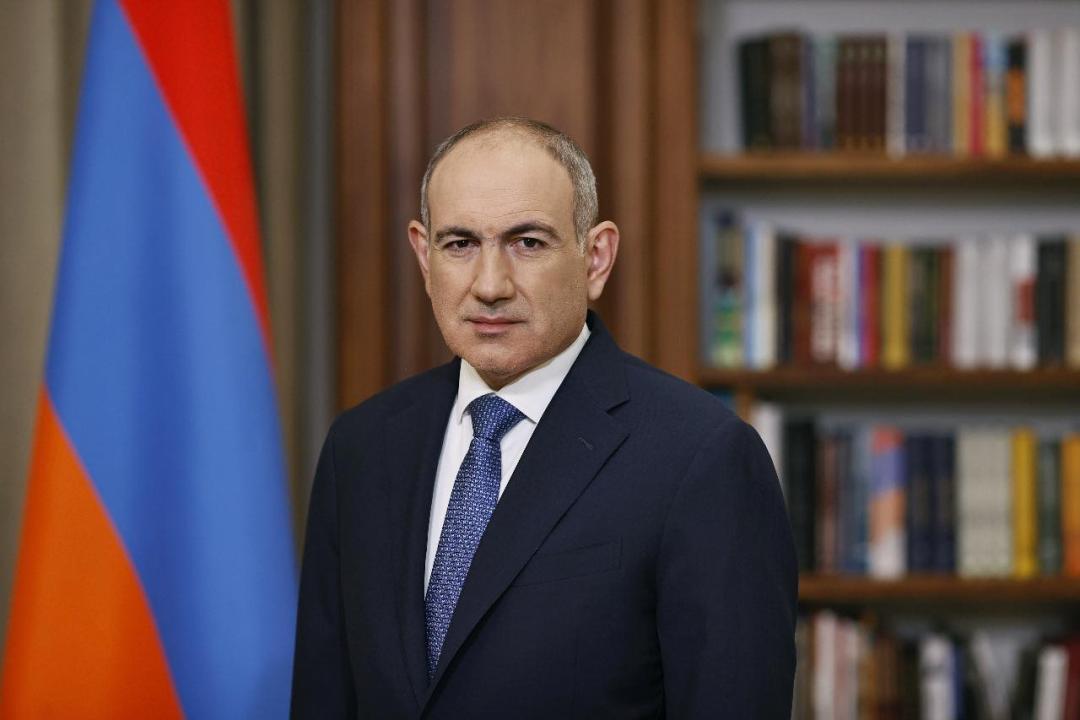
On December 3, during the discussion of the draft 2026 state budget in the National Assembly, Armenian Prime Minister Nikol Pashinyan delivered a series of statements addressing the negotiations, domestic political debates, and the broader trajectory of Armenia. The Prime Minister of Armenia stated that the opposition had shifted from demanding the publication of the negotiating package to repeating "old narratives," which he described as long outdated. He argued that the opposition continued to insist that negotiations "should have been this way, should have been that way," and emphasized that those who had held power for decades bore responsibility for failing to use the opportunities they now claim existed. According to him, either "there was a chance for a pro-Armenian solution, and you didn’t take it," or the entire narrative was "just a scam".
He reiterated that the 2019 document presented to him was prepared before his tenure, noting that it referenced a "President of the Republic of Armenia," a position he had never held. He explained that after becoming Prime Minister in 2018, he had requested clarity from the co-chairs regarding which document summarized the previous stage of negotiations. The June 2019 document, he stated, had been presented as such a summary. Pashinyan continued that when he asked the co-chairs whether these documents meant that Nagorno-Karabakh could not be part of Azerbaijan, he received a "crystal clear" answer: "Yes, if Azerbaijan agrees". He said that this view was also consistent with Serzh Sargsyan’s address from the parliamentary podium in April 2018. According to him, any citizen reading the published negotiation package "from beginning to end" would no longer have unanswered questions.
Pashinyan emphasized that the government did not possess any package related to the Key West negotiations. He clarified that the "ideological basis" of Key West was what Levon Ter-Petrosyan had once provided to the Haykakan Zhamanak newspaper and published. He referred to a detailed report released by Radio Liberty, asserting that "there’s nothing to discuss" regarding the matter.
Pashinyan added that 2026 would be an intensive year for Armenia, hosting the European Political Community summit, the COP-17 biodiversity summit, and parliamentary elections. He expressed optimism, stating that peace had been established between Armenia and Azerbaijan and that the task now was to maintain and institutionalize it. He reflected that even a slight increase in trust between the two countries created significant practical results and noted that he felt "much more optimistic" about peace prospects than he had in mid-August 2025. He further stated that the people of Armenia must support peace in the 2026 elections, calling it "their peace, the peace of their children, their family, their grandchildren, and their great-grandchildren," and paid tribute to the fallen.
Pashinyan underlined that when he spoke of the "government," he included the parliamentary majority, since the cabinet depended on it. He praised the majority’s work, stressing that the most important achievement was not economic indicators but the fact that Armenia had been taken "out of a geopolitical trap" and onto a path with new opportunities. He noted that the increase in public debt from 2018 to 2024–2025 was almost entirely tied to defense spending, amounting to $4.4 billion in capital expenditures. Another significant portion, he said, concerned support for refugees from Nagorno-Karabakh and related unforeseen expenses.
During government hour, the Prime Minister responded to allegations that Armenia had rejected a favorable offer in 2019. He emphasized that "not a single negotiating package stated" that a referendum should occur exclusively in Nagorno-Karabakh; instead, it referred to a nationwide referendum involving "the entire population of Nagorno-Karabakh," including the Azerbaijani community. He argued that the formulations meant that "no status for Nagorno-Karabakh could have been envisaged," referring to the 1996 OSCE Lisbon Summit document that outlined international expectations that Nagorno-Karabakh receive self-governing status within Azerbaijan. He called the contrary claims "propaganda talk" repeated for decades in Armenia and insisted that if earlier authorities had considered the proposals good, they should have resolved the issue at that time.
In turn, responding to MP Artur Khachatryan, Pashinyan, the Prime Minister, emphasized that the 2019 document reflected the logic of the previous period and that those in the coalition previously had the opportunity to settle the issue. He recalled asking whether Nagorno-Karabakh could avoid being part of Azerbaijan under the package and receiving the response: "It could, if Azerbaijan agreed". He explained that all packages eventually annulled the 1991 referendum. Pashinyan also stated that the people of Armenia had given the "green light" to the peace process.
He argued that the negotiations had not aimed to resolve the Nagorno-Karabakh conflict but rather to keep Armenia and, to some extent Azerbaijan, in a geopolitical trap, preventing Armenia from becoming an independent state. He reiterated that Armenia had "escaped the trap," asserting that this was the most promising period in centuries and that intuition—both his own and that of the people—had guided decisions. He noted that previous authorities should no longer be discussed, as "there is nothing left to say". According to him, the published Karabakh package itself proved that point. He added that instead of focusing on opponents, the government should highlight accomplishments such as hundreds of kilometers of newly built roads, schools, and major reforms in the education sector.
Pashinyan stated that the government was examining the reopening of small airports in different regions, including Stepanavan, Shinauyr, Sisian, Gavar, and Berd. He explained that the Yerevan–Kapan flight had been suspended due to aircraft maintenance but assured that efforts were underway to find another aircraft and increase commercial interest in the subsidized route.
During government hour, MP Agnesa Khamoyan criticized the government for allegedly presenting a publication by Levon Ter-Petrosyan as a negotiating document and questioned why the Key West document had not been published. She referenced Tatul Hakobyan, who had seen it in 2005, and accused Pashinyan of misleading the public regarding Artsakh. Pashinyan responded that the government possessed no Key West document because it had been an incomplete and conspiratorial draft linked to political events such as October 27. He criticized those dismissing Ter-Petrosyan’s writings, pointing out their own cooperation with him after 2020. He argued that if Key West had been a good plan, previous authorities would have implemented it and reminded that they themselves had rejected Key West in favor of the 2007 Madrid Principles. He added that his generation remained loyal to the ideals of the Karabakh movement, even if those ideals later collided with geopolitical realities. Responding to accusations of fear, he said that if he had been afraid, he would not have signed the November 9 document, and stressed that the fear had been of losing Armenia’s statehood, not of political attacks.
Pashinyan assured that severe steps would be taken against the criminal subculture, responding to an inquiry about a beating incident in Noyemberyan College. He stated that the phenomenon was rooted in societal issues, reinforced by certain community leaders, and demanded "harsh, drastic, and harsh measures". He also blamed social media’s influence, noting that some democratic countries restricted teenage access. He stated that the government’s greatest mission was to bring peaceful development to the region. Addressing the opposition, he claimed that they had spent years trying to change the government but failed even to organize rallies of significant size.
The Prime Minister explained that he had not spoken publicly about the negotiation process earlier because he lacked sufficient facts and had spent years assessing the documents. He recalled summoning former foreign minister Zohrab Mnatsakanyan for explanations, only to conclude that the minister "was telling fairy tales". He added that networks of agents of influence in Armenia had been identified and neutralized. Criminal cases were underway, and "everything is known," including the sources of funding and control. According to him, the absence of political turmoil proved the effectiveness of these measures. He stated that the state now acted with the "steel hammer" demanded by the people.
During the same session, Pashinyan explained that some details in the negotiation documents could not be publicly disclosed due to international sensitivities, though they could be understood "between the lines". He reiterated that if previous governments had an option ensuring Nagorno-Karabakh’s Armenian status, they should have implemented it. He again stated that the Karabakh issue had effectively been resolved in 1996 and that the real question had been "in whose pocket Armenia should be". He concluded that Armenia now stood outside anyone’s pocket and had chosen the path that ensured the country’s continued existence. He also referred to the European Union’s allocation of 15 million euros to support peace and resilience, stressing the importance of combating disinformation through international cooperation.