
Pashinyan Warns Against Historical Narratives; Emphasizes Border Delimitation, Regional Trade, and Normalization with Turkey
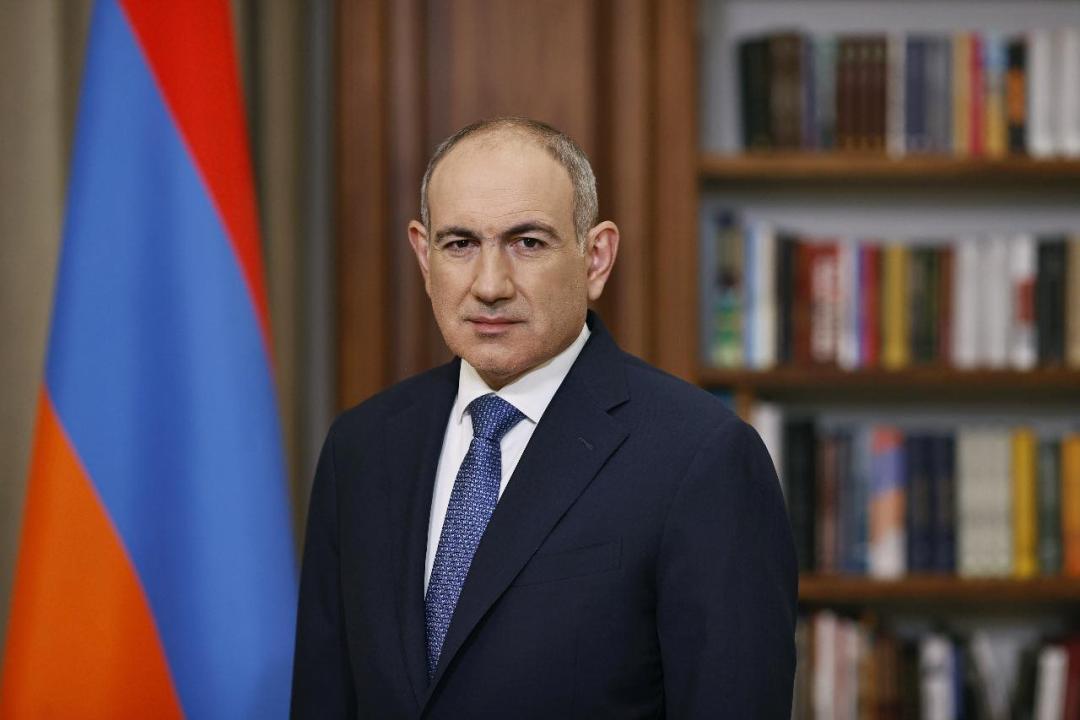
On November 4, at the Orbeli 2025 International Forum, Armenian Prime Minister Nikol Pashinyan urged careful handling of refugee and Nagorno-Karabakh return discussions, warning that historical narratives risked reviving old conflicts, while emphasizing Armenia’s leadership in fostering peace with Azerbaijan, advancing border delimitation, regional trade, foreign partnerships, and the normalization of relations with Turkey. Pashinyan stated that discussions about the return of Armenians to Nagorno-Karabakh were harmful and that the broader refugee and internally displaced persons agenda posed dangers, as it risked reviving the old parameters of the conflict. He recalled that after returning from the Washington summit, he had warned against such approaches and reiterated his long-held belief that the notion of a "historical homeland" must be transformed into a "real homeland."
He stated, "Do we want to nurture peace or not? The will of the government and people of Armenia is that they will continue to nurture the peace that was created by our own hands, the hands of Armenia and Azerbaijan, and this is unique. This value requires special care; we must reconsider many of our perceptions. We must be careful with history." The Prime Minister commented on the psychological challenges that citizens of Armenia and Azerbaijan might face once border crossings open, noting that while some fear brief interactions, others still demand the return of refugees displaced from Nakhichevan, Baku, and Kirovabad. "There’s a distortion of logic in this case," he emphasized. Pashinyan stated that a long-term strategic agreement accepting each other’s territorial integrity based on the Alma-Ata Declaration, unblocking communications under the Washington Declaration, delimiting borders, and mutually respecting sovereignty would ensure lasting peace and stability between Armenia and Azerbaijan. He stressed that although the conflict was "politically over," it remained unresolved "socio-psychologically." Pashinyan argued that overcoming a 30-year-old conflict required political leadership, asking, "Do we want to be consumers of history or creators of it? The experience of the last two years suggests that we can be creators of history, which doesn’t mean forgetting history."
Referring to history, Pashinyan criticized the selective use of historical narratives, saying that some political groups in both Armenia and Azerbaijan used past names like Artsakh, Kovsakan, and Basargechar as ideological reference points. "As long as the name Basargechar is heard in Azerbaijan, the names Artsakh and Kovsakan are heard in Armenia. This in itself is a problem," he stated. He warned that using history as the main justification for present-day politics undermined peace, adding, "If we try to find the justification and logic for our actions in history, it means we don’t believe in peace. Peace doesn’t generate debate, but harmony. Established peace requires daily maintenance and further institutionalization, which is an ongoing effort."
Pashinyan described Armenia’s success story as beginning in 2024 with the start of the border delimitation and demarcation process in the Tavush region, which faced internal criticism but later gained acceptance. He said, "So far, I haven’t received a single negative reaction to anything we’ve demonstrated on the ground, and this is a very important success story that has continued." The Prime Minister highlighted that the regulation on the joint activities of delimitation and demarcation commissions had been signed and ratified in both countries, marking the first legally binding interstate documents between Armenia and Azerbaijan. He called this development "the cornerstone of the establishment of interstate relations" and a turning point, as both countries effectively recognized each other’s territorial integrity within the former Soviet borders.
Pashinyan pointed to the peace summits held in Washington on August 8, 2025, as a major achievement, resulting in a declaration and the initialing of an agreement on the establishment of peace and interstate relations. "Thus, peace has been established between Armenia and Azerbaijan," he stated. However, he cautioned that peace remained an unfamiliar concept for both nations, as their independence had emerged "within the logic of conflict." Addressing symbolic disputes, Pashinyan said that questions in Azerbaijan about Nagorno-Karabakh flags hanging in the Armenian parliament had led to rhetoric such as, "Since that’s how it is, we’ll say ‘Goycha.’" He added that such exchanges only deepened divisions: "After this, Azerbaijan is saying, ‘Look, they said Jarakan, let’s call Yerevan an ancient Azerbaijani city.’ This is the wrong path." Pashinyan also referred to Azerbaijani President Ilham Aliyev’s remark that maps from Tsarist Russia showed no reference to "Sevan" but another name, urging a more balanced approach to history. He described the "return to the historical homeland" narrative as dangerous, questioning where such a timeline should begin—"the 1970s BC" or the early 20th century. The Prime Minister stressed that Armenia was capable of assuming political leadership and called on those unwilling to do so to "say so directly." He also confirmed that EU observers would remain in Armenia until the signing of a peace agreement with Azerbaijan, after which discussions on their role and format would follow.
Pashinyan reiterated the importance of implementing the "Trump Roadmap for International Peace and Prosperity," which involves Armenia, Azerbaijan, Iran, Russia, Georgia, the EU, the US, China, Turkey, and Central Asian states. He described it as "a guarantee that this project will not only be implemented but will also become the most successful project in modern history, bringing revenue, security, and stability to the countries." He further announced that cargo from Kazakhstan would soon arrive in Armenia via Azerbaijan and Georgia, calling it proof that the unblocking of regional communications had become a reality and expressing gratitude to the President of Azerbaijan for cooperation.
During the same forum, Pashinyan said that during his last working visit to Turkey, he officially invited President Recep Tayyip Erdogan to Yerevan for the European Political Community Summit and hoped the invitation would be accepted. He highlighted his frequent meetings with Erdogan and noted that he had already visited Turkey twice, including on a working visit. According to him, the normalization of relations, establishment of diplomatic ties, and opening of the border were only a matter of time, influenced by both political will and "gravitational factors." Commenting on Armenia’s foreign policy, Pashinyan referred to the strategic partnership document signed with China, which includes references to the "Crossroads of the World" and "One Belt, One Road" initiatives, emphasizing their complementarity with the Middle Corridor project. He described this as the essence of Armenia’s "balanced foreign policy," based on complementarity rather than competition among interests. He added that while some partners had initial concerns after the signing of the Washington Declaration, they later began to show interest in regional developments. "As a result of the implementation of the Washington agreements, Iran will gain a transit route to and from the Black Sea. Georgia’s transit capabilities in the Black Sea–Persian Gulf direction will increase. Furthermore, there are discussions about Russia potentially establishing a railway connection with Armenia via Azerbaijan," Pashinyan emphasized.