
Russia Supports Armenia-Azerbaijan Talks, Criticizes Western Interference
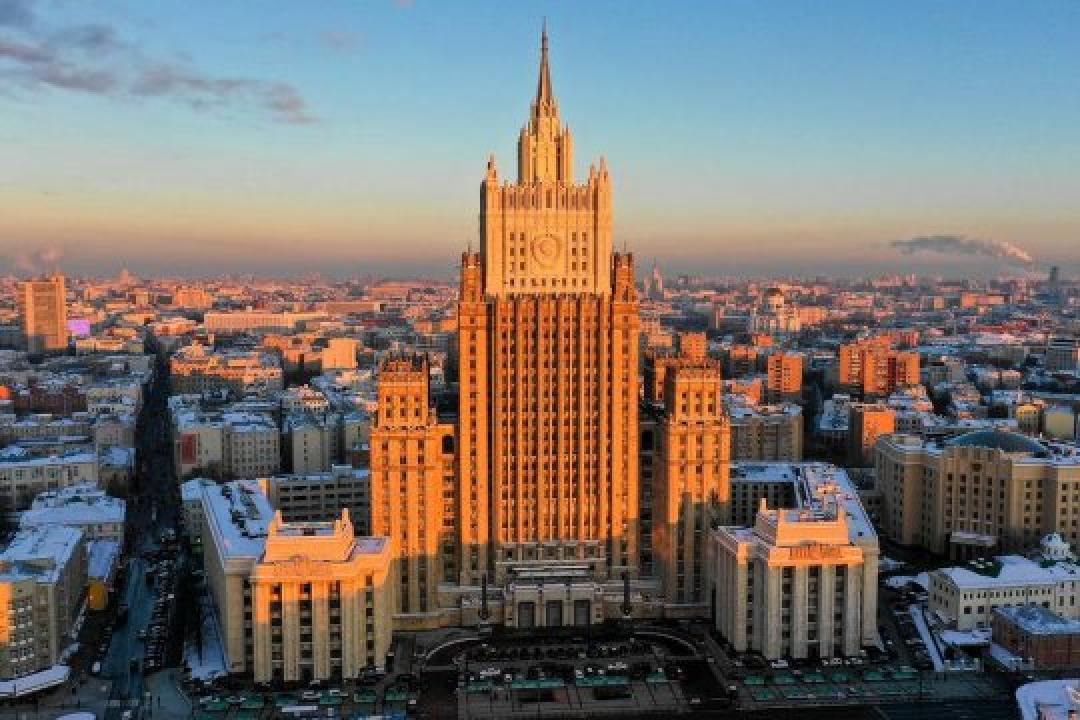
On July 24, Russian officials reaffirmed Moscow’s support for negotiations between Armenia and Azerbaijan concerning the Zangezur corridor. Concurrently, representatives from both Armenia and Russia voiced criticism of Western involvement, describing it as a threat to regional stability and sovereignty.
Dmitry Peskov, the Russian Presidential Press Secretary, emphasized that the status of the "Zangezur corridor" is a sovereign issue for Armenia and Azerbaijan to resolve. He stated that Moscow offers its strong support for the ongoing negotiations between the two nations. In a statement to journalists, Peskov reiterated, "This is a sovereign matter for Armenia and Azerbaijan," adding, "We strongly support the negotiations between Azerbaijan and Armenia. We wish for both Baku and Yerevan to sign the agreement as soon as possible."
Meanwhile, Armenia has rejected a U.S. proposal to lease the 42-kilometer road through its Syunik province, which is often referred to as the "Zangezur corridor." Arman Egoyan, Head of the National Assembly's Commission on European Integration, explained the decision by stating, "We saw the danger of ceding sovereignty." He clarified that the Armenian government is prepared to "consider the issue of unblocking the region's communications within the framework of observing the principles of sovereignty, jurisdiction, reciprocity, and territorial integrity."
Maria Zakharova, the official representative for the Russian Foreign Ministry, issued a warning that increasing Western participation in the normalization process between Baku and Yerevan could create a regional imbalance. She suggested that "the West's true motives behind yet another good intention conceal a purely opportunistic task." Zakharova argued that Western efforts are aimed at separating the Armenian-Azerbaijani normalization from its regional context. She described this as an attempt to "pull the Armenian-Azerbaijani normalization out of the regional dimension," away from the constructive efforts of neighboring countries like Russia, Iran, and Turkey, who have historically aided in reconciliation.
Zakharova cautioned that Western nations are trying to move the reconciliation process "to their own tracks," which could disrupt the regional security system and undermine the principle of regional self-sufficiency. Criticizing Washington's involvement in efforts to lift the regional transport blockade, she remarked, "The Americans, for example, say that they allegedly have... ‘a unique solution to the issue.’ In fact, they cannot offer anything new." She attributed the stagnation of the trilateral working group, co-chaired by the deputy prime ministers of Russia, Armenia, and Azerbaijan, to the "destructive influence of Westerners on the position of the Armenian authorities."