
South Caucasian Reactions to the US Military Operation in Venezuela
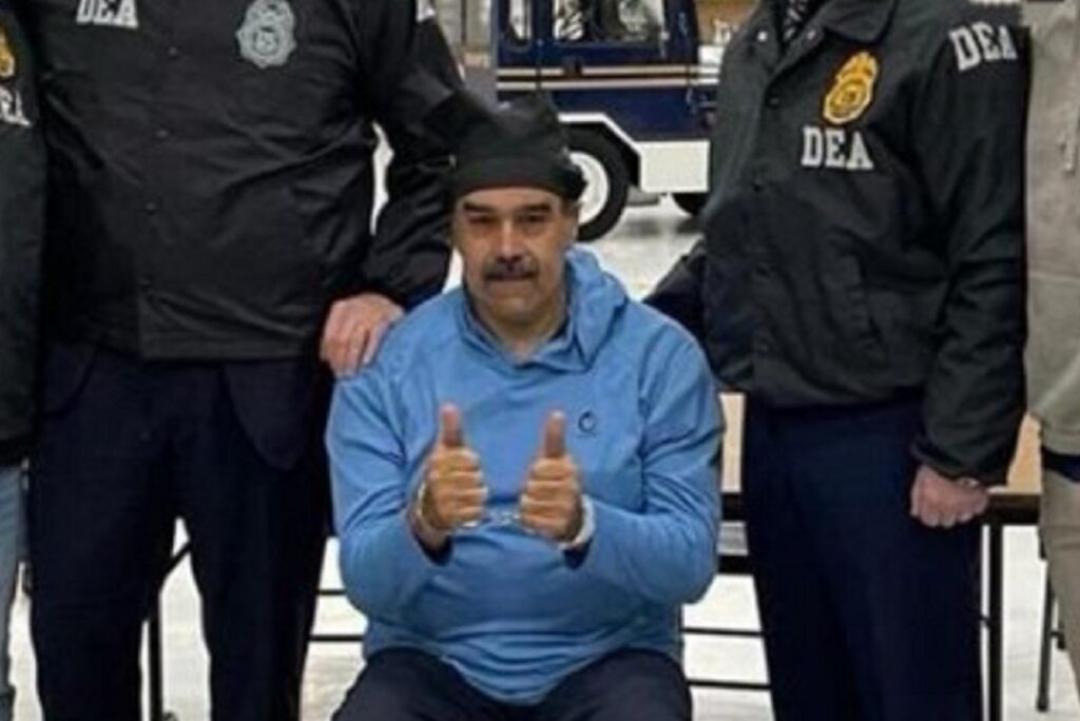
In the early hours of January 3, 2026, shortly after 02:00 local time, the United States conducted a large-scale military operation in Venezuela that resulted in the detention of Nicolás Maduro, the President of Venezuela . US officials stated that the operation, designated as Operation Absolute Resolve, involved coordinated airstrikes and special operations forces targeting military and strategic facilities around Caracas . Subsequently, Maduro and his wife, Cilia Flores, were captured and flown to the United States to face narcotrafficking and related criminal charges in a federal court in New York City . Meanwhile, Delcy Rodríguez, the Vice President of Venezuela, was declared acting president by authorities in Caracas and denounced the action as a "kidnapping" .
Reactions from the South Caucasus and the International Community
International reactions followed swiftly . António Guterres, the United Nations Secretary-General, criticized the use of force, emphasized the need to respect international law, and urged all parties to pursue peaceful resolutions . Officials in Beijing and Moscow issued strong condemnations; China’s Foreign Ministry stated it was "deeply shocked" by the use of force against a sovereign state, while Russian officials characterized the operation as an act of "armed aggression" . Leaders in several European countries also reacted; officials in France and Germany underlined the primacy of international law, warning that no durable political solution could be imposed from the outside and calling for restraint and dialogue instead of military escalation . A group of Latin American governments, including Brazil, Chile, Colombia, Mexico, Spain, and Uruguay, issued a joint statement condemning the intervention, emphasizing that it undermined sovereignty and peaceful dispute resolution while threatening regional stability and civilian safety .
Representatives of the de-facto authorities in the separatist, Russian-occupied regions of Abkhazia and South Ossetia voiced concern and condemned the US military action and the detention of Maduro . While Tbilisi initially remained silent, the de-facto Foreign Ministry in Tskhinvali stated that the strike constituted "a gross violation of the UN Charter and the fundamental principles of international law" and warned of "unpredictable consequences for peace and stability in Latin America and the Caribbean" . Oleg Bartsits, the de-facto Foreign Minister of Abkhazia, reportedly called for an end to "the aggressive actions by the United States," and his deputy confirmed that staff at the so-called Abkhazia Embassy in Venezuela were safe .
Georgia’s Foreign Ministry later stated it was "closely following" developments in Venezuela following the US military operation and the detention of the Venezuelan leader . The Ministry expressed hope that future processes would unfold in line with the interests of the Venezuelan people and could lead to a reversal of Caracas’s recognition of Georgia’s Russian-occupied regions . The statement added: "Given that the Venezuelan authorities recognized Georgia’s occupied regions, Abkhazia and the so-called South Ossetia, as independent states in gross violation of international law, we express hope that recent developments will lead to the reversal of this unlawful decision, in line with Georgia’s national interests and international legal principles" .
As of January 5, 11:00 (CET), Armenia and Azerbaijan had not issued any official statements regarding the developments .