
Wings of Unity Presents Armenia’s Strategic Development Program
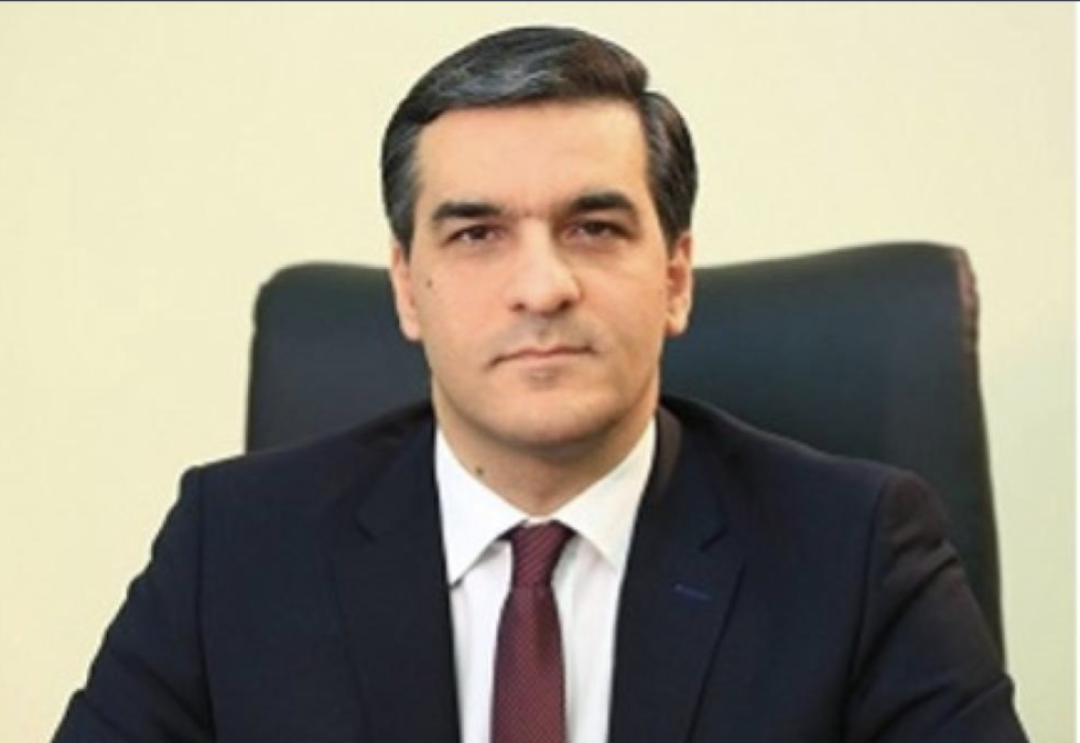
On February 28, David Ananyan, a member of the Wings of Unity political initiative, presented the program of the initiative, stating that Armenia’s future will be determined by choice, not circumstance. "Today we are making this choice—we are choosing the path of a creative and victorious state," he emphasized.
Ananyan outlined seven strategic directions. First, Armenia aims to define its role in the global economy by creating a modern digital state with educated and highly qualified citizens. The initiative seeks to transform Armenia into an international economic hub with transparent rules, convert science into technology, and technology into exportable products. A favorable tax and investment environment will be established to attract domestic and foreign investments, while selected industries will be prioritized to make Armenia a manufacturing and technological nation.
Second, Armenia will pursue industrialization with the establishment of industrial zones nationwide, from Syunik to Tavush and Ashotsk to Armavir. The first industrial zone will open in Ashotsk, promoting regional employment and community development. Third, a sustainable system for small and medium-sized enterprises will be implemented, supported by a simplified and balanced tax system. Fourth, the initiative aims to foster domestic capital to reduce reliance on debt financing.
Continuing, Ananyan emphasized that the fifth direction involves mobilizing the economic potential of the Diaspora, the sixth is creating a balanced, development-focused tax system, and the seventh is building a digital, transparent, and reliable state.
On the same day, Arman Tatoyan, leader of Wings of Unity and former Armenian Ombudsman, criticized the government’s handling of national security. He stated that Azerbaijan has reinforced existing posts and established new ones on Armenian territory, strengthening control over these areas. Tatoyan highlighted repeated concessions by the Prime Minister and called for an end to amending the Constitution to suit individual leaders or foreign pressure. "Some want to amend the Constitution so that their leader can become prime minister, others to fulfill the demands of the Azerbaijani state. But let's be honest: the problem isn't the Constitution; the problem is that we don't believe it's necessary to comply with it," he said.
Tatoyan warned that Armenia faces a vicious cycle of political narratives, perpetuated by criticism of former presidents and nostalgia for past victories. "Nikol Pashinyan offers us a formula: guilt, humility, capitulation. We offer a new formula: mistakes, lessons, rebirth," he added. The initiative’s goal is to break this cycle and strengthen Armenia’s security, democracy, economy, and national dignity.
Tatoyan presented specific measures to ensure national defense and security. He announced the creation of a special commission on military reforms on his first day in office. Within six months, the commission will develop a comprehensive strategy with immediate implementation. By the end of the first year, Armenia will establish a fully functional deterrent capability, and by the end of the first term, a military balance with transparent public reporting will be achieved. Defense spending will amount to at least 8% of GDP, with a minimum of $500 million annually allocated to develop the national military-industrial complex. Tatoyan also promised immediate publication of the parliamentary commission report on the 44-day war.
Regarding Karabakh, Tatoyan emphasized the protection of the rights of its people and their safe return. "The people of Karabakh were subjected to ethnic cleansing. They are our compatriots; our blood, my blood, flows in their veins. Karabakh is an integral part of Armenian identity," he said. Cooperation with international partners, including France and the US, will continue to ensure security.
Education and technology are central to the initiative. Tatoyan highlighted plans to transform Armenia into an intellectual hub for the South Caucasus with support from the Diaspora, promoting fair opportunities and future-oriented education for youth. "Education will become predictable, and young people will have a real opportunity to build themselves," he stated.
The initiative also seeks to restore Armenian history and end interference in the Church. "The war declared today against the history of the Armenian people will end immediately…Armenia should be a country where the clergy does not need to engage in politics, and the state does not interfere in the internal affairs of the Church," Tatoyan said.
Tatoyan stressed Diaspora integration and the fight against oligarchy and corruption, prioritizing national interests. Regarding urban development, he highlighted issues in Yerevan, calling for proper infrastructure planning in new neighborhoods to include schools, parks, and roads. "If you build a neighborhood, you have to build a school, a park, and a road. No infrastructure—no permits," he emphasized.