
Zakharova Outlines Challenges and Realities of Armenia’s EU Ambitions and Russian Relations; Responds to Karapetyan Arrest
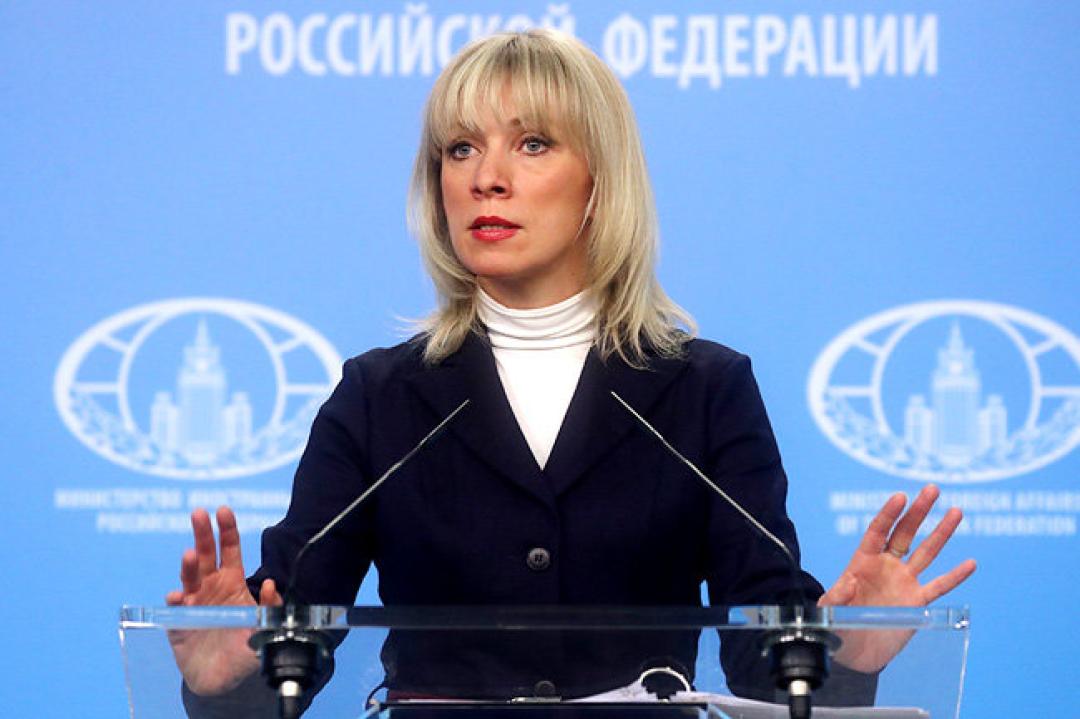
On June 19, Maria Zakharova, Spokeswoman for the Russian Foreign Ministry, addressed multiple issues related to Armenia, the South Caucasus region, and Russian-Armenian relations during a weekly briefing.
Zakharova acknowledged the realism in Yerevan’s statements regarding the incompatibility of Armenia’s membership in the Eurasian Economic Union (EAEU) with potential accession to the European Union. She emphasized that Armenia has not yet attained EU candidate status and noted that the accession process could take decades. Zakharova also questioned whether the EU genuinely seeks to integrate Armenia or merely views it as a temporary geopolitical tool, citing Ukraine and Moldova as examples of countries that have fallen into political and economic dependence on Brussels once EU interest waned. She warned that if Armenia were to leave the EAEU, it would lose benefits such as free movement of goods and services, favorable customs duties, and advantages in labor, technical regulations, and sanitary standards, which could lead to higher prices and decreased competitiveness. "All these consequences need to be understood now—so that later the people of Armenia do not ask why they were not told about this," she stated.
Regarding the issue of Russian troops in Armenia, Zakharova said that despite wide-ranging dialogue between the two countries, this matter has never been raised in practical terms by Yerevan. She acknowledged that while relations between Russia and Armenia involve some problems and tensions, it would be inaccurate to say they have only improved or warmed. Zakharova described the situation as having "issues and drama."
In response to a question about Azerbaijani President Ilham Aliyev’s possible plans to open the so-called Zangezur corridor amid the Iranian-Israeli conflict, Zakharova expressed reluctance to speculate or discuss the topic, quoting the Russian president’s remark: "I don’t even want to think about it, I don’t even want to discuss it." She emphasized that Russia’s efforts focus on de-escalating regional tensions, especially concerning Iran and Israel’s actions, and noted that Moscow is actively working with Armenia and Azerbaijan through relevant working groups to normalize the situation. Zakharova underscored the deep historical ties Russia shares with both Armenia and Azerbaijan, as well as its developing relationship with Iran, stressing the importance of achieving stability and economic consolidation in the region.
Concerning the recent arrest of Samvel Karapetyan in Armenia, Zakharova stated that the Russian side is awaiting clear information regarding the accusations before commenting further. She reaffirmed that as a Russian citizen and businessman, Karapetyan would receive necessary assistance from Russian authorities.
Finally, Zakharova emphasized that unblocking transport communications in the South Caucasus must proceed exclusively through peaceful means. She noted that the most reliable way to lift the regional transport blockade is to resume cooperation within the trilateral working group co-chaired by the deputy prime ministers of Russia, Armenia, and Azerbaijan. Zakharova highlighted that at their last meeting in Moscow in June 2023, the parties came close to agreeing on most practical issues.