
After the Alliance: Armenia's Search for Security in a Post-Russian World
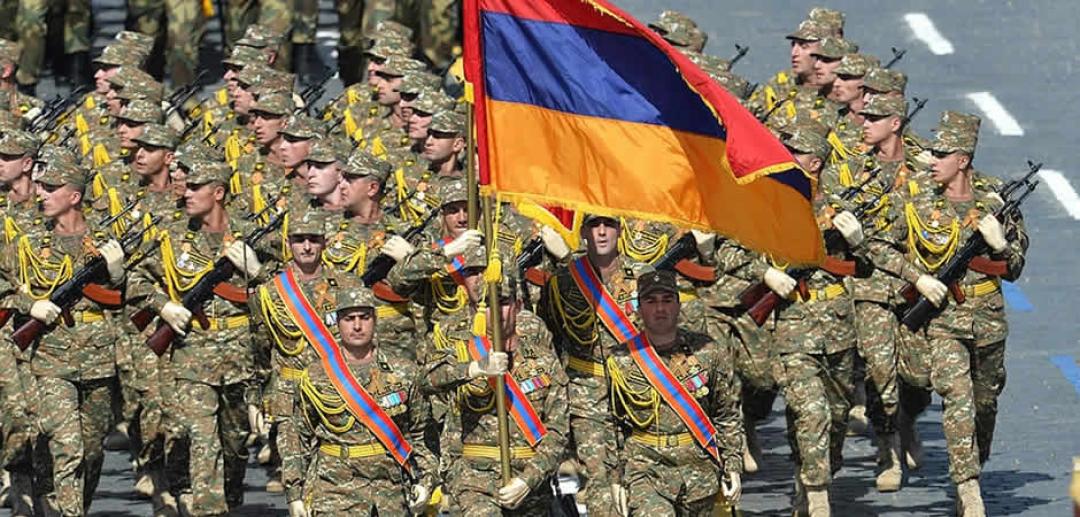
The cornerstone of Armenia's post-Soviet security policy has long been its alliance with Russia. In the aftermath of independence, this relationship was underpinned by CSTO membership, Russia's 102nd military base in Gyumri, and the 1997 bilateral treaty. For decades, these structures were presumed to offer a reliable deterrent against threats from Azerbaijan and Turkey.
But the events of the past few years have unraveled this assumption. In 2020, during the 44-day war in Nagorno-Karabakh, the Armenian side suffered a painful defeat, losing control of territories it had held for centuries. Russia’s role in brokering the ceasefire was seen by many in Armenia as lukewarm and belated. The presence of Russian peacekeepers in Nagorno-Karabakh was intended as a stabilizing measure, but their mandate was limited and ultimately ineffective in deterring further aggression.
Then came 2022, and with it the Russian invasion of Ukraine. As Moscow redirected its focus and resources to the war in Europe, its capacity and willingness to project influence in the South Caucasus significantly declined. Russia was no longer able to deliver the weapons Armenia had already paid for. For a country that had relied on Russia for nearly 100% of its arms purchases, this created a major challenge: finding new markets and partners for defense procurement, especially at a time when Azerbaijani aggression against Armenia's sovereign territory had become a very real and growing threat.
The 2023 military operation by Azerbaijan, which led to the complete depopulation of Armenians from Nagorno-Karabakh, took place with minimal resistance from Russian forces stationed in the region. This was a turning point for many Armenians. Military analyst Leonid Nersisyan is clear about the depth of the rupture in Armenia–Russia military relations. “In my opinion, that connection is now close to zero, if we’re talking about military-technical cooperation,” he says. He notes that Russia had failed to deliver paid-for weapons to Armenia.
But beyond procurement, the military partnership has eroded across the board: “Since 2022, there have been no drills, not under CSTO, and not bilaterally. The troops at the 102nd Russian base in Gyumri are no longer training with Armenian forces.”
The CSTO and Armenia’s Disillusionment
Russia’s failure to intervene or even meaningfully react to repeated Azerbaijani incursions into Armenian territory in 2021 and 2022 severely eroded its image as Armenia’s protector. Many in Yerevan came to see the CSTO as a shell alliance, one that offered neither guarantees nor solidarity. Importantly, this disillusionment did not begin with the war in Ukraine. As early as May 2021, when Azerbaijani forces crossed into Armenia’s sovereign territory and seized positions in Syunik and Gegharkunik, Armenia appealed to the CSTO for support. However, the alliance failed to respond. Although the CSTO charter explicitly states that aggression against one member state is considered aggression against all, the organization cited the absence of a formally delimited Armenia-Azerbaijan border as a reason for inaction. This marked the beginning of a deep rift between Yerevan and its supposed allies.
The situation deteriorated further in September 2022, when Azerbaijan again launched incursions into Armenian territory, resulting in the occupation of more land. Once more, the CSTO remained passive. In response, Armenia turned to the European Union, inviting an EU monitoring mission to be deployed along its borders. The CSTO belatedly offered to send its observers, but the Armenian government declined the offer. Yerevan demanded that the CSTO clearly condemn Azerbaijan’s aggression and officially acknowledge the occupation of Armenian territory. This, too, did not happen. The lack of meaningful action, combined with diplomatic ambiguity from Moscow, cemented the perception in Armenia that the CSTO had not only failed in its purpose but had also become an obstacle to Armenia’s independent security strategy.
By early 2024, Armenian Prime Minister Nikol Pashinyan publicly declared that Armenia’s participation in the CSTO was "de facto frozen" and might also be "de jure" frozen if the alliance failed to reassess its stance. In September 2024, he went even further, stating that the CSTO was beginning to pose threats to Armenia’s security, sovereignty, and statehood.
“There is constant discussion about whether Armenia is trying to return to the CSTO or considering it. We will fully restore our participation in the CSTO only if we receive concrete answers to the questions we have raised. Two years have passed since we made that clear, yet no answers have been given—and it’s now evident that none will be. Or even if that’s not entirely obvious, I can say this: the longer those answers are delayed, and the less convincing they are, the more Armenia distances itself from the CSTO with each passing moment,” emphasized Prime Minister Pashinyan. This marked not only a diplomatic shift but a broader reassessment of Armenia’s strategic orientation.
Rethinking Defense: Armenia’s Military Procurement and Reform Imperative
As Armenia distances itself from Russia in security matters, it faces an urgent dual challenge: modernizing its armed forces while navigating a radically reshaped procurement landscape. Historically reliant on Russia for nearly all of its military needs, Armenia has found itself cut off from its primary supplier at a moment of heightened regional insecurity. This has forced Yerevan to seek out new defense partnerships, with both strategic and symbolic implications.
In recent years, Armenia has dramatically diversified its military procurement, signing new defense deals with India, France, and other suppliers. This shift is not just about replacing one vendor with another. It represents a deeper strategic recalibration, driven by the recognition that dependence on a single supplier, especially one as geopolitically constrained as Russia, has left Armenia vulnerable. India has emerged as a significant new partner, supplying Armenia with artillery systems, drones, and ammunition. For India, which is looking to expand its global defense exports and extend its geopolitical influence westward, the Armenian market is now a priority. In 2023, Armenia reportedly became India’s top customer for defense exports.
France has also stepped in, offering not only military equipment but political backing. In 2023, Paris committed to providing radar systems and strengthening Armenia’s air defense capabilities. French officials have been outspoken in their support for Armenia’s sovereignty and territorial integrity, signaling a broader shift in EU attitudes toward the South Caucasus. While the scale of French military assistance remains modest compared to what Armenia once received from Russia, the political messaging is potent.
Yet, according to experts, hardware alone is not enough. Military analyst Leonid Nersisyan warns that simply adding modern weapons to a structurally outdated army is unlikely to yield lasting improvements. “If we just imagine adding new tech to the army we had in 2019,” Nersisyan says, “yes, it’ll improve capabilities—but much less than if it’s combined with real reform.” This includes not only training and doctrine but also internal organization, strategic planning, and readiness for modern hybrid warfare. For Armenia, which has endured multiple rounds of aggression and shifting battlefield dynamics, the importance of reform is existential.
The shift away from Russia also creates a more competitive procurement environment. Freed from traditional constraints, Armenia now has access to a global marketplace of arms and training packages. As Nersisyan points out, this allows Yerevan to shop strategically, choosing high-quality systems from countries with technological advantages. “Why buy lower-quality equipment from the country you’re used to working with?” he asks. “When you diversify, you choose the best from different markets. It creates market competition—you get better offers.” This competitive edge has another benefit: political leverage. Defense partnerships, especially those involving long-term training, logistics, and co-production agreements, often spill into broader diplomatic relationships. By forging closer ties with India and France, Armenia is not just buying weapons—it is embedding itself in new geopolitical networks that may yield future benefits in diplomacy, trade, and regional support.
However, as Nersisyan notes, no matter how advanced the weapons or how deep the alliances, no foreign partner will fight Armenia’s battles for it. “They can sell weapons, offer cheap deals, help rebuild your army, but no one will fight in Armenia’s place. We saw that Russia didn’t show up. No one else will either.” Director of the Caucasus Institute and political analyst Alexander Iskandaryan does not view Armenia’s current strategy of diversifying its security allies as a proactive choice, but rather as a response to the collapse of the existing alternative.
“It’s hard to call this Armenia’s choice. Getting security or guarantees from Russia today is barely possible. This is not just some intellectual idea. It’s a forced position. If things were different, maybe there would be no need for this.” Iskandaryan notes that the current situation is not solely the result of Armenia’s present government. He recalls that even before the Russia–Ukraine war, back in 2021, there were plans to reform the Armenian army based on Russian models and narratives, following a similar logic to the reforms being implemented in Russia’s own military.
“But now, since that has become almost impossible overall, Armenia is trying to find alternative paths to ensure its security. The question, however, is how successful these efforts are and to what extent they can be implemented,” the political analyst adds. Moreover, he points out that Armenia’s foreign policy choices remain largely reactive. Despite new ties with India and France, much of the shift occurred only after the 2020 war, and under considerable duress. “Why France? That’s understandable, there are special ties. Why India? Less clear. But in any case, this is all being done reactively. It’s not strategic. It’s not part of a clear long-term vision. What—Armenia didn’t know India existed before 2020? Did we not know France had a special relationship with Armenia?”
This pattern of late response, he argues, reflects a broader lack of strategic foresight.
The shift also leaves Armenia in a geopolitical middle ground, too isolated from Moscow to count on its support, yet too distant from Western structures to benefit from full inclusion. The United States, despite some rhetorical support, has not made Armenia a foreign policy priority. “There is no coherent U.S. policy toward the South Caucasus,” Iskandaryan says. “And there won’t be. Armenia is not interesting enough for America.” Instead of choosing camps, Iskandaryan suggests Armenia should emulate the flexible approach taken by its neighbor and rival: “Azerbaijan doesn’t make civilizational choices. They work with Russia, the West, the Islamic world. Sometimes they clash, sometimes they cooperate. That’s the model. That’s normal politics.” By maintaining relations across ideological and geopolitical divides, Azerbaijan has preserved room to maneuver. For Armenia, achieving a similar level of balance may be key to long-term stability.
And yet, while distancing itself from Russia, Armenia cannot escape its geographic and geopolitical realities. Iskandaryan warns that illusions of full Western integration, whether into NATO, the EU, or a broader Western-led security framework, are misplaced. “Russia exists. And being a neighbor to our region, it influences our region and will continue to do so. Guatemala cannot ignore the United States. Luxembourg cannot ignore France. That is simply impossible. Russia, let us remember, is about 50 times larger than Armenia in population, 600 times larger in territory, and in military, economic, and other capabilities, it is perhaps hundreds of thousands of times more powerful—it’s hard to even quantify. And it is very close. In other words, the influence is there.” Even in the post-Ukraine war context, Iskandaryan sees no scenario in which Russia simply disappears from the South Caucasus.
Europe’s Incomplete Embrace and the Risk of Overreach
While Armenia’s turn to the West is increasingly visible, the road to genuine Western integration, especially with the European Union, remains narrow, slow, and full of constraints. Even as the EU expands its engagement with Yerevan, particularly through civilian missions, technical assistance, and diplomatic statements, the structural realities of European policy make it unlikely that Armenia will receive deep security guarantees or rapid institutional integration.
Armenia’s most significant formal agreement with the EU is the Comprehensive and Enhanced Partnership Agreement (CEPA), signed in 2017. CEPA mandates sweeping legal and economic reforms, with the aim of aligning Armenia’s domestic legislation more closely with EU standards. However, as Michael Emerson, senior fellow at the Centre for European Policy Studies in Brussels, notes: “The CEPA requires a vast number of legal reforms, but in practice, many of these are being largely ignored.” In short, CEPA offers a roadmap for Europeanization—but without the powerful incentive of EU membership. Armenia remains a member of the Russia-led Eurasian Economic Union (EaEU), a bloc that imposes its own regulatory framework and binds Armenia’s trade and customs policy to Moscow’s economic strategy.
For now, Armenia is caught between two economic and political systems, unable to fully commit to either. Emerson acknowledges this contradiction: “If Armenia did withdraw [from the EaEU], I guess it would face hostile responses from Russia.” Those responses might not be limited to economics. As Emerson points out, geopolitical signaling from Moscow has a coercive history. When Ukraine, Georgia, and Moldova sought EU association agreements in the past, Russia responded with political pressure, trade blockades, and even military force.
And yet, some in Armenia still harbor aspirations for deeper European integration. The idea of EU membership has periodically surfaced in political discourse, especially following major regional crises. But according to Emerson, such hopes remain premature. “If Armenia applied for EU membership, it would receive a polite response, but most likely not an agreement to ‘candidate’ status. Short of membership, the European Economic Area is an option, but that means adopting hundreds of EU laws without political status.” The reality is that while Brussels is willing to offer symbolic support and technical cooperation, it is not prepared to extend the kind of security umbrella or membership promise that would radically transform Armenia’s geopolitical standing.
The EU’s most significant security-related gesture has been the deployment of its civilian monitoring mission to Armenia’s borders. Though unarmed and limited in scope, the mission has had a tangible stabilizing effect, reducing cross-border violence and providing a form of international presence that Armenia lacked for decades.
“After it appeared, violent incidents decreased,” says Alexander Iskandaryan. “It’s not a solution, but it helps.” Nevertheless, this presence must be seen for what it is: a modest deterrent, not a military shield. European leaders have made it clear that the EU does not intend to become a security actor in the South Caucasus comparable to NATO. As the war in Ukraine continues to drain European bandwidth, Armenia is unlikely to move higher on the EU’s strategic agenda.
This leaves Armenia in a complex and precarious position. It is no longer aligned with Russia in practice but not yet integrated into the West. It has diversified its military suppliers, but lacks long-term security guarantees. It has partnered with EU institutions, but faces legal and political obstacles to further integration. Its strongest diplomatic supporters—France and India—remain limited in their ability to project power or enforce peace in the region.
Adopting Pragmatism in a Polarized Region
For now, Armenia must navigate a reality defined by uncertainty. Russian influence is waning but not gone. Western support is rising, but not guaranteed. Regional threats remain active and adaptable. And domestic reform, while essential, is uneven and slow. As Iskandaryan notes, the danger lies in confusing tactical flexibility with strategic clarity. Armenia must continue building partnerships, but it must do so with the sober understanding that no external actor will substitute for internal resilience. “Great powers are somewhat like God. They help those who try to help themselves. If that doesn’t happen, things will be very difficult. But to some extent, that support exists, and they try to assist in certain areas. It’s just that often, it’s not enough,” says Iskandaryan.
In this environment, Armenia’s best hope may lie not in choosing sides but in adopting a pragmatic, non-aligned strategy, borrowing a page from Azerbaijan’s foreign policy playbook. By maintaining open channels with multiple actors and avoiding overreliance on any one bloc, Armenia can preserve room to maneuver, adapt to shifting geopolitical winds, and steadily build the capacity to defend itself. The path forward will not be defined by easy victories or clear alliances. It will require realism, resilience, and a willingness to embrace complexity. For a nation that has already endured profound geopolitical shocks, that may be its greatest strength.
Contributed by Ani Grigoryan, the founder and editor of CivilNetCheck—a fact-checking department at CivilNet online TV.
Insights,
Politics,
Armenia |
EU, NATO, South Caucasus, Russia, Nikol Pashinyan, USA, CSTO, Armenia-Russia Relations, India, Ani Grigoryan