
Armenia’s EU Ambitions: Opportunity or Risk?
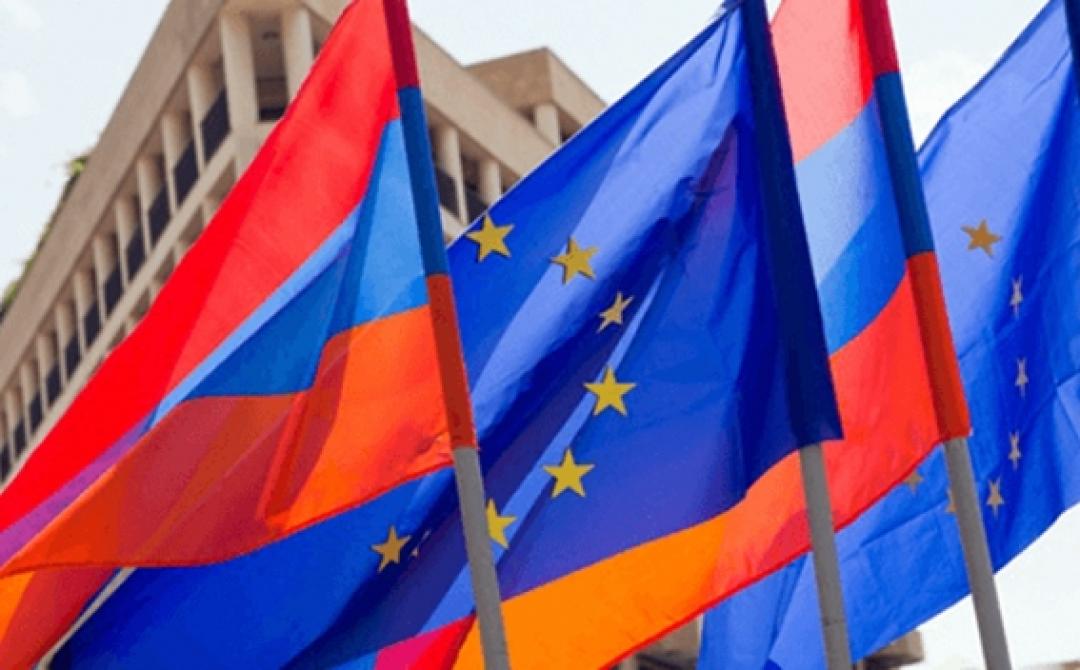
Armenia is considering a significant foreign policy pivot: moving from the Eurasian Economic Union (EAEU) to integration with the European Union. Such a shift carries profound economic implications. This article analyzes the economic trade-offs of Armenia’s Westward turn, assessing immediate risks versus potential rewards in the context of Armenia’s recent steps toward EU accession.
Background: Armenia’s Delicate Balance
Armenia has long maintained a balance between its ties to the EAEU and the EU. The country initially negotiated an EU Association Agreement in 2013 but, strategically, under pressure from Russia, shifted to join the EAEU due to its security dependencies on Russia. Economically, this choice tethered Armenia to the EAEU’s single market. A tariff-free trade with EAEU members, streamlined regulations for commerce, and reciprocal labor rights for Armenian workers across member states.
In early 2025, the Armenian National Assembly passed a resolution declaring an “irreversible” political will to pursue EU membership. Nonetheless, the legislative push crystallized Armenia’s geopolitical dilemma: can it pivot toward the EU without courting economic upheaval?
Economic Risks of Leaving the Eurasian Economic Union
Armenia’s exit from the EAEU raises immediate economic risks. First is the impact on trade. Armenia’s trade data reveal a strong economic dependence on Russia, which accounts for over 41% of its total trade turnover, compared to just 7.4% with the European Union. Exiting EAEU can cause Armenia’s manufacturers and farmers to lose duty-free access to the EAEU’s market overnight. Imposing WTO tariffs on these goods would make Armenian products expensive for EAEU buyers, likely pricing them out. The result could be a sudden drop in export revenue, echoing Alexey Overchuk, Deputy Prime Minister of the Russian Federation’s projection of up to an 80% export reduction. Armenian importers would also be impacted, as key imports such as fuel, grain, and consumer goods from EAEU partners would become costlier.
Additional risks are labor migration and remittances. Thousands of Armenians work in Russia and regularly send money home. In 2022–2023, official personal remittances surged, peaking at $2 billion in 2022 before falling to $1.41 billion in 2023. Even at that lower level, remittances accounted for nearly 6% of Armenia’s GDP ( $24.2 billion in 2023), underscoring their importance. Suspending EAEU membership means that Armenians would no longer enjoy automatic work rights in Russia. Sergei Shoigu, former Russian Defence Minister, warned that “many migrants would have to return home” if Armenia opts for Europe. The loss of income from abroad would greatly cause a setback to Armenia’s economy.
Energy supply is an additional pressure point. Armenia buys the bulk of its natural gas from Russia at preferential prices. This keeps energy and heating affordable for Armenian consumers and underpins approximately 70% of the country’s electricity generation. Outside the EAEU framework, Armenia could no longer benefit from the same favorable terms. Armenian households and industries struggling with inflation might see utility costs jump. Higher gas prices would increase electricity generation costs, leading to broader inflation.
The Challenge of Meeting EU Economic Standards
Armenia must also undertake profound economic reforms and adjustments to integrate with the EU’s single market. The EU’s standards and regulations in product quality, food safety, industry, and competition are far stricter than those in the EAEU. Aligning with these would be a painstaking process. Armenia has a head start in some regulatory areas, thanks to the CEPA, and has initiated reforms in governance, trade facilitation, and sectoral cooperation. However, CEPA deliberately avoided duplicating a free trade agreement; thus, much of the heavy lifting on economic standards remains ahead.
This means everything from customs rules to industrial standards would need an overhaul. Armenian businesses would be required to upgrade production processes to European technical standards. This could entail new equipment, certifications, and compliance costs that many small and medium enterprises would struggle to afford. Even though these compliance costs are an investment in long-term quality, they act like a tax on local producers in the short run, potentially causing layoffs or consolidation in industries that cannot keep up.
Adjusting tariff regimes is another complex task. Joining the EU would oblige Armenia to adopt the EU’s Common External Tariff. That means eliminating import duties on goods from the EU, while imposing EU-level tariffs on goods from non-EU countries. Once tariffs are dropped, Armenian consumers might initially welcome cheaper imports of European goods. However, local producers could be undercut by a flood of competitively priced EU products. Conversely, essential goods from Russia would get more expensive due to new tariffs until Armenia can negotiate separate trade terms. The net effect could be pressure on Armenia’s trade balance, a widening deficit if imports from the EU surge faster than exports. The government would need to implement support measures for sectors hit by import competition and help exporters pivot to new markets.
Economic alignment with the EU also necessitates institutional reforms. Strengthening the rule of law, combating corruption, and enhancing the business climate are all prerequisites for EU integration. The tax and customs administration would need to become more transparent and efficient to meet EU expectations. Labor regulations may be tightened to align with EU standards on worker rights and safety. Even the statistical and accounting systems would need to be updated to EU methodologies. These changes amount to a comprehensive modernization of Armenia’s political economy – a daunting agenda for the nation and an opportunity to boost productivity.
Transformation or Turbulence?
If Armenia were to shift entirely toward the EU, significant turbulence is likely in the short to medium term. The severity would depend on how fast Armenia exits and whether mitigating measures are in place. A carefully managed exit (for example, negotiating temporary trade agreements with EAEU countries) could minimize the impact. International financial support would be crucial to buffer the transition. The EU and the US have already indicated their willingness to assist Armenia’s resilience: Brussels recently pledged 270 million euros in new aid over four years (France 24, 2024). If Armenia’s European turn becomes definitive, one would expect the EU, international lenders (such as the IMF and World Bank), and diaspora investors to step up with loans, grants, and investments to prevent a collapse. Such support could help stabilize the Armenian dram, fund retraining programs for returning workers, or upgrade infrastructure at borders for new trade routes.
The long-term opportunities, while intangible now, could be significant. Proponents of EU integration argue that aligning with Europe offers a path to a more diversified and innovative economy, one less bound by the fortunes of any single partner. Over time, accessing the EU’s vast single market and its extensive network of free trade agreements could open up new avenues for Armenian goods and services. For example, Armenian textiles or tech services might find niches in Europe if they meet quality standards and competitive pricing. EU-oriented reforms in governance and transparency could greatly improve Armenia’s investment climate, attracting foreign direct investment from not only Europe but also globally (as investors take the cue that Armenia is part of a stable, EU-aligned regulatory system).
Additionally, EU membership comes with structural funds and cohesion policies that have transformed the infrastructures of poorer members. While it is premature to assume Armenia will join the EU, even candidacy status could unlock sizeable EU funding for development, infrastructure, and education. One can examine the experience of Eastern European states, which endured difficult transitions in the 1990s and 2000s. However, those that joined the EU saw substantial GDP growth and rising living standards in the long run.
There is also the question of whether Armenia can fully replace what it gives up. Remittances from Europe, for instance, are unlikely to compensate for those from Russia, Western Europe already has established migrant communities and stricter labor markets. It could take a generation for significant Armenian labor migration to shift to the West (requiring language skills, visa liberalization, etc.). In contrast, the immediate impact of the loss to Russia would be felt in the current generation. Similarly, even if EU trade doubles or triples for Armenia, it would still start from a low base and might remain smaller than the EAEU offers for many years to come.
Crucially, the economic benefits of realignment will hinge on Armenia’s ability to implement reforms. If Yerevan seizes the opportunity to enact significant changes, the country could become far more attractive to both European and global markets. A reformed, EU-oriented Armenia might leverage its expert diaspora (in Europe and the US) for investment and know-how, turning brain drain into “brain gain.” Conversely, if reforms falter and the country is caught in a geopolitical no-man’s land (neither fully benefiting from the EU nor the EAEU), it could experience the worst of both worlds: lost traditional markets without gaining new ones, and social discontent over unfulfilled promises.
Conclusion: A High-Stakes Economic Choice
Armenia’s flirtation with an EU pivot is a classic case of weighing opportunity versus risk. On the one hand, EAEU membership has provided Armenia with short-term economic benefits, including stable export outlets, migrant labor opportunities, and access to cheap energy, which supports its GDP and helps buffer shocks. Leaving this arrangement would undeniably incur costs and hardships in the immediate term.
On the other hand, the status quo carries its long-term risks. Armenia’s economic dependence on Russia is such a double-edged sword, as seen when external events (like sanctions on Russia or regional conflicts) cause ripple effects. Many in Armefree feel that a bold reorientation is the only way to break out from a cycle of dependency and unlock a more prosperous future. Despite its stringent standards, the EU represents an economic community of stability and opportunity. Access to EU markets, investments, and eventually its financial support mechanisms could be a game-changer for Armenia’s development. Moreover, EU integration is intertwined with improvements in governance that could strengthen Armenia’s institutions and rule of law, yielding benefits beyond pure economics (like a better environment for innovation and entrepreneurship). These are more abstract and longer-term gains, but potentially transformative – the “opportunity” side of the equation.
Ultimately, Armenia’s EU ambitions exemplify a broader strategic gamble: enduring short-term pain for prospective long-term gain. Success will depend on mitigating external shocks (through phased implementation and securing outside aid) and convincingly charting a roadmap of reforms that can persuade both the Armenian public and European partners that the sacrifices are worthwhile.
Authors:
Diana Galoyan, Ph.D., CRO, Nexus Intellect Research, https://orcid.org/0000-0001-5700-764X
Verej Isanians, Ph.D., CEO, Nexus Intellect Research, https://orcid.org/0009-0008-1145-9251