
Central Asia’s Embrace of Azerbaijan: The Rise of Cauc-Asia
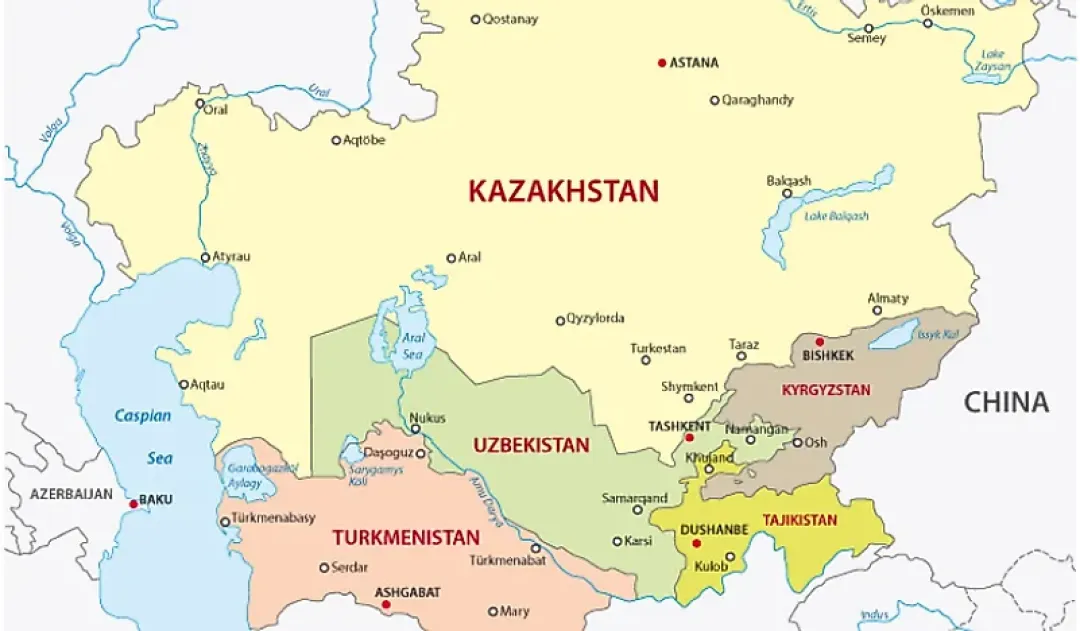
Azerbaijan’s accession to the Central Asia Consultative Summit is less an expansion of a diplomatic forum and more the birth of an increasingly interlinked regional space. By bringing together the strategic resources of Central Asia with the transit capabilities of the South Caucasus, this development has the potential to reshape Eurasia’s political economy. Azerbaijan’s admission as a permanent member of the Central Asia Consultative Summit represents a significant geopolitical shift, signaling the emergence of a trans-Caspian political and economic space, connecting Central Asia and the South Caucasus more closely than at any point since the dissolution of the Soviet Union.
The rise of the "Cauc-Asian" region is thus a chief geopolitical development of the past decades in the heart of the Eurasian continent. The decision to welcome Baku institutionalizes a relationship that had previously evolved through bilateral and sector-specific cooperation, and it positions Azerbaijan as an integral actor in the strategic architecture of Central Asia’s future. For decades after independence, the Central Asian republics and the South Caucasus evolved as separate geopolitical theaters. Despite geographical proximity and shared infrastructure legacies, there was no formal mechanism linking the two regions at the level of heads of state.
Central Asia consolidated internally around its own integration agenda, while the South Caucasus remained fragmented by conflicts, competing transit projects, and divergent geopolitical orientations. Azerbaijan’s entry into the consultative summit effectively dissolves this long-standing separation. It transforms the format from a C5 group into a C6 regional platform that encompasses both sides of the Caspian Sea. This move reflects the changing priorities of Central Asian states. Kazakhstan, Uzbekistan, and Turkmenistan have become increasingly committed to diversifying their connectivity and reducing their dependency on Russian transit routes.
The Middle Corridor—running from China through Kazakhstan, across the Caspian to Azerbaijan, then to Georgia, Turkey, and Europe—has evolved into a central component of their long-term development strategies. In this context, Azerbaijan is not simply a neighboring state; it is a key transit state, which means that integrating Azerbaijan into the Central Asian institutional framework formalizes this recognition. For Azerbaijan, full membership elevates its geopolitical clout. Baku has spent two decades building the infrastructure designed to bind the Caspian region to wider markets, from the Baku–Tbilisi–Jeyhan oil pipeline to the Trans-Anatolian and Trans-Adriatic gas pipelines, and from the Port of Alat to the Baku–Tbilisi–Kars railway.
By joining the summit as an equal participant, Azerbaijan becomes embedded in long-term regional planning that encompasses transport, trade, energy, digital connectivity, and diplomatic coordination. It also gains a platform for shaping the development strategies of its eastern neighbors, complementing its close relationship with Turkey and expanding its diplomatic reach beyond the South Caucasus. The implications extend across the wider region. Georgia, although not a member of the summit, becomes an even more crucial part of Central Asia’s westward outreach.
Every corridor that links the Caspian to Europe must cross Georgian territory. Baku’s deepening institutional ties with Central Asia translate directly into increased economic, logistical, and political relevance for Tbilisi. Therefore, it is highly likely that Georgia could be invited to future C6 summits as a guest country. Armenia, by contrast, is in a less favorable situation. Yet, given the ongoing progress in its relations with Azerbaijan and Turkey, Armenia too could be included in Central Asia-South Caucasus connectivity projects.
The geopolitical reverberations are also felt by external powers. Russia faces challenges to its monopoly over Eurasian connectivity, as the Middle Corridor becomes politically anchored and less vulnerable to external shocks. China gains an additional channel for its Belt and Road Initiative, especially at a time when northern routes are increasingly constrained. The European Union sees opportunity in a consolidated, institutionalized trans-Caspian route that supports its diversification goals in energy and trade.
Iran, meanwhile, views the development with ambivalence: the strengthening of trans-Caspian links bypasses Iranian territory, yet it also creates incentives for Tehran to offer complementary southward corridors if Western sanctions imposed on the Islamic Republic are lifted. Despite the momentum, Azerbaijan’s accession does not resolve all existing challenges. The trans-Caspian transport space still requires harmonized customs regimes, modernized ports, expanded shipping capacity, and improved railway interoperability.
The political cohesion of Central Asian states—each with its own foreign-policy orientation and economic priorities—cannot be taken for granted. And the rising interest of global powers in the region may introduce additional geopolitical pressures that could complicate cooperation. Nevertheless, the decision to admit Azerbaijan marks a turning point. It formalizes a geopolitical reality that has been taking shape in practice: the Caspian Sea is no longer a dividing line between two separate regional systems, but the center of a newly forming macro-region stretching from the Kazakh steppe to the Black Sea.
This emerging "Cauc-Asia" reflects the logic of twenty-first-century connectivity, where economic corridors, energy flows, and political alignments increasingly transcend old geographic categories.
Emil Avdaliani is a professor of international relations at the European University in Tbilisi, Georgia, and a scholar of the Silk Road. He can be reached on X (formerly Twitter) at @emilavdaliani.