
Georgia and the EU Integration Conundrum
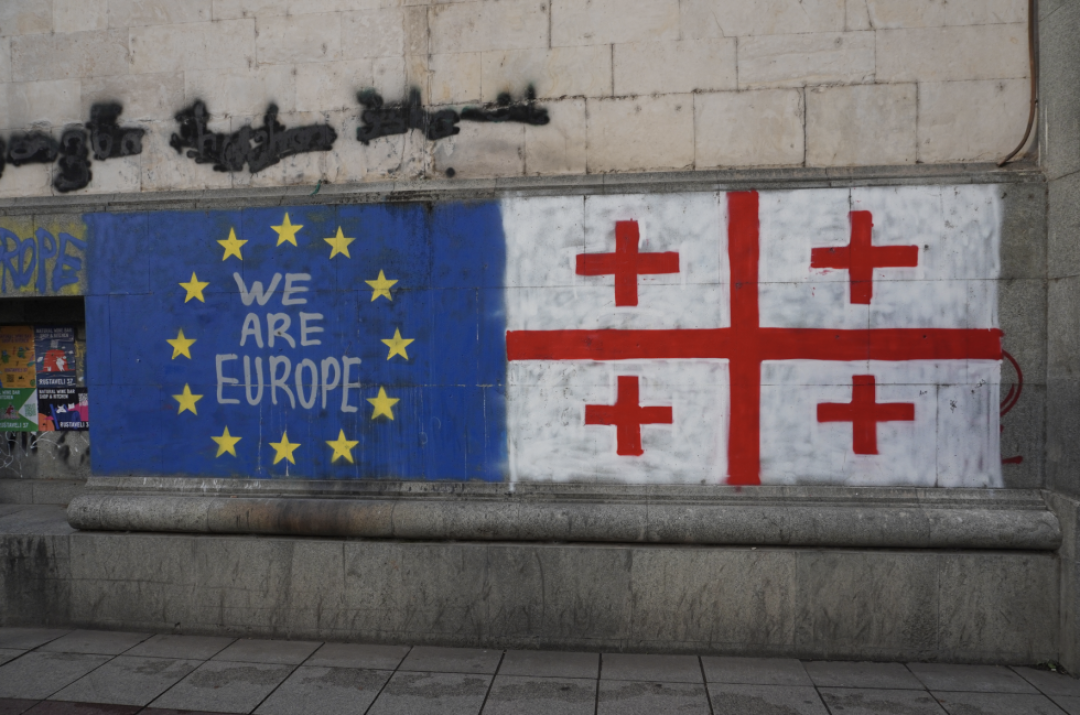
The relationship between the European Union and Georgia has reached its lowest point since the 1990s. What once appeared to be a steadily developing partnership, culminating in Brussels' 2023 decision to grant Georgia candidate status, has now evolved into a fractured relationship. While this crisis is often seen as a short-term issue resulting from the personal decisions of European or Georgian leaders, it actually represents a longer-term geopolitical shift caused by mutual frustration and changes in regional dynamics.
The latest iteration of the crisis began following the parliamentary elections on October 26, 2024, in which the ruling Georgian Dream party secured another term. In the wake of subsequent protests, the government announced in November 2024 that it would freeze EU accession negotiations until 2028, a move that was coupled with its refusal to accept EU financial grants. In response, the EU moved to suspend visa-free travel for Georgian government officials and even threatened to suspend visa liberalization for Georgia’s entire population. The EU also delivered an ultimatum to the Georgian government, demanding the repeal of controversial laws concerning NGOs and "family values."
This diplomatic standoff occurs just as the United States has suspended its strategic partnership with Georgia, although the true value of that partnership has never fully materialized. The EU's ultimatum is unlikely to be met, as it is widely seen in Tbilisi as a pressure tactic. Moreover, an EU-wide consensus on sanctions remains elusive due to internal divisions, with a number of countries opposing tougher measures that they fear will impact the ordinary population. The Georgian government has claimed the EU is interfering in its internal affairs and attempting to impose cultural norms incompatible with the country’s values. Government spokespeople have continuously denounced the European Parliament’s statements as politically motivated, arguing that the Georgian people, not foreign institutions, should determine the country’s political direction.
The problems in the bilateral relationship are also institutional. Georgia is neither too close to the EU nor too far from it, existing in an intermediate space that creates numerous challenges. Geopolitics plays a major role as well; Georgia is on the periphery of both the European continent and the EU itself. The country’s location and its proximity to the Middle East and Russia mean that a complete pivot toward the EU is bound to cause tensions, not only within Georgia but also regionally.
Furthermore, Georgia’s foreign policy is changing. It is no longer exclusively pro-Western but has become more multi-vectoral. This change reflects global shifts toward a multi-polar system that is not dominated by any single power but rather by a range of actors. In such a new geopolitical order, relying on a single player would diminish the country’s room for maneuver on the international stage. Instead, a multiplicity of choices is now regarded as a convenient instrument for advancing national interests.
This rupture in bilateral relations has far-reaching consequences, happening at a time when the EU and the US are increasingly focused on their own internal problems and larger geopolitical issues like the war in Ukraine and instability in the Middle East. The United States is also actively reorienting its foreign policy toward the Indo-Pacific region, which explains why Georgia is not a primary American concern at present. The country and the region will only become important if Washington remains committed to developing the Middle Corridor, which links the Black Sea to Central Asia. Given the persistent US interest in Central Asia’s natural resources and American investments there, keeping the corridor through Georgia unobstructed should remain a key concern for Washington. This suggests that relations between Georgia and the United States are expected to grow more pragmatic, with major decisions based on geopolitical realities on the ground.
With Russia drastically changing the regional balance of power in its favor, Washington will face two choices: either to concede that the South Caucasus falls within Moscow’s sphere of influence or to push back against Russia’s ambitions. A similar dynamic exists within the EU. Georgia serves as a vital conduit for the Union to reach the Caspian Sea and Central Asia. This geopolitical reality dictates that relations between Brussels and Tbilisi must also grow increasingly pragmatic. The alternative—a complete breakdown of ties—would cause irreversible damage to the EU’s influence in the region. It would also harm Georgia’s aspirations to build a more diversified foreign policy and could once again push the country into making uncomfortable choices, namely aligning completely with another major power.
Emil Avdaliani is a research fellow at the Turan Research Center and a professor of international relations at the European University in Tbilisi, Georgia. He can be reached on Twitter/X at @emilavdaliani.