
Khalid Khayati: Kurds, Azerbaijanis, and Iran’s First Water Conflict
When Kurdish and Azerbaijani fans clashed in Urmia on October 13, 2025, it wasn’t just about football. It was the latest flare-up in a long-simmering rivalry shaped by identity, geography, and power. From Grey Wolves salutes to Kurdish flags, from chants invoking massacres to slogans of resistance, the pitch has become a proxy battlefield. But beneath the surface, something more structural is unfolding: a battle over water.
As Iran’s internal fractures deepen, the symbolic geography of Western Azerbaijan and Eastern Kurdistan is turning volatile. What appears to be ethnic confrontation is increasingly a contest over access to resources—especially water. The drying of Lake Urmia is not just an ecological crisis; it is a political one. And as Professor Khalid Khayati warns, “The identification of the water issue is the second problem.” The first is mismanagement, but the second—how water is claimed, distributed, and politicized—is now central to Iran’s internal fault lines.
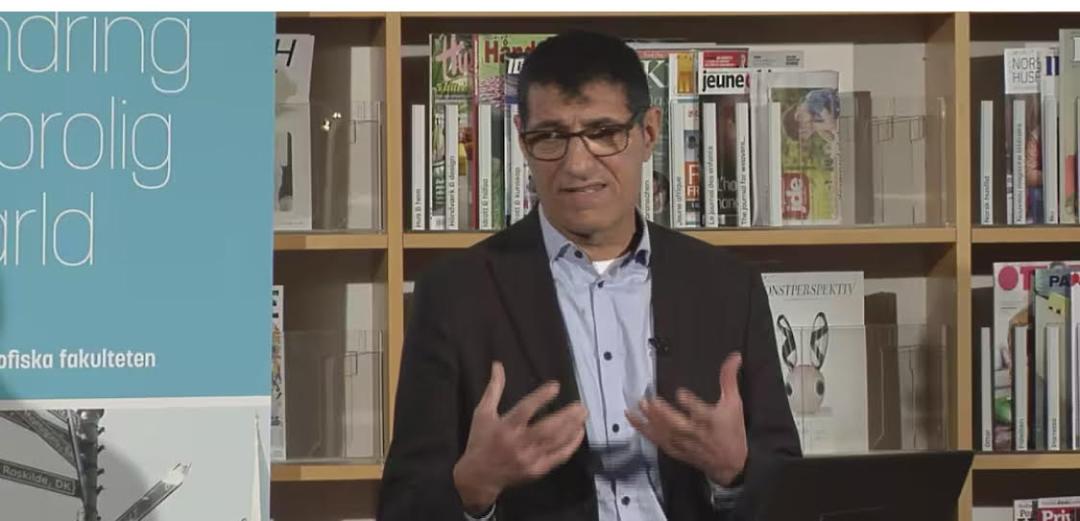
To understand this shift, Caucasus Watch spoke with Professor Khayati, a Kurdish-born political scientist at Linköping University in Sweden. Raised in a village near the ethnic fault lines between Kurds and Azerbaijanis, Khayati sought political asylum in Sweden and now researches political theory, Middle Eastern international relations, and the symbolic geography of Kurdish identity.
Let’s start with Lake Urmia. What does its drying represent in this context?
Urmia now has a dried-up lake. When people were demonstrating about the drying of the lake—about the mismanagement of their water resources—there was intervention by the Basij. But when there was a fight between Kurds and Azerbaijanis, the Basijis sat back and watched it happen. That contrast is telling. When the issue is water, and people are united in protest, the regime intervenes. But when the conflict is inter-ethnic, they let it play out. That’s the danger. It’s not just about water scarcity—it’s about how the state manages division.
So, this isn’t just environmental mismanagement. It’s political?
Yes. Mismanagement is the first problem. But appropriation of the water is the second problem. Who owns it? Who controls it? Who gets access? That’s where things get dangerous. I come from a fertile region rich in water. That’s the problem. There are administrative manipulations because both the land and the water are contested. The water leaving my village has caused the ground to sink by two centimetres a year. That’s enormous. People’s homes are at risk. This is the result of overexploitation and mismanagement, after they built around 20 dams to supply Azerbaijani regions. Climate change has made it worse. One region is being dried out to sustain another.
When we talk about ethnic friction, how does it look like?
You see it during Nowruz—Kurds celebrate openly, and suddenly there’s a crackdown. But when Azerbaijani groups hold rallies or wave Turkish flags, no one touches them. Same thing in the stadium. Kurdish kids paint flags on their cheeks, chant slogans the Kurdish team and Kurdistan. On the other side, you have Grey Wolves salutes, chants hailing the Azerbaijani team and the salute to a man who committed massacres. Football is rarely just football—it’s symbolic. The authorities don’t intervene. They let it happen. That tells you everything.
Was there ever cooperation between Kurds and Azerbaijanis?
Yes. Go back to 1946—two republics were formed: the Republic of Azerbaijan and the Republic of Kurdistan in Mahabad. There was no central government presence, so these groups built their own administrations. They saw themselves as sharing the same destiny. Students were sent from Mahabad to Azerbaijan for training, leaders visited each other—it was a close relationship.
Even after the Islamic Revolution, the Kurdish and Azerbaijani left maintain the rhetoric of cooperation, which was echoed across large segments of society. There were parts of the Azeri community participating in the Kurdish resistance struggle. However, the regime regarded the Kurds primarily as a security concern and ethnic divisions a valuable tool to legitimise the further militarisation of Kurdistan and the consolidation of oppression. Part of this strategy was the exploitation of Azerbaijanis recruited into the regime’s religious, political, military, and security institutions. The result was the first devastating interethnic conflict in the ethnically mixed city of Naghadeh.
When did that change?
Right after the Islamic Republic was established. During the referendum to confirm the new regime, Kurdish political organisations opposed it. Azerbaijani groups initially resisted too, but they quickly shifted and chose to participate. That split—Kurds going into opposition, Azerbaijanis opting for integration—set the stage for everything that followed.
And that created asymmetry?
Yes, but it’s not just about status. It’s about infrastructure. Azerbaijani regions developed agriculture and industry early on. Kurdistan didn’t. Now you’ve got over 20 dams diverting water from Kurdish areas to Azerbaijani projects. The industry was on the other side of the river. Our side was empty.
How does the state respond to unrest in this context?
Selectively. When Kurds and Azerbaijanis clash, the Basijis often stand back and let it happen. But when people protest water mismanagement, they intervene immediately. Civil society is stronger in Azerbaijani regions, but it’s suppressed from within—by their own nationalist forces.
Are there voices within the Azerbaijani community that challenge this?
Definitely. After some football-related protests, two young Azerbaijani activists spoke out. They said, “Look, you fly Azerbaijani and Turkish flags everywhere and no one touches you. But when Kurdish kids paint a flag on their cheeks, it becomes a scandal.” These two were arrested quickly.
What about cooperation in the diaspora?
Honestly, it’s almost non-existent. I was part of a federalist platform in Sweden 25 years ago. The Azerbaijanis in that platform had a completely different agenda. In all these years, there’s been no joint cultural or political initiative—no shared celebrations, no collaborative media. Even when we proposed civilian protection, they said, “We don’t need it. We’re already embedded in Iran’s military.” That tells you a lot.
How do you see this conflict evolving?
It’s escalating, but not in a straightforward way. Kurdish political parties and organisations see the danger and tend to underplay it. They keep a low profile because they understand how sensitive the issue is. Then there’s a generation of intellectuals active on social media. They try to be measured and accurate, defending Kurdish rights without feeding the monster—but in doing so, they often end up explaining the problem away. And then there’s the youth, who operate with less restraint and without the political allegiances that might otherwise temper their actions. Generally speaking, the Kurds are more politicised. They belong to political organisations. The Azerbaijanis, less so.
Is there a shared language or cultural bridge?
It’s not uncommon to be bilingual. I speak both languages myself. Maybe my neighbour doesn’t speak Kurdish, but I speak Azerbaijani. I went to school in an Azerbaijani town. Still, the divisions run deep. In Turanic discourse, Kurds are referred to as “Iraqi immigrants”—regarded as foreigners in Western Azerbaijan. All 1.7 million of us. They mean to say that I, my father, my grandfather—all born and raised in this region—are outsiders.
Are they perhaps referring to those who crossed the border with Barzani, after the First Gulf War in Iraq?
Look, even according to the Iranian government’s own account, many of those people were repatriated or relocated to Tehran. We’re talking about less than 3% of the population.
What are the options for de-escalation?
Escalation won’t come from the diaspora—we’re citizens of other countries. But we can influence the discourse. Kurdish parties have been cautious, and that’s helped. Still, the initiative must come from Kurdish political organisations and maybe combining a kind of lobby and diplomatic activities around the world. We have a kind of preventive approach—talking in order to inform the international community before it’s too late. Not talking is not a good option.
Bottom-up initiative is much better than taking it from, for example, government or from Tehran. They have plenty of problems. Corrupt. It becomes much more complicated. My family knows people in different Azerbaijani cities. They have friends. That’s where it starts.
And what’s the strategic takeaway?
If water continues to be identified along ethnic lines, the second problem may become the first. What began as a local grievance around Lake Urmia has become a broader pattern of core-periphery friction. From Khuzestan to Kurdistan, water is becoming the medium through which core-periphery tensions are expressed. This isn’t just an environmental crisis. It’s a governance crisis. And if it’s not addressed, it will escalate.
Interview conducted by Ilya Roubanis for Caucasus Watch