
Real Armenia: Building a State Through the Economy
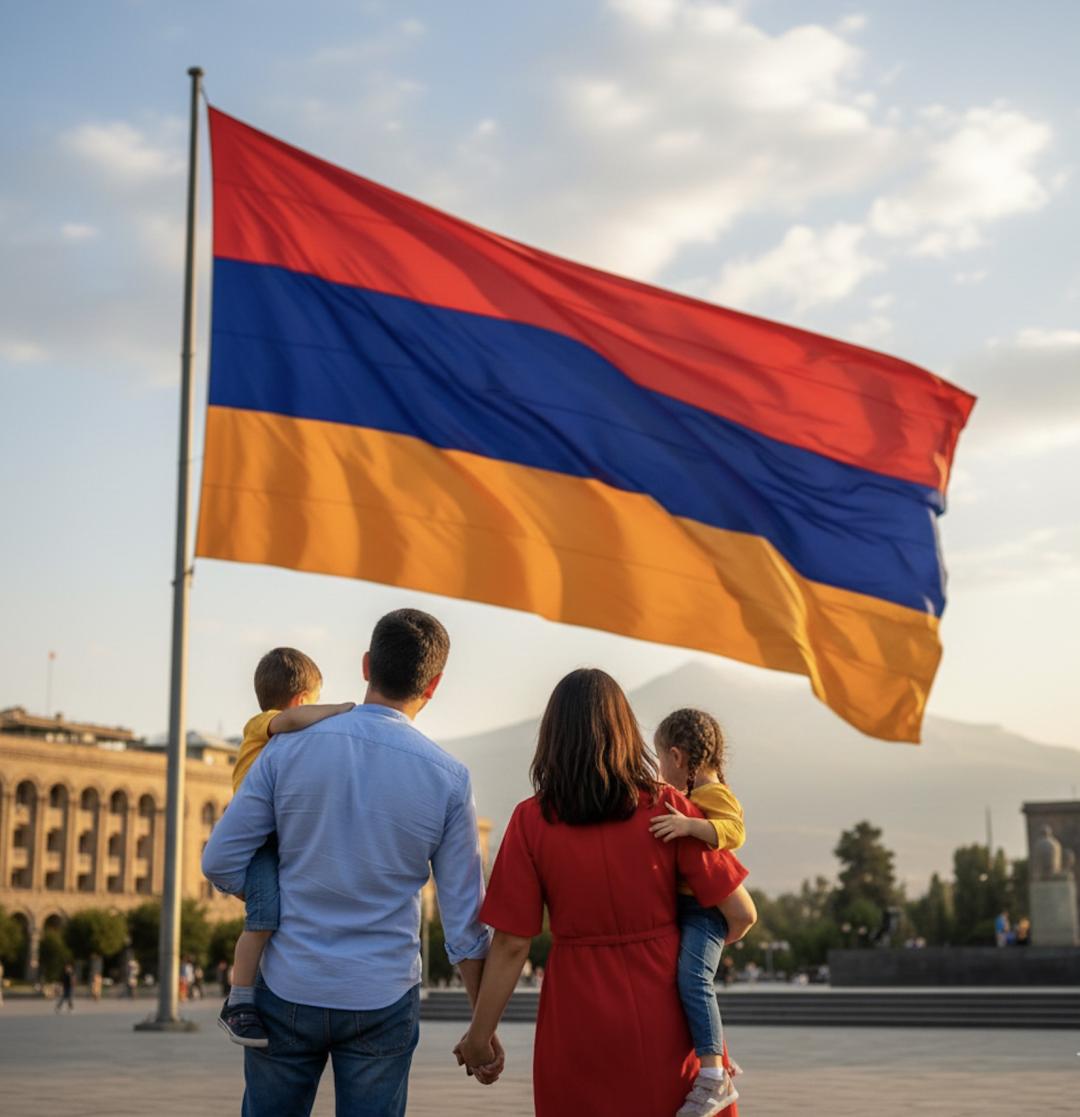
In recent years, Armenia has demonstrated remarkable economic momentum. GDP per capita has more than doubled. In just two years, exports of digital services have tripled, surpassing US $1.5 billion. For the first time since independence, the export of knowledge is beginning to rival the export of raw materials. Armenia’s progress in the Corruption Perceptions Index-from 105th place in 2018 to 63rd in 2024-ranks among the most impressive in the Eurasian region. All of this has been achieved despite a 44-day war, a global pandemic, and a turbulent geopolitical environment.
Since the 2018 Velvet Revolution, Armenia has significantly strengthened freedom of speech, thought, and political choice. Over ten independent television channels of varying political orientations operate freely; more than half of their content is critical of the government, yet none have been censored or restricted. Foreign media, including Russian channels and online outlets, remain fully accessible to the public.
This is the new Armenian reality. The philosophy of the “Real Armenia” - where the state and the homeland are one - is taking shape in practice. Freedom, responsibility, and statehood are becoming inseparable. Institutions safeguarding these freedoms-from the Ombudsman’s Office to media regulators-continue to evolve.
As the Chief Economic Adviser to the Prime Minister, I am fully aware that many of the ideas expressed here will spark debate-within and beyond the government. Yet I am equally convinced that they reflect an emerging strategic consensus within the Armenian leadership: a consensus rooted in the principles of the “Real Armenia,” aligning national identity, economic resilience, and technological sovereignty.
The Economic Paradigm of “Real Armenia”
Armenia’s new national vision is anchored in the idea of “Real Armenia” - a state where sovereignty and prosperity are not competing goals but mutually reinforcing imperatives. Economic growth is not pursued for its own sake, but as a tool for strengthening statehood and advancing collective well-being.
In this paradigm, prosperity is not imported. It is cultivated from within - through the rule of law, education, innovation, and public trust. National independence is no longer measured by autarky but by the nation’s ability to diversify and balance its economic interdependencies. Peace, in turn, is reframed not as a political outcome but as a practical capacity: the art of coexistence through economic cooperation - both regional and global.
Here, patriotism is not declared. It is built - in factories and laboratories, in knowledge-based industries and digital ventures. Each productive act becomes a brick in the edifice of national resilience, each startup a quiet pledge to the homeland.
From Post-Soviet Openness to Strategic Resilience
For much of its recent history, Armenia’s economy followed a familiar path for small nations: liberal openness, low labor costs, reliance on remittances and raw material exports, and a fragmented base of “cottage” manufacturing. This model brought growth, but also vulnerability - overexposure to external shocks and underinvestment in internal capabilities.
Now, as Armenia looks ahead to 2031, the logic must shift. The Real Armenia paradigm calls for an economy that does not merely function in the state, but one that serves it - strategically, deliberately, and sustainably.
What might this new logic look like in practice? That is the question at the heart of Armenia’s transformation - one that demands new tools, new thinking, and a new social contract between the state and its citizens.
I. Security as an Economic Category
If Armenia does not make itself useful to the world, it risks remaining on the periphery-dependent on external goodwill and volatile aid flows. In today’s world, countries assist not out of sympathy, but out of shared interest. Hence, our strategic objective is to integrate into global economic and technological value chains in such a way that it becomes neither easy nor profitable to ignore us.
This means deep participation in regional and global value chains through strategic investments in IT, energy, agribusiness, and biotechnology. It is not dependency but mutual benefit - sovereignty built through productivity, partnerships, and shared value.
II. Human-Centered Development
For a small nation, people are not statistics-they are the principal asset, source, and shareholder of progress. Armenia must move from a model where citizens are the object of social policy to one where they are its subject and strategic partner - a direct expression of the Real Armenia principle that “Man is the highest value.”
Education. The old formula - “study, graduate, get a job” - no longer works. The modern economy demands flexibility, rapid adaptation, digital literacy, multilingualism, critical thinking, and entrepreneurship. Armenia must build a lifelong learning model centered on STEM, AI technologies, and continuous upskilling.
Healthcare. Illness shortens not only lives but economic horizons. Around 85% of healthcare spending in Armenia is paid out of pocket-among the highest rates in the world. Medicine and service prices remain elevated, limiting access for the vulnerable. Beyond universal health insurance and digital diagnostics, Armenia must adopt a regularly updated Essential Medicines List, implement centralized procurement, and adapt fair-pricing models. This is not only a matter of health, but a strategic imperative for the economy: a healthy person lives longer, remains active longer, and produces more. It is about families and society as a whole - healthier people build stronger families and make a greater contribution to national development.
Reverse migration. A significant share of Armenia’s intellectual potential resides abroad. The national priority is not merely to call people back, but to create real conditions for their return and integration. This means simplifying visa procedures, introducing tax and education incentives, designing professional reintegration packages, and building integration infrastructure for specialists - including those of non-Armenian origin - from different countries. Talents with diverse cultural mindsets broaden horizons and bring solutions that cannot emerge within a purely local context.
III. Artificial Intelligence and Technological Sovereignty
We are living in an era defined by the accelerating forces of “creative destruction” (Schumpeterian creative destruction), where artificial intelligence, automation, and data technologies dismantle entire industries and create new ones at a scale and speed unprecedented in economic history. For Armenia, technological sovereignty is no longer a choice but a condition of survival: nations that fail to adapt will not simply lag behind—they will be structurally excluded from future growth.
In the twenty-first century, a nation’s ability to design, implement, and scale advanced technologies defines its sovereignty. Without AI, no economy can be competitive or sustainable.
AI factories-where energy and data are transformed into intelligent digital products-create a historic opportunity for energy-rich, talent-dense nations like Armenia. This is a chance to export intelligence rather than raw materials, transcending geographic limitations.
AI also allows small nations to transcend their scale. Even with full employment, human capacity is finite. Digital agents-and soon physical robots-can extend Armenia’s productive frontier. With affordable energy and infrastructure, three million citizens could be joined by millions of digital co-workers. This is a radically new growth model, crucial for small states with global ambitions.
Already, Armenian tech firms are competing globally. In partnership with NVIDIA, the government is developing a US $500 million AI Fabric-an ecosystem for creating, training, and deploying artificial-intelligence models.
Beyond exporting knowledge, this initiative will nurture an AI citizenship ecosystem - where skills, creativity, and data literacy become universal civic assets, empowering every Armenian to participate in the digital economy.
IV. Institutional Transformation
True statehood, as envisioned by the Real Armenia, requires institutions that citizens trust and that serve society with integrity and efficiency. In today’s world, success belongs not to the fastest-growing economies, but to those most honestly and durably integrated into the future.
Law and trust. Rule of law, anti-corruption, and judicial independence are not reputational tools-they are investments in dignity and stability. Where trust exists, there is less need for control; where it doesn’t, bureaucracy and costs multiply. Institutional quality must be measured not by the number of signatures but by the speed, clarity, and purpose of decisions.
Meritocracy. Strong institutions depend on strong people. A new talent policy based on professionalism, open recruitment, and leadership potential is essential. The proposed National Knowledge Center would document reforms, exchange practices, and co-design solutions across ministries and regions. The Fast-Track Talent Program aims to bring 500+ new leaders into public service, embedding a merit-based culture.
Tax democracy. Armenia is a “tax democracy.” Without oil or gas rents, the nation lives by labor - and that means the state must be accountable. Every dram collected must return to citizens in the form of justice, infrastructure, and quality public services. We propose fixing the core types and rates of taxation for at least ten years, creating predictability for businesses and investors. A fair tax system begins not with coercion but with inclusiveness - by fostering broader civic participation, simplifying declaration procedures, and launching a long-term educational campaign to strengthen the culture of taxation. In a tax democracy, trust is the most valuable currency.
Financial architecture. To accelerate growth and reduce vulnerability to external shocks, Armenia must build a next-generation financial architecture - one based on domestic resources, deep capital markets, and stronger competition within the banking sector. The policy of market entry should be revised to attract new players, including international investment banks and fintech companies. Among the priorities are the launch of regulatory sandboxes, the creation of a flexible and adaptive legal framework, and the large-scale development of digital infrastructure - from a national instant payment system to a modern KYC ecosystem.
Public property and sustainability. Strategic assets-energy, water, logistics, minerals-must be managed with state participation (for example, via a “golden share”), respecting private capital but prioritizing national sustainability.
Environment. Ecological resilience is now a geo-economic asset. Armenia will expand renewables, hybrid storage, clean transport, and circular-economy projects; modernize its forest and water systems; and deploy digital monitoring of air and soil. Hosting COP17 in Yerevan offers a platform to present Armenia not as a problem source but as a solutions hub.
V. Economic Openness and Strategic Partnerships
For small nations, foreign policy is no longer about choosing between East and West-it is about maintaining agency amid global turbulence. Smart openness should guide Armenia’s external economic strategy: diversify markets, strengthen diplomacy, and protect sovereignty through cooperation.
Crossroads of Peace and TRIPP. Following the Joint Declaration by the President of Azerbaijan and the Prime Minister of Armenia and the Memorandum of Understanding between the Governments of the United States and the Republic of Armenia, Armenia is poised to transform geography into opportunity. The Crossroads of Peace and TRIPP (Trump Route for International Peace and Prosperity) initiatives seek to reconnect the South Caucasus through trade, logistics, and energy routes - transforming former dividing lines into arteries of cooperation.These initiatives represent more than infrastructure; they embody a new model of peaceful coexistence, where shared economic interests and regional connectivity become the most reliable foundations of lasting peace.
Economy of Trust: Armenia and Russia. Russia remains Armenia’s largest economic partner-accounting for about 30% of exports, nearly half of all tourist arrivals, and key investments in energy, telecommunications, and logistics. Armenia still depends on Russian supplies of fuel and food, which makes it all the more vital to reframe this relationship through a renewed, honest, and pragmatic dialogue.
Yerevan does not seek symmetry but offers strategic value. The new phase of Armenian-Russian relations must be built not on inertia, but on progress-a shift from post-Soviet preservation to a forward-looking partnership for shared growth in such areas as the digital economy, energy, logistics, education, and institutional cooperation.
Armenia is an open and welcoming country. The Russian language is widely spoken, and Russian-language education is both available and in demand. Russians living or working in Armenia feel secure, culturally close, and socially comfortable. In the current climate of external pressure, it is both rational and humane that Russian citizens temporarily leaving their country find in Armenia not just safety, but a community of familiarity and respect.
Yet openness to Russia does not exclude openness to the world. Armenians speak not only Russian but also English and French. International schools operate freely, and business is oriented both eastward and westward. Our hospitality toward guests from the Urals does not prevent us from building economic relations with Berlin and Paris, flying to Milan, or vacationing in Barcelona. This is not ambivalence-it is strategic clarity grounded in common sense.
As a small nation, Armenia understands that friendly and mutually beneficial relations with Russia neither preclude nor should hinder the development of equally pragmatic partnerships with other countries, including those with which Moscow currently has complex relations. Our position is not one of confrontation but of balance-the same philosophy that has guided many small but confident nations, from Finland to Singapore, preserving sovereignty through equilibrium rather than exclusion.
This strategic balance is not neutrality, but sovereignty exercised through choice-the ability to engage with all partners while remaining guided by national interest, dignity, and long-term stability.
VI. A New Philosophy of Development
While short on natural resources, Armenia possesses far more valuable assets-resilience, adaptability, and the will to transform. The trajectory ahead envisions an economy built on internal stability: empowered citizens, trusted institutions, home-grown technologies, and managed openness.
The Real Armenia transforms the idea of patriotism into a modern economic doctrine-where love for the homeland means building the state, and building the state means creating value.
Target indicators for the next 5-7 years include: Annual GDP growth of 6–7%; Doubling of exports with a focus on services (tourism to reach 3.5 million visits per year); Population growth to 3.3–3.5 million through repatriation and controlled migration; Attaining a sovereign credit rating of BBB to ensure access to global capital markets
Risks and Challenges. “In Armenia, institutions are weak, habits are strong, and bureaucracy knows how to imitate reform.” This phrase captures the structural paradox at the core of Armenia’s development challenge. Political will can weaken; talent shortages and bureaucratic resistance are also likely. Yet the alternative to reform is not stability but stagnation, institutional erosion, and loss of agency. In such conditions, inaction is far riskier than failure.
But the essence lies not in numbers or risks, but in a new mindset. Armenia is changing not only the tools of economic policy but the philosophy of development itself. It is ceasing to be a country that evokes sympathy and becoming one that commands respect. Armenia no longer imitates-it innovates. It no longer asks for help-it offers partnership. To its citizens. To its neighbors. And to the world.
Contributed by Artak Kamalyan, Chief Adviser to the Prime Minister of Armenia