
Ukraine War’s Spillover in the North Caucasus
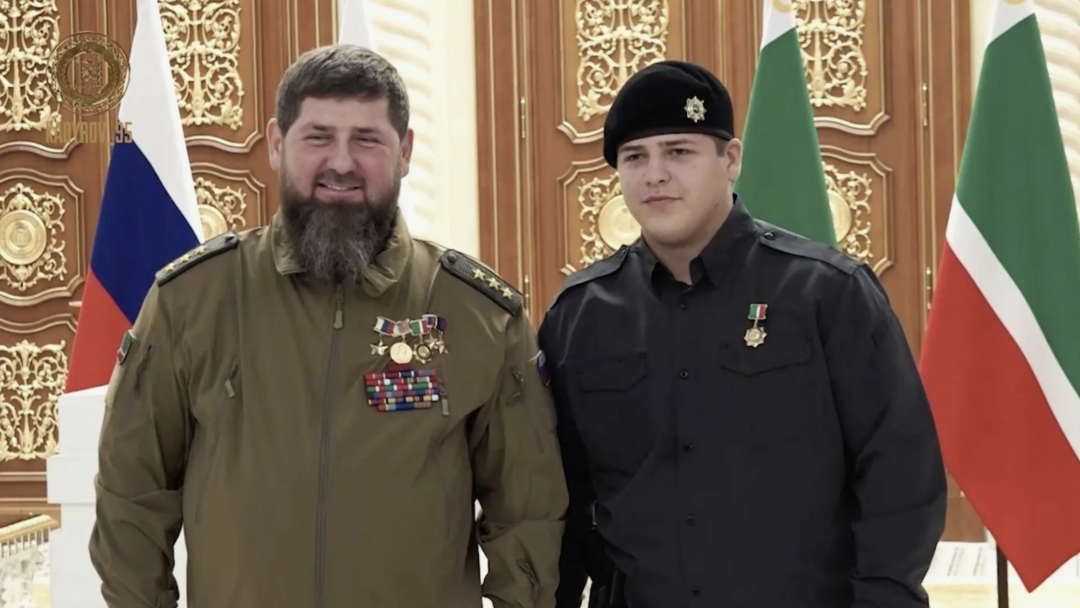
The war in Ukraine is reverberating heavily across the North Caucasus, triggering a profound militarization of society and a widening spillover effect. The region has experienced drone incursions that have caused significant incidents such as the downing of the Azerbaijani AZAL flight in December 2024. Chechnya has emerged as one of the most targeted areas, largely due to the role of Ramzan Kadyrov in the conflict and his prominent position within Russia’s propaganda apparatus. Persistent speculation about Kadyrov’s health adds an additional layer of instability, even more following the probable serious car accident involving his son Adam, one of the names in the line of succession.
Militarization and the War’s Spillover
In the North Caucasus, the war in Ukraine has ceased to be a distant conflict, it has become an increasingly concrete presence, reshaping everyday life, public space, and the regional security environment. The militarization of society has accelerated, embedding the war into institutions, narratives of identity, mechanisms of social control and the systematic incorporation of the war into educational and civic spaces. In July, a school in Vladikavkaz, North Ossetia, inaugurated a Museum of the Special Military Operation. Around the same time, a photographic exhibition titled Chronicles of the Terror of the Ukrainian Neo-Nazi Regime opened in the Ingush parliament, displaying images alleged to document Ukrainian crimes and the consequences of bombardments. Similar exhibitions soon appeared with near-daily frequency across North Caucasian cities and districts, turning schools, parliamentary buildings, and cultural venues into sites of wartime messaging. Through these initiatives, the conflict has been normalized as a central reference point of public life.
Commemoration has followed a similar logic. In November, authorities unveiled a monument in Dagestan’s Kizlyar district bearing the names of 3,000 soldiers killed in three conflicts: World War II, the Soviet invasion of Afghanistan, and Russia’s war in Ukraine. The deliberate conflation of these wars into a single commemorative narrative underscored how the Ukrainian conflict is being woven into a longer arc of sanctioned sacrifice and historical continuity. In December, children from Ingushetia - each the child of a participant in the war - were selected to attend the Kremlin’s New Year celebration in Moscow, reinforcing the integration of wartime status into civic recognition and state-sponsored legitimacy.
At the same time, the war has remained largely unspeakable as a subject of dissent. On 28 April, a woman in Grozny was kidnapped and tortured by police for criticizing mobilization and released only after a ransom was paid. On 19 June, criminal charges were brought against Ossetian activist Vissarion Aseev for “anti-war” social media posts. In Dagestan, acts of vandalism targeting war banners led to forced public apology videos involving parents. Bloggers, lawyers, economists, and members of Russia’s Human Rights Council faced prosecution or public denunciation for remarks deemed to “discredit” the armed forces. By December, the Mufti of Chechnya openly described the invasion of Ukraine as jihad, completing the fusion of militarization, ideology, and enforced loyalty that increasingly defines the North Caucasus’ political and security landscape.
These symbolic and coercive efforts have unfolded against a backdrop of recurring and escalating security challenges. From the second half of 2025 onward, the war’s presence has taken on a physical, audible, and intrusive form: drones, an acoustic marker of how the conflict has crossed borders. Repeated drone alerts prompted the temporary closure of airports in North Ossetia, Chechnya, Ingushetia, and Kabarda–Balkaria. The spillover of the conflict produced direct civilian harm: a drone strike hit the Ingush village of Nizhniye Achaluki, an explosion in Stavropol killed two people, including Zaur Gurtsiev, a former combatant in Ukraine who had later become a deputy mayor.
In October, drones struck what authorities described as a Dagestani industrial facility, while another reportedly hit an unfinished shopping centre. Dagestan imposed a ban on posting images online showing bridges, air defense systems, or the aftermath of drone strikes. Drone alerts were repeatedly declared overnight across North Ossetia, Kabarda–Balkaria, Dagestan, and Stavropol Krai, prompting Rosaviatsiya to restrict flights to Vladikavkaz and Grozny. By late December, Kabarda–Balkaria cancelled large-scale New Year celebrations due to the “developing situation.”
Multiple incidents were reported across Chechnya, including damage to residential and security-related buildings. Only on 8 December did Chechen leader Ramzan Kadyrov publicly acknowledge the attacks, promising retaliation and later claiming strikes on Ukrainian targets. In early 2026, drone incidents continued, while Kadyrov released videos depicting FPV drone strikes, reinforcing the performative dimension of warfare that has earned his forces the nickname “TikTok troops.” The war, once distant, has become a persistent and destabilizing presence in the North Caucasus.
Chechnya and Kadyrov’s role in the war
Chechnya has often been targeted, and not by chance. Head of Chechnya, Ramzan Kadyrov’s role in Russia’s war in Ukraine started with his initial announcements in February 2022 of Chechen forces entering the invasion and then the creation of multiple Akhmat battalions.
Militarily, although Chechen units have often been criticized for performative battlefield footage, they have nevertheless remained a constant part of Russia’s mobilization. This includes not only frontline deployments but also the recruits into active duty. In October 2025, Russia announced a significant expansion of state funding for the Russian Special Forces University in Gudermes, a Chechen‑initiated military training centre that prepares volunteers before deployment to Ukraine. The centre is slated to receive over 5 billion rubles in federal funding for 2026–27, suggesting Moscow’s ongoing reliance on Chechen‑linked training pipelines as part of broader military manpower efforts. Ingushetia as well will not be involved in the production of military drones, adding a chapter to local militarization.
Beyond combat units, Chechen security forces have also been implicated in the detention and handling of Ukrainian prisoners of war. Ukraine’s Coordination Headquarters for the Treatment of Prisoners of War reported that more than 150 Ukrainian soldiers might be held in Chechnya, potentially in Grozny‑area facilities, where humanitarian and Geneva Convention norms are reportedly not observed. The report suggested that Kadyrov’s regime uses POWs both as leverage and, in some cases, as “human shields” around military installations. The Security Service of Ukraine (SBU) has charged Kadyrov in absentia with war crimes related to alleged orders to kill Ukrainian POWs rather than capture them, as well as using prisoners atop buildings to protect them from drone strikes—charges that highlight how his forces’ conduct in wartime remains central to Ukrainian legal efforts to document abuses. In early January 2026, Kadyrov reportedly attempted to leverage the release of Ukrainian prisoners of war in exchange for Western sanctions relief for his family and assets.
Chechnya and Kadyrov’s inner circle have faced expanded Western sanctions. The UK government’s September 2025 sanctions targeted the Akhmat Kadyrov Foundation and key individuals, including Kadyrov’s mother Aymani Nesievna Kadyrova, for alleged involvement in the forced deportation, indoctrination, and military training of Ukrainian children. The measures froze assets and banned travel for a range of officials. The European Union has also continued to extend broader economic sanctions on Russia through at least mid‑2026, including provisions addressing repression and destabilizing actions linked with the war, sustaining pressure on figures like Kadyrov by association.
Politically and symbolically, Kadyrov has maintained an increasingly uncompromising public posture about the war’s continuation and territorial aims. In September 2025, he publicly stated that there could be “no peace until Ukraine becomes Russian territory or a district of Russia,” framing the war as an imperative rather than a conflict to be negotiated or ended. This rhetoric consolidates Chechnya’s alignment with the Kremlin’s hardline elements and underlines his role as a figure of maximalist wartime ideology.
Chechnya’s domestic political climate has further reflected this martial emphasis. Kadyrov’s public appearances and messaging have sought to emphasize military readiness. Although these appearances have sometimes been staged, observers note that they reinforce Kadyrov’s image as a wartime leader whose legitimacy is tied to his commitment to Vladimir Putin’s war goals. It should be recalled that Kadyrov always pledged royalty to Putin, not necessary to the Russian Federation, its constitution and State institutions. And this is one of the strings he can pull: Chechnya is not well rooted in the Russian institutional framework, it’s just Kadyrov keeping it on track, as long as he can personally negotiate with Putin.
Kadyrov after Kadyrov?
For years, Ramzan Kadyrov’s health has been a subject of speculation among analysts. Not yet fifty, he has suffered from chronic medical issues that have repeatedly fueled rumors about his long-term political viability. Publicly, Kadyrov has invested heavily in the image of the vigorous warrior‑leader, leveraging high‑visibility theatre to drown out doubts about his physical condition. Yet beneath the spectacle lies a stark reality: Russia’s longest‑serving regional Don may be nearing the limits of his authority and life, and the question of succession may be right now transitioning from hypothetical to pressing. Ukrainian and independent media throughout late 2025 and into 2026 have reported that Kadyrov’s kidneys have failed, requiring ongoing dialysis, and that he was hospitalised in Moscow in late December 2025.
Despite repeated denials from his press service - such as a January video showing him at his residence claiming he felt well - the intensity and consistency of these reports would explain his later maneuvers. In late 2025 and early 2026 he began positioning his family members into increasingly significant roles. On 6 January 2026, he appointed his 20‑year‑old son Akhmat as acting deputy prime minister of the Chechen government, while Akhmed Dudaev, the republic’s minister for National Policy and Information, was also elevated to the same position. Both appointments were formalised in mid‑January by the Chechen parliament. Akhmat’s rapid rise, continuing his role as Sports Minister, signals an effort to embed him within the republic’s executive apparatus well ahead of any formal transition. It mirrors the earlier elevation of his younger brother Adam - secretary of Chechnya’s Security Council and previously exposed as a public figure in loyalist events.
And here the plot twisted: Adam Kadyrov was allegedly seriously injured in a car crash in Grozny on 16 January 2026. Oppositional Telegram channels and regional sources say his motorcade was travelling at high speed, and vehicles collided. Roads around the scene and the hospital were closed following the incident. He was taken to intensive care in Grozny. There are reports that he was subsequently flown to Moscow for further medical treatment, though authorities have not released official details about his condition. Pro-government Chechen media have focused on previously recorded footage of Adam rather than providing up-to-date information about the accident itself, prompting speculation about timing and transparency.
The speculations that always surround the Kadyrov family opened the Pandora Box of conspiracy theory. Some commentators recalled that Автокатастрофа (Avtokatastrofa, translates to car crash) was, and it might be still, a method to get rid of undesirable candidate. The word gained popularity with this nuance in 1980, after the Secretary of the Belorussian Communist Party Pëtr Mašerov’s career was thus put to an end. This «ликвидация через ДТП»" (likvidatsiya through road-traffic accident) would put an end to the ambitions Kadyrov had for Adam, who in Moscow was believed to be far too young to raise to the succession.
The most striking tension, indeed, arises from the gap between Kadyrov’s own ambitions and the Kremlin’s preferences. While Kadyrov has openly canvassed for future leadership - telling media he is “fed up with power” yet prepared to run again in the 2026 elections if Putin and the people support him - Moscow appears wary of endorsing an untested teenage dynasty in a strategically volatile region. And, under Russian law, a regional head must be at least 30 years old, far older than either son.
Different circles in Moscow are weighing alternative candidates who might command greater institutional legitimacy and security backing than an inexperienced heir. Among those mentioned are Apti Alaudinov, commander of the Akhmat special forces and a figure with formal ties to the Russian Defense Ministry, and Adam Delimkhanov, a Chechen MP with entrenched political connections. This scenario remains speculative as long as Kadyrov’s poor health - and now his son’s too - are unverified.
Kadyrov has also cultivated a web of familial influence across the republic’s institutions. His sons and daughters have accrued awards and titles for their wartime and civic roles, and his nephew Khas‑Magomed Kadyrov topped a national ranking of Russian mayors for 2025, suggesting that the extended family network is being groomed to sustain influence regardless of the immediate outcome of any succession struggle. Power in Grozny is not merely familial but also embedded in networks of military loyalty and federal relationship management. Potentially, without Kadyrov, Chechnya’s political landscape could face internal competition among clans and armed elites, with Moscow ultimately playing the decisive role in determining a successor. Complicating the internal calculus are reports that Kadyrov has sought external guarantees for his family’s safety and wealth from states beyond Russia, including negotiations with representatives of Middle Eastern monarchies. These discussions, reportedly conducted outside Kremlin coordination, have raised eyebrows in Moscow about divided loyalties and independent power bases beyond federal oversight.
The succession question has also played out in public symbolic terms. Kadyrov’s periodic announcements of stepping down, interspersed with assurances of his continued leadership, reflect a balancing act between mildly threatening and preserving the aura of invincibility central to his cult of personality. His many awards for sport, development, and loyalty reinforce a narrative of perpetual utility. The broader Russian leadership has also engaged with these dynamics. President Vladimir Putin referenced the Kadyrov family during a national 2025 “direct line” broadcast, framing it as an example of traditional family values - an implicit endorsement of stability.
The question of Ramzan Kadyrov’s succession carries consequences far beyond Chechnya’s borders. As the region’s dominant political and military actor, Kadyrov has for nearly two decades acted as Putin’s enforcer in the North Caucasus, maintaining internal stagnation while supplying substantial paramilitary contributions to Russian campaigns, most visibly in Ukraine. Any transition at the top risks not only a reshuffling of local power structures but also the operational readiness of units like the Akhmat regiment, which remain integrated into Russia’s military apparatus.
In the event of Kadyrov’s incapacitation or death, the cohesion of Chechnya’s armed forces - particularly those directly loyal to him - could be tested. Deputy appointments of his sons, Akhmat and Adam, indicate an effort to institutionalize continuity, but both are untested in full executive authority and lack the battlefield credibility of veteran commanders like Apti Alaudinov. Any vacuum at the top could prompt rivalries among military and security elites, particularly within the Chechen Ministry of Internal Affairs and the Akhmat special forces, potentially spilling into wider instability in the republic, if not regionally. His sons, particularly Adam, have begun to inherit his media presence, signaling continuity, yet questions remain about the legal and practical viability of such a succession.
Moscow is acutely aware of these risks. Intelligence assessments reportedly highlight concerns that factions within Chechnya might act independently of federal directives, especially if Kadyrov’s successors pursue policies aimed at consolidating local power rather than coordinating fully with the Kremlin. The Chechen leader’s own line of conduct further exacerbates Moscow’s anxieties. These dynamics pose a subtle but tangible challenge to federal control, complicating the Kremlin’s calculations for both domestic stability and military deployments.
The succession is closely monitored by Western intelligence, particularly given Chechen paramilitary involvement in Ukraine. Western observers are also attuned to the implications for human rights monitoring, as leadership instability may exacerbate repression to consolidate authority.
Contributed by Dr. Marilisa Lorusso
Insights,
Politics,
Armenia, Azerbaijan, Georgia |
Russia, Ukraine, Ramzan Kadyrov, Chechnya, Russia-Ukraine War, Apti Alaudinov, Adam Kadyrov, Marilisa Lorusso