
General Mikhail Klouvas: The Greek Mission in Armenia under an EU Mandate
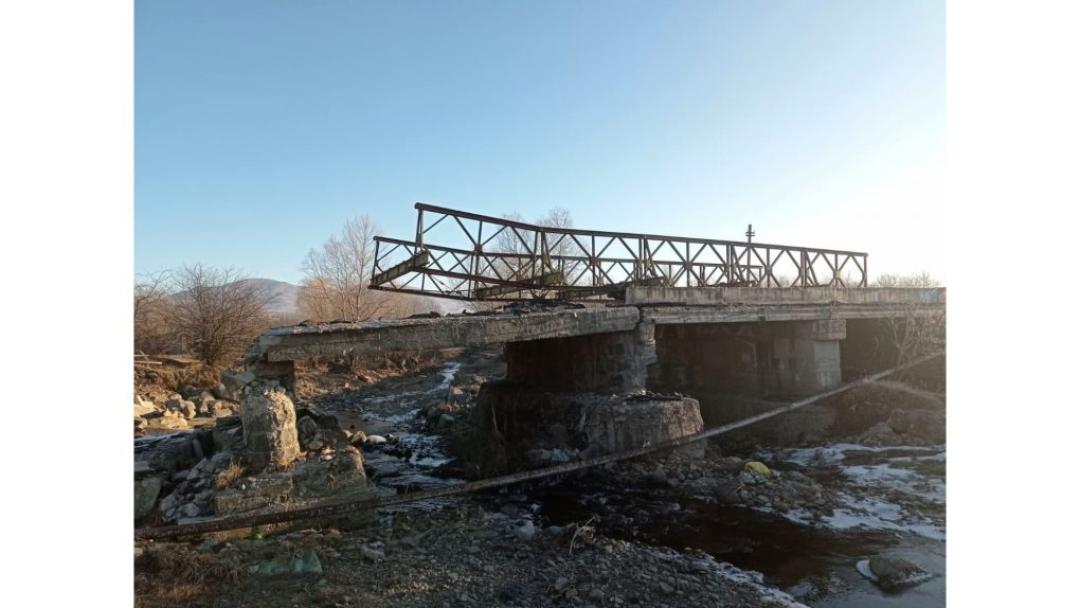
General Mikhail Klouvas is the Commander of the Directorate for Disaster Response Engineering of the Hellenic National Defence General Staff (HNDGS). He leads an operation of the Greek military in Armenia, within a unit at the forefront of military crisis management response, including fires, floods, and earthquakes. The mission involves constructing Bailey-type bridges in the Lori and Tavush regions, near the border with Azerbaijan.
A Bailey bridge is a type of portable, prefabricated bridge developed in 1940–1941 by the British, requiring no special tools or heavy equipment to assemble. The Greek mission followed flash floods in Armenia that occurred on May 26, 2024. The damage affected 15 villages, and Greece responded to Armenia’s request for EU support to rebuild local infrastructure. The bridges are constructed over the Debed, Gargar, and Debed rivers. Construction is also taking place near the small town of Alaverdi, where a small Greek community has been present since the 19th century.
Greece and Armenia signed a military cooperation agreement in December 2023. This builds on a track record of bilateral cooperation that has been in place since 1996 and was renewed in 2011, focusing on training and technical cooperation. Deeper cooperation has been historically hindered by the fact that the two countries belong to different technological ecosystems, with Armenia being a member of CSTO and Greece a member of NATO. However, the strategic dialogue between the two states has been sustained, and there has been some degree of technical cooperation. Since 2023, discussions on technological cooperation have deepened as Yerevan moves politically closer to Brussels. Nevertheless, this mission focuses more on responding to natural disasters than on strategic cooperation.
Within what framework does the Greek military assist Armenia—bilateral or multilateral under the EU?
On May 25 and 26, 2024, the northern regions of Armenia, Lori and Tavush, were severely affected by heavy rainfall, resulting in river overflows and the destruction of a significant number of road bridges. To address the impact of this natural disaster, the Armenian Ministry of Internal Affairs requested assistance through the European Union Civil Protection Mechanism, which made the urgent need for Bailey-type bridges to restore the road network.
After assessing the situation on the ground and following a meeting between the Greek Minister of National Defence, Nikos Dendias, and his Armenian counterpart, Suren Papikyan, in Washington on December 4, 2024, it was decided to deploy an engineering team from the Directorate for Disaster Response Construction/Hellenic National Defence General Staff (HNDGS/DICAFK) for the installation of three Bailey bridges in the areas of Karkop, Hobardzi, and Ayrum.
What is the scale and purpose of the mission? Is it a military cooperation effort or military support for civil protection?
The engineering team from HNDGS/DICAFK, led by its Commander, Lieutenant General Michail Kloubas, and seven specialized personnel, aimed to deploy three bridges at the following locations: Karkop: installation of a 40-metre bridge over the Debed River; Hobardzi: installation of a 19-metre bridge over the Gargar River; Ayrum: installation of a 64-metre bridge over the Debed River.
The bridges installed in Karkop and Hobardzi aimed to restore the road network. Notably, in Karkop, before the bridge installation, residents had to take a 50-kilometre alternative route to transport essential supplies for daily activities.
The installation of the bridge in Ayrum is pending, expected to proceed once the Armenian Ministry of Infrastructure completes the necessary preparatory technical work. The mission serves multiple roles, constituting both military cooperation, falling within a bilateral military agreement in effect since 2011, and Armed Forces (AF) support for civil protection, given the deployment of personnel and material.
What is the expected duration of bridge usage? What infrastructure development is planned in the region? Are there complications given the mission’s proximity to the border?
Bailey bridges in Greece are typically temporary, though from a technical standpoint, there are no restrictions on their usage duration. The bridge structure enables reuse and flexibility in various bridging scenarios. With proper inspections and maintenance, Bailey bridges can be used for extended periods. The installed Bailey bridges in Armenia can meet the region’s road network needs until the Republic of Armenia constructs new concrete road bridges.
Efforts are underway to gradually restore major technical works destroyed by the extreme weather events of May 2024. Once new concrete bridges are constructed, the Bailey bridges can be dismantled and reused by Armenian authorities for future natural disasters. No issues arose due to the proximity of the border during operations. The bridges primarily serve the daily needs of residents.
How does this mission fit within the broader framework of bilateral cooperation, and how does the local community receive the Greek deployment?
This assistance falls within the framework of a bilateral military cooperation agreement, in effect since 2011, which provides for “mutual assistance on environmental protection and disaster management related to natural, ecological, and industrial accidents and catastrophes.”
The Greek presence in the area dates back to the 19th century, particularly in the town of Alaverdi, which is home to a Greek community. Both expatriates visiting the engineering team daily and other residents expressed their deep gratitude for the restoration of the road network.
Interview conducted by Ilya Roubanis