
Victor Kipiani: Windows, Not Walls - Georgia’s Way Ahead
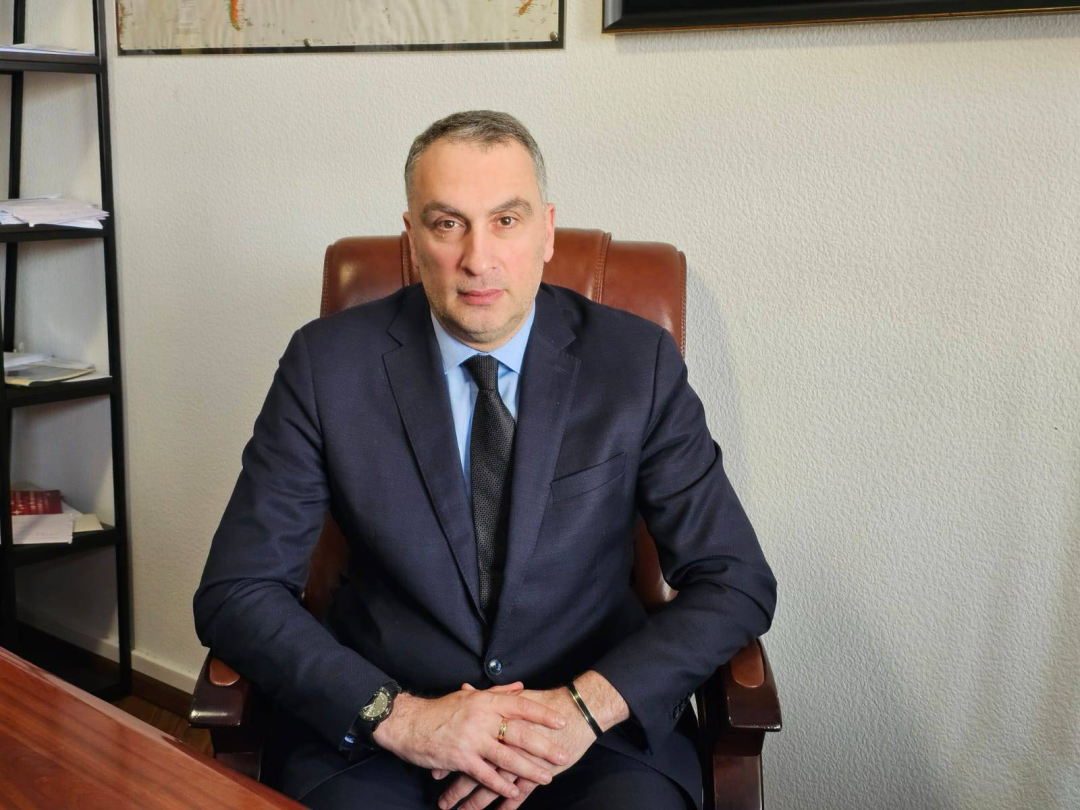
Following the Local elections on October 4, 2025, Georgia reached a turning point that finalized the recent political cycle and kicked off another. The past few weeks have been turbulent, with the ruling Georgian Dream party further consolidating its grip on power, while the opposition spectrum seems to be reshuffling, and new players are rising. This reset presents a real window of opportunity and emerging strategies.
To better understand and assess these dynamic developments in sober, practical terms, this interview features Mr. Victor Kipiani, chairman of Geocase, whose perspective offers a measured and realistic view of challenges and openings at this juncture. The discussion examines ongoing internal political processes as well as what lies ahead for Georgia.
How is Georgia’s recent internal political turbulence best described? Has the latest political cycle been finalized, and what opportunities and challenges define the next phase ahead in the near future?
To put it in very short terms, it could be described as a way into the abyss. Someone would say that this is quite a typical description when outlining global political trends these days. But it's important to note that for Georgia, any uncertainty is challenging, unpredictability is risky, and what we are witnessing these days goes along with further undermining its institutional and state capacity. Practically speaking, this is demolishing the reputational image of Georgia, which is so vital to maintain, as it is critical for any nation, but even more so for such a small and developing nation like Georgia. So all in all, this is not a very palatable description, but looking into the eye of the truth, that's where we are and heading to.
What we've witnessed over the last year or so is a very rapid backslide in all those historic successes and strategic achievements we were so proud of. Objectively, that's the given status quo. Nevertheless, it needs to be underlined that this deplorable state of affairs should be a transformational juncture – a key drive for identifying new energy, alternative resources, rising opportunities, and not falling into the trap of frustration and desperation. That's very important, because what we see these days is a type of discontent with deep disappointment, and that's even more precarious.
What are the implications of the ruling Georgian Dream party’s recent consolidation of power for the political opposition spectrum, and which avenues for political activity and engagement remain viable over the next years?
There are different implications, which could be either implicit or explicit. One of the key consequences could be turning Georgia into a 'fortress mentality,' which in other words could be described as the nation completely isolated or disconnected from the real world, moving by the inertia of phobia and conspiracy, and making the outer world disinterested, which is the case. I keep repeating that 'fatigue with Georgia' could be the worst result of the policies we are witnessing these days. That fatigue could be fatal for the sustainability of Georgia's sovereignty, and for the prospects of our statehood development. If we are not part of the bigger world, if we are not part of this international system.
When we speak about choices and options, I personally believe that the Western system is not merely a desirable option but provides Georgia with better and more optimal leverages for transforming its economy and its political system, making us not just compatible and compliant with Western norms, but attractive and viable. I very much believe that amplifying our limited resources and strategic positioning by combining them with the Western system appears to be the most optimal way to proceed in this very challenging world order, which I call "order without order".
As for the opposition, I have to be honest: when we speak about the existing Georgian opposition, it's an even tougher question than describing the political agenda of the ruling Georgian Dream party. The catch is that, so far, they have failed to present a united or systematic vision of which way the nation has to navigate. The opposition is very much obsolete, disunited, and spending most of its resources and image on internal skirmishes. While we speak about the current government lacking credibility or legitimacy, regretfully, the Georgian opposition also lacks that highly esteemed reputation in the sensitive perception of public trust. It's not surprising that, based on different polls, many voters are undecided, somewhere between 40% to 50%, which means there's a big gap, a big quest for a new supply to the latter demand. Indeed, it's high time for a new supply to be provided, because eventually, politics works like a semi-market economy: when there's demand, there should be supply. I hope that supply would be found and activated sooner rather than later, and it would mean not just refreshing faces or personalities, but a new approach, a distinctive political signature, and a coherent, informed approach. You can have many opposition parties and still lack a real and vital alternative. Today, the country needs an alternative more than it needs “opposition” as a label.
As the opposition landscape resets and new entrants emerge, which tendencies are likely to shape the coming year, what overall trajectory appears most realistic, and what concrete benchmarks would indicate a genuine reset rather than surface-level transformations?
I mentioned the word alternative. From my side, an alternative is about transformation without shocks. It is a systematic transformation – evolutionary, but not revolutionary developments. Revolutionary development is a direct challenge to the country's national security, as any turmoil, disruption, or friction could be exploited internally and externally. An alternative also means handling the crisis in a very responsible and competent manner. Another point is that an alternative should emphasize significant shifts that people should not be scared of. Instilling a perception, a belief, that changes are about making life better for all of us and not worsening it for any of us – that's what the real alternative should stand for. Unless that accountable, consistent, and genuinely visionary handling shows up, I'm afraid that the ruling Georgian Dream party would always have an upper hand. This would be abused in the context that, to my regret, although Georgia changed its color on the world map, mentally and psychologically, it still continues to be part of the Soviet past. This historic inheritance of fear, cliches, and stereotypes is the best ally of the propagators and the major obstacle for Georgia to continue its way ahead. The genesis of this Georgian Catch-22 lies in the collective struggle to overcome the unresolved inertia of Soviet legacy and homo sovieticus in Georgia. Successfully managing this dilemma could open new opportunities, meaning that Georgia either will be a fully open democratic society or it cannot be semi-democratic, semi-open, or semi-free.
Which domestic and external factors are most likely to enable Georgia to move beyond the current impasse, and how could these be activated in the short term?
To start with, I always say that our homework should be done by us. Delegating or outsourcing the destiny of Georgia to someone else's shoulders is the most primitive and irresponsible way to look at your path. Unless that greater task is dealt with, there would be no sense in expecting any added value or interest from external actors. I treat statements or expectations about isolation, international pressure, sanctions, etc., to untie the political deadlock as quite overrated and unserious. The principal actor should be the Georgian society — the Georgian vote, the Georgian people. It's about respecting yourself in your own eyes but also earning credibility in the eyes of your partners.
At the same time, as for external factors, I wish for our partners in the West to be more definitive in their approach, more clear-cut in their policies. That's also quite critical and a difference-maker. The West, regardless of multiple efforts, still has not decided to go beyond its own comfort zone. As we're moving toward the Euro-Atlantic sphere, or are supposed to move toward the Western system, they are also expected to move toward us in an even more vigorous and dedicated manner. This is a legitimate anticipation by Georgians for the West to bear relatively tangible commitments to nations like Georgia and Ukraine.
In the best-case scenario, assuming a change in government, to what extent might Georgia’s foreign policy evolve? How might this development affect the country’s relations with other South Caucasus states on the regional scale, and what policy shifts and strategies might be expected as a result?
This is up to Georgia's "white paper" or strategy paper on foreign policy objectives. The current government does possess a formal facade of Georgian foreign politics, and beyond that facade, it operates with different objectives and parallel actors. My understanding of Georgian foreign policy should be hinged upon a few premises : Openness, transparency, and reliability are important principles in the volatility of this world order. We should be able to explain and clearly define our positions better. We should not stick just to one or a limited number of geopolitical centers. A real value of Georgia is being open to any possible direction – West, East, North, or South – a type of "Georgian politics of the open doors". Potentially, such balanced and diversified integration might provide us with added value and benefits.
More focus should be paid to regional politics and recreating regional hubs. This does not imply less attention to the mainstream objective of realigning Georgia with the West, but the division of priorities in foreign policy should be in proportion to the regional and global agendas. The West remains our top priority, but the West would appreciate it if we continued keeping good working relations with Turkey, Azerbaijan, and Armenia. We have to direct special attention to laying out favorable grounds of cooperation with the so-called Global South, which is picking up its own gravitation in global politics.
Russia will always remain our neighbor. The sensitivity of our relationship with Russia is encapsulated in the given reality that this proximity and neighborhood cannot be swept away. It's about gaining the art of managing relations with Russia. It's not about partnership or realignment because Russia is continuously acting in violation of fundamental principles of international law. We must be able to deal with Russia in acknowledgment of the objective fact that we will remain neighbors for the foreseeable future. Georgian foreign policy should be very pragmatic and realistic in this world of realpolitik.
What conditions and processes are necessary for meaningful political change to unfold, and, in light of the publicly declared readiness for political activity and the possibility of transforming Geocase into a political vehicle, have consultations taken place with parties across the opposition spectrum or with civic, business, and professional groups?
Geocase continues to operate as a think-tank. Our motivating factor has always been about having an impact on policymaking. That entails being very much interrelated with political processes and decision-making activities, which means being in constant communication and dialogue. The most relevant challenge is the lack of political maturity and the practical absence of institutional policymaking. For us, carrying on with that objective is a puzzle ; we can't create a world on our own if political parties/actors or state institutions do not assist us in streamlining our approaches.
So far, we have made every effort, contributing intellectual, human, and material resources, as well as professional expertise, to support Georgia’s democratic development and Euro-Atlantic integration. Geocase has worked to bolster the country’s national security and international cooperation, enhance its economic growth and strategic competitiveness, and strengthen its global reputation. Looking ahead, the future could be encouraging, because even amid major crises, there is always a window of opportunity. These prospects should be carefully evaluated and comprehensively explored. I like to say, never say never. Considering the current context, I do not rule out the emergence of a renewed form or new posture of Geocase. With all honesty, while some internal discussions are ongoing, we are not at that stage yet, for any definitive or open statements in that respect.
Interview conducted by Luka Okropirashvili for Caucasus Watch